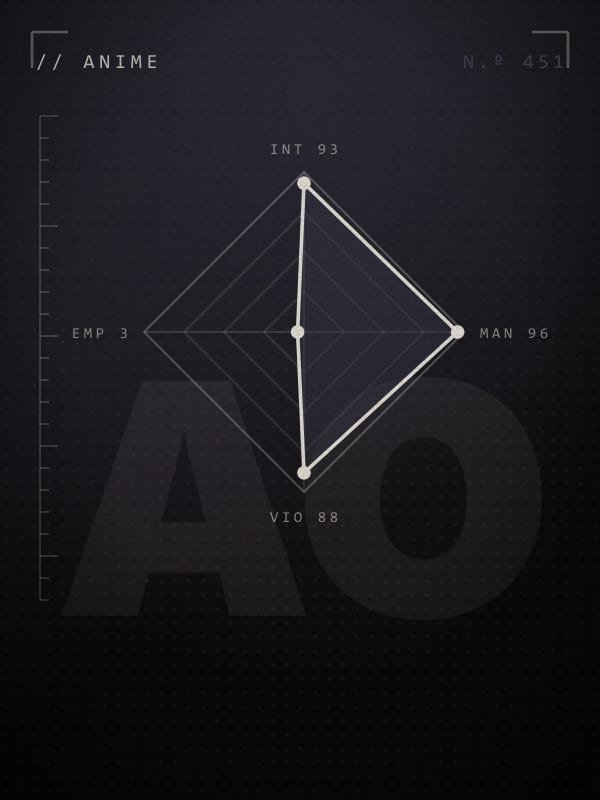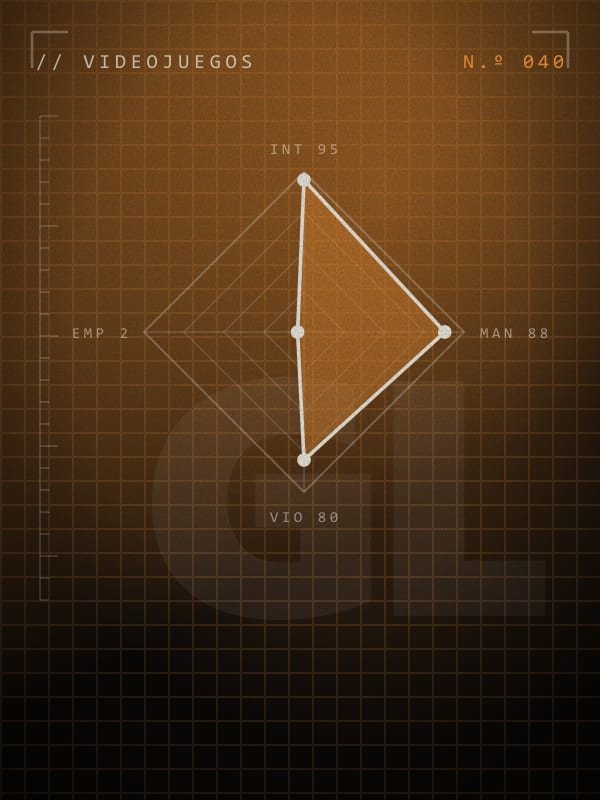
Orochimaru, «the White Serpent» of Naruto, is one of the most gifted ninja of his generation: a prodigious memory, absolute technical mastery, an intelligence bordering on the superhuman. And yet his name evokes not admiration but basements and jars. Because Orochimaru devoted that talent to a double obsession —to know everything and to never die— and to attain it he turned his laboratory into a slaughterhouse: he experimented on human beings, children included, treating them as fungible material from which to extract data, organs, abilities. For criminological eugenics, Orochimaru is not a supernatural demon: he is the terribly real figure of the scientist who amputates ethics from science and begins to see bodies where he should see people.
// The theoryManufacturing the "superior", discarding the "inferior"
The eugenics that Francis Galton christened in 1883 was never neutral science: it was the project of «improving» the human species by selecting the fit and suppressing those it declared inferior. Here it is worth being blunt: eugenics is pseudoscience, and its history is not theoretical but bloody —forced sterilization laws, the exclusion of immigrants, and at its extreme, the Nazi program that turned «racial hygiene» into gas chambers—. Orochimaru embodies the internal logic of that project taken to the individual laboratory. His goal is to produce superior beings —stronger vessels, more lethal techniques, a body capable of housing his mind forever— and for that he needs raw material. That raw material is people. The subjects who do not survive his experiments are not, to him, tragedies: they are failed iterations, discards on the road to the perfect result. There lies the rotten heart of eugenics: it divides humanity into the useful and the disposable, and once that line is drawn, exterminating the «disposable» becomes a mere problem of efficiency. Orochimaru does not hate his victims; something worse: he has stopped seeing them.
The instrumentalization of the body
The philosopher Kant formulated the rule Orochimaru tramples on without pause: always treat the person as an end, never only as a means. Eugenics and its experimental arm invert that principle: the human body ceases to be the home of a subject and becomes an instrument —a tissue bank, a testing ground, a renewable resource—. Orochimaru takes this inversion to its pure form. The children he abducts and modifies are not, to him, future adults with a life of their own, but promising experimental lines. His own plan for immortality consists, literally, of using another's body as a replaceable container. This is the moral operation that science without ethics always performs first: to reclassify the person as material. And it is not Japanese fantasy: the doctors of Tuskegee, of Unit 731, of the T4 program, did exactly that —they turned patients into data and human beings into «parts»—. The lesson is that the horror does not begin with cruelty, but with that silent reclassification: the moment someone looks at another and sees, instead of a you, a specimen.
Get the map of theories for free
Subscribe to the criminal archive —one case a week, no spam— and I'll send you The map of theories: the great currents of criminology on a single sheet.
// The subjectThe genius who mistook knowing for possessing
What makes Orochimaru dangerous is not his evil, but his brilliance. He is a genuine researcher: patient, rigorous, insatiably curious. The series is honest in showing that many of his findings «work» —his techniques are real, his modifications produce power—. That is precisely the lure. Orochimaru shows that intellectual excellence and moral depravity can coexist without friction in the same person; that an impeccable method can serve a monstrous end. His error is not one of intelligence but of orientation: he mistook knowing for possessing. For him, understanding an organism justifies dismantling it; curiosity becomes a license to do anything. He is responsible —fully— for every body he ruined, and the series does not absolve him: it hunts him, seals him, condemns him. But his figure serves as a precise warning about a comfortable myth, the one that holds that great crimes are committed by coarse minds. History's worst experiments were designed by cultured doctors, in prestigious institutions, convinced they were serving progress. Orochimaru is of that lineage.
Orochimaru
// The crackAdmiring the genius does not oblige us to pardon the butcher
The crack with Orochimaru is fascination. It is tempting to keep the genius —the dizzying intellect, the titanic ambition, the will to transcend human limits— and let that brilliance eclipse the bodies he trampled to achieve it. It is exactly the effect eugenics has exploited for a century: presenting itself wrapped in the prestige of science and the noble language of progress, so that we do not look at its victims. To explain Orochimaru's ambition —to understand what moves him, why knowledge and immortality hypnotize him— is a legitimate and necessary task. But explaining is not excusing. Understanding an experimenter's logic does not dilute by a single gram the responsibility for the children he destroyed.
The honest reading holds both things at once without letting one erase the other: the genius and the slaughterhouse, the legitimate curiosity and the bodies turned into spare parts. The opposite crack —dismissing Orochimaru as a simple incomprehensible monster— is just as lazy, because it exempts us from recognizing that his logic is human, repeatable and historical. The uncomfortable truth is that the line separating the researcher from the butcher is not drawn by talent, but by ethics: the decision, sustained at every step, that there are things you do not do to a person no matter how much you learn by doing them.
Ethics is not a brake on science: it is its condition
Orochimaru matters because he dismantles the most dangerous myth of science without limits: the idea that knowledge justifies any means of obtaining it. The real history is unequivocal. Japan's Unit 731 dissected living prisoners «for science». The Nazi doctors measured skulls and sterilized tens of thousands before industrializing murder. The Tuskegee study let Black men die of syphilis in order to «observe» the disease. All invoked progress; all had first reclassified their victims as material. That is why informed consent, ethics committees and the Nuremberg Code exist today: they are not bureaucracy that hinders geniuses, they are the institutional scar of what happens when that brake is missing. Orochimaru, the brilliant scientist without ethics, is the fictional reminder of a perfectly real horror. The question his figure forces us to ask before any promise of «improvement» —editing embryos, selecting the «optimal» genes, discarding the «undesirable»— is always the same: who must be turned into material to achieve it?. If the answer means ceasing to see someone as a person, science has already gone crooked, however impeccable the method.
Three key ideas
- Orochimaru is eugenics in the laboratory: a genius who instrumentalizes human bodies —children included— as disposable material to manufacture "superior" beings and perpetuate his own immortality. His victims are not tragedies to him, but failed iterations.
- Eugenics is pseudoscience with a bloody history (sterilizations, T4, Unit 731, Tuskegee): it divides humanity into the useful and the disposable, and once that line is drawn, extermination becomes a matter of efficiency. The horror begins with the reclassification of the person as material.
- Talent does not separate the researcher from the butcher: ethics does. Admiring Orochimaru's genius does not oblige us to pardon the butcher, and explaining his ambition does not excuse it. Ethics does not brake science; it is its condition.
Sources · further reading
- Black, E. (2003). War Against the Weak: Eugenics and America's Campaign to Create a Master Race. Four Walls Eight Windows.
- Annas, G. J. & Grodin, M. A. (1992). The Nazi Doctors and the Nuremberg Code. Oxford University Press.
- Kevles, D. J. (1985). In the Name of Eugenics: Genetics and the Uses of Human Heredity. Alfred A. Knopf.
Case-file questionsFrequently asked questions
¿Quién es Orochimaru?
Orochimaru («la Serpiente Blanca») es un villano de Naruto, analizado en KRIMINIS con la lente de la criminología. He wants to know everything and live forever.
¿Por qué Orochimaru (la Serpiente Blanca) se convierte en villano?
Orochimaru and eugenics: the scientist who treats human bodies as fungible material to manufacture "superior" beings and perpetuate his own survival. Science amputated from all ethics.
¿Qué teoría criminológica explica a Orochimaru?
El caso de Orochimaru se analiza desde la Eugenesia Criminológica. Eugenics (Galton) dreams of manufacturing superior beings and discarding the "inferior" ones. Orochimaru, from Naruto, is its laboratory version: a genius who instrumentalizes human bodies —children included— as disposable material to design "perfect" organisms and perpetuate his own immortality. He embodies the point where scientific ambition, severed from all ethics, degrades people to the category of resource —and the real horror that logic has already caused in history—.