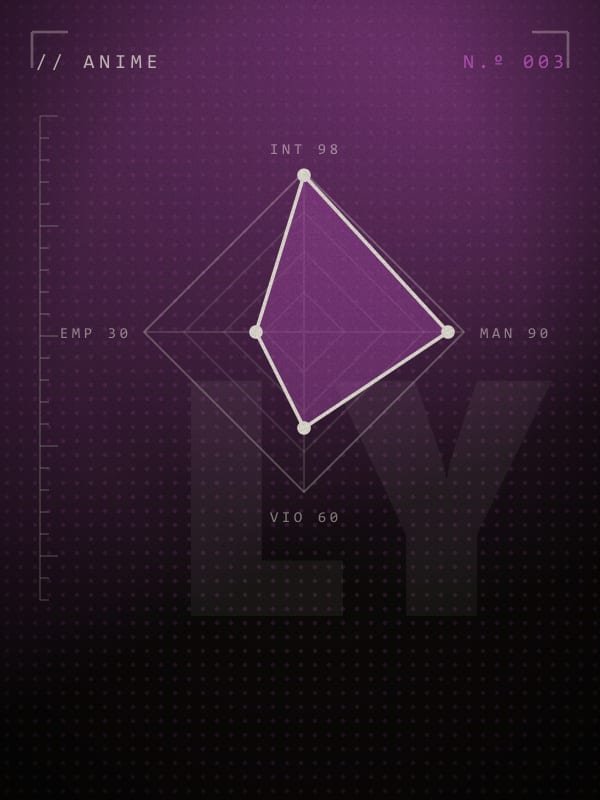
Tom Riddle was a brilliant, charming orphan. No one sentenced him to become Lord Voldemort: it was he who, decision by decision, split his own soul, spurned love, and chose power above all else. The saga insists on this through Dumbledore's voice, and in doing so it takes sides in the oldest and most uncomfortable debate in criminology: is the criminal born, driven by forces beyond his control, or does he make himself through his choices?
// The theoryThe criminal as an agent who chooses
The classical school of criminology, which begins with Cesare Beccaria in 1764, rests on a single premise: free will. The offender is a rational agent who weighs pleasure against pain and chooses to break the law. If he chooses, he is responsible; and if he is responsible, he can be deterred by penalties that are certain and proportionate. All of modern criminal law—guilt, punishment, the very idea of justice—stands on that assumption: that you could have acted otherwise.
Voldemort is the classical agent taken to the extreme. He is no poor devil dragged down by circumstance: he is someone who, with more options than almost anyone, deliberately chooses evil again and again. He fits the classical school like a glove… until the story itself forces us to doubt.
Free will versus determinism
Against the classical school rose criminological positivism. Cesare Lombroso (1876) argued the opposite: the criminal is determined by his biology—the "born criminal," recognizable by physical traits. For this current there is no real choice, only causes; and if there is no choice, punishment is absurd: one should treat, not blame. Ever since, all of criminology swings between these two poles: freedom and cause.
// The subjectTom Riddle had a choice
The deterministic reading of Voldemort is tempting: an orphan, unloved, perhaps the "Heir of Slytherin" by blood. Born evil, Lombroso would decree. But the saga dismantles it with a brilliant device: Harry Potter. The same gifts, twin origins, even a fragment of Voldemort's soul lodged inside him… and he chooses the opposite. Harry is the control group that refutes destiny. As Dumbledore tells him: "it is our choices, Harry, that show what we truly are, far more than our abilities." Tom Riddle was not sentenced to become Voldemort; he chose himself.
The saga even makes that self-construction literal. Each Horcrux demands a murder that tears the soul in two: evil does not simply befall Riddle, he manufactures it piece by piece, with premeditation, until he is unrecognizable. It is the sharpest image of the classical thesis—character as the sum of chosen acts—and also its tragic reverse: when he finally would undo the damage, he no longer can. The very freedom with which he made himself a monster is what shuts the door on desistance, that abandonment of crime that other villains in the archive still manage to reach.
Tom Riddle
Get the map of theories for free
Subscribe to the criminal archive —one case a week, no spam— and I'll send you The map of theories: the great currents of criminology on a single sheet.
// The fault lineWhen the brain enters the courtroom
Neuroscience has reopened the wound. The experiments of Benjamin Libet (1983) suggested that the brain "decides" a fraction of a second before we are conscious of having chosen: if that scales up, where does that leave the free will on which all culpability rests? Neurolaw carries the question into the courts.
The sensible way out is not to surrender to either extreme. As Greene and Cohen put it, for the law neuroscience "changes nothing and changes everything": even if metaphysical free will is doubtful, justice needs an operative notion of responsibility in order to function. Voldemort is the limit case that lays this bare: we want him to be guilty, and that moral demand shows just how deeply choice is stitched into the heart of justice.
The law already lives in that uneasy balance—not in the abstract, but in every trial. It requires mens rea—a "guilty mind," intent—to convict, and it recognizes the insanity defense for someone who, because of a severe disorder, could not tell right from wrong: these are the M'Naghten Rules, born of a real 1843 case. Each of those doors presupposes the same thing Voldemort embodies to the extreme—that the normal person could in fact choose. And Tom Riddle would never cross into that exception: he is lucid, he calculates, he understands. That is why the law would want him, without hesitation, fully responsible.
Why the law needs you to choose
Free will is no philosophical ornament: it is the hinge of every verdict. The insanity defense—excusing the person with a severe disorder, or the minor—exists precisely because we assume that everyone else does choose. And the tug-of-war between punishing (you deserve the penalty because you chose) and rehabilitating (let us change the causes) is, at bottom, this same debate. To decide how much freedom someone had is to decide how much justice we owe them.
That is why Tom Riddle unsettles us more than he seems to: he does not terrify because he was doomed to become Voldemort, but because he was not. He is the proof, in the key of fantasy, of the uncomfortable wager of the classical school: that the monster is, first of all, a decision.
Three key ideas
- The classical school (Beccaria) founds criminal law on free will: whoever chooses to offend is responsible and can be deterred.
- Positivism (Lombroso) answers with determinism—the "born" criminal: if there is no choice, one should treat, not punish. Criminology swings between the two poles.
- Neuroscience (Libet) reopens the debate, but the law needs an operative notion of responsibility: to decide how much freedom someone had is to decide how much justice we owe them.
Sources · further reading
- Beccaria, C. (1764). On Crimes and Punishments.
- Lombroso, C. (1876). Criminal Man.
- Libet, B. (1983). "Time of Conscious Intention to Act in Relation to Onset of Cerebral Activity". Brain, 106(3).
- Greene, J. & Cohen, J. (2004). "For the Law, Neuroscience Changes Nothing and Everything". Philosophical Transactions of the Royal Society B, 359(1451).
- Morse, S. J. (2008). "Determinism and the Death of Folk Psychology". Minnesota Journal of Law, Science & Technology, 9.
Case-file questionsFrequently asked questions
Who is Tom Riddle?
Tom Riddle (“Voldemort”) is a villain from Harry Potter, analysed on KRIMINIS through the lens of criminology. Is the criminal born, or self-made?
Why does Tom Riddle (Voldemort) become a villain?
Harry Potter and free will: criminology's classical school confronts a villain who is not the product of his environment, but of his own choices.
Which criminological theory explains Tom Riddle?
Tom Riddle's case is analysed through Free will. The classical school begins with free will: crime is the choice of a responsible agent, not the fate written by his biology or his surroundings. Voldemort embodies that wager, and the old tug-of-war between free will and determinism that still runs through criminal law.