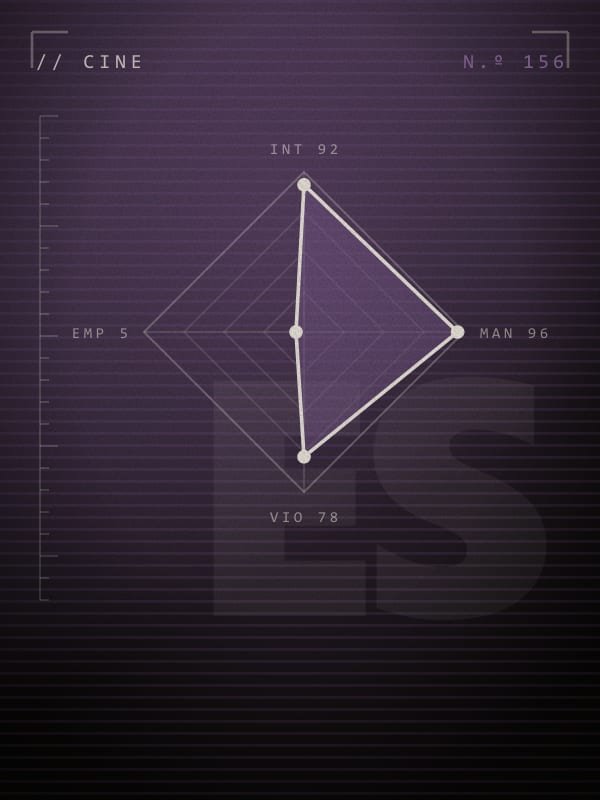
In the desert kingdom of Alabasta, the people revere Sir Crocodile as their hero: the man who defeats the pirates, protects the weak and embodies hope. It is a perfect mask. Behind it, Crocodile runs a criminal organization and patiently orchestrates a coup d'état to seize the throne. He does not act out of rage or madness: every lie is calculated, every person he deals with is a piece on his board. For the criminal personality theory of Yochelson and Samenow, Crocodile is neither sick nor impulsive: he is an almost textbook illustration of a way of thinking —a pattern of thinking errors that sustain and justify crime—.
// The theoryThe offender's "thinking errors"
In the late 1970s, the psychiatrist Samuel Yochelson and the psychologist Stanton Samenow published The Criminal Personality, the fruit of years of interviews with inmates. Their thesis broke with the fashionable explanations: the chronic offender, they argued, does not commit crimes because of trauma, poverty or mental illness, but because he thinks differently. They described a constellation of "thinking errors": a sense of superiority and entitlement (the world owes me, the rules are for others), lying as an everyday tool —not occasional, but structural—, the tendency to blame others and circumstances, manipulation as the natural mode of relating, and objectification: seeing people as objects, means to an end. Crocodile matches the picture point by point. His superiority is absolute: he considers himself destined to rule. His lying is not a slip, it is his entire public identity —the manufactured hero—. And every ally, every enemy, every citizen of Alabasta is for him a disposable instrument.
Lying as structure, not as exception
Most people lie sometimes, to get out of a jam. In Yochelson and Samenow's model, the criminal personality inverts that relationship: lying stops being the exception and becomes the background state, the operating system. Crocodile does not lie when he needs to; his entire life is the lie. The identity of "hero of Alabasta" is not a disguise he puts on and takes off: it is a construction sustained over time, believable, armored, designed to make the truth unthinkable. The authors noted that this structural lying serves two functions: it hides the crime and, above all, it protects the grandiose image the subject has of himself. Crocodile cannot bear the humiliation of his past; his heroic facade does not only deceive the kingdom, it also confirms the superiority he needs to believe in. Lying, here, is not a means: it is the mortar with which an entire identity is built.
Get the map of theories for free
Subscribe to the criminal archive —one case a week, no spam— and I'll send you The map of theories: the great currents of criminology on a single sheet.
// The subjectThe manipulator who plays the savior
What makes Crocodile such a clear-cut case is the coldness. There are no outbursts, no loss of control: there is planning. He manufactures a rebellion, turns the people against their king, positions himself as the only one capable of restoring order —and all to inherit the power he himself has destabilized—. It is manipulation in its purest form: he does not conquer Alabasta by brute force, he seduces it, convinces it that he is the solution to the problem he has created. His subordinates are pieces with an expiration date; his empathy, in the picture Yochelson and Samenow would draw, is practically nil —people are worth what they contribute to the plan and nothing more—. And yet, and this is decisive, the story never presents him as a lunatic. Crocodile is lucid, disciplined, brilliant. He knows exactly what he is doing and why. That lucidity is precisely what the theory underlines: we are not facing a broken brain, but a mind that has chosen and perfected a way of operating in the world based on superiority and the use of others.
Sir Crocodile
// The crackExplaining a pattern is not an infallible diagnosis
Here it is worth slowing down. The criminal personality theory is seductive precisely because of its clarity, and that is its first trap. Yochelson and Samenow were heavily criticized: their sample came from inmates of a forensic psychiatric hospital, with no control group, which makes it impossible to know whether those "thinking errors" truly distinguish offenders from the rest of the population —many people who never commit crimes also feel entitled, lie or manipulate—. They were also reproached for having minimized the weight of poverty, trauma and inequality, replacing it with an almost moral idea that the criminal simply "thinks badly" and "chooses" crime. Applying the model as a label that closes the case —"he just has a criminal personality"— is to fall into the crack: it turns a description into an essentialist condemnation, and slides toward the dangerous idea that there exists a type of person who is irremediably criminal.
The honest reading uses Crocodile as an illustration, not as proof. He serves wonderfully to recognize a pattern —the grandiosity, the structural lying, the objectification— because he is a fictional character designed to embody it. But let us remember the ethical nuance that runs through KRIMINIS: explaining is not excusing, and describing a pattern is not diagnosing anyone. That a model helps us name how a fictional manipulator thinks does not mean we have a machine for detecting "born criminals" on the street. Superiority, lying and the use of others are signs worth learning to see; never an excuse to label a person as lost in advance.
Seeing the pattern without manufacturing monsters
Crocodile matters because he teaches us to distinguish two things we tend to confuse: the spectacular villain and the functional manipulator. We tend to imagine the criminal as someone out of control, sick, obviously monstrous. The lesson of the criminal personality —properly understood, with its limits— is that the most effective harm usually comes from someone perfectly lucid, charming even, who has made superiority and lying his way of being in the world. Learning to recognize that pattern —who always blames others, who treats people as pieces, who builds a heroic image that is too polished— is a real defense tool. But the same theory, misused, becomes a weapon: it serves to dehumanize, to decide that someone "is like that" and beyond repair. Maturity consists in keeping the first —the lucidity to see the pattern— without falling into the second —the temptation to manufacture categories of irredeemable humans—. See the mechanism, do not shut down the person.
Three key ideas
- Sir Crocodile embodies Yochelson and Samenow's "criminal personality": not a sick or impulsive man, but a pattern of "thinking errors" —superiority, entitlement, structural lying, manipulation and objectification of people—.
- His strength as an illustration is the coldness: he disguises himself as the hero of Alabasta while orchestrating the coup, with full lucidity and no loss of control. Lying is not a slip, it is his entire identity.
- The model is disputed —uncontrolled sample, essentialist bias, minimization of poverty and trauma—. It serves to recognize a pattern, not to diagnose "born criminals". Explaining is not excusing; describing is not condemning anyone in advance.
Sources · further reading
- Yochelson, S. & Samenow, S. E. (1976). The Criminal Personality. Jason Aronson.
- Samenow, S. E. (2014). Inside the Criminal Mind (rev. ed.). Broadway Books.
- Bartol, C. R. & Bartol, A. M. (2017). Criminal Behavior: A Psychological Approach. Pearson.
Case-file questionsFrequently asked questions
¿Quién es Sir Crocodile?
Sir Crocodile («Cocodrilo») es un villano de One Piece, analizado en KRIMINIS con la lente de la criminología. He is neither a madman nor a hothead.
¿Por qué Sir Crocodile (Cocodrilo) se convierte en villano?
Sir Crocodile plays the savior of Alabasta while orchestrating the coup. Yochelson and Samenow would explain him not as sick or impulsive, but as a pattern of thinking: superiority, lying and objectification.
¿Qué teoría criminológica explica a Sir Crocodile?
El caso de Sir Crocodile se analiza desde la Personalidad criminal. Yochelson and Samenow described a "criminal personality" made of thinking errors —a sense of superiority and entitlement, systematic lying, manipulation, blaming others, objectifying people—. Sir Crocodile, from One Piece, embodies that mental architecture: a crime lord who disguises himself as a hero in Alabasta while planning the coup. Cold, grandiose, calculating. The model is disputed, but its lesson about the manipulative pattern remains alive.