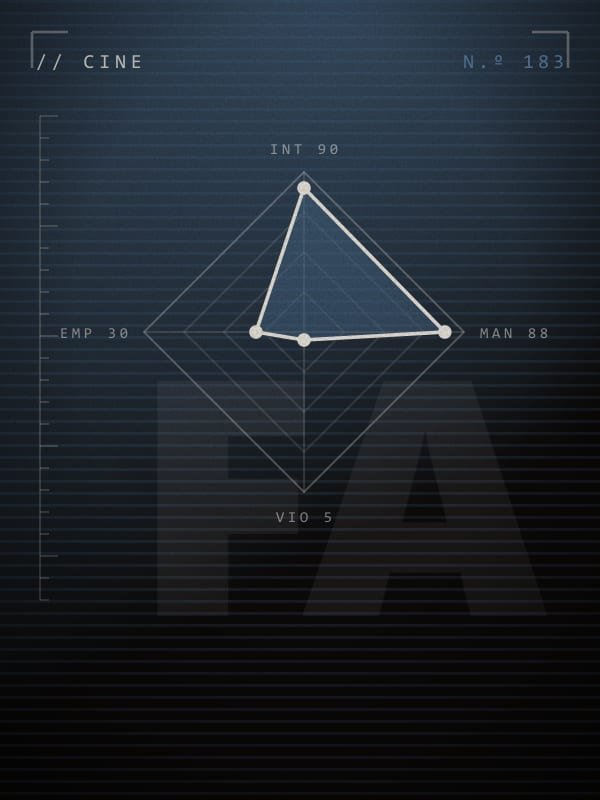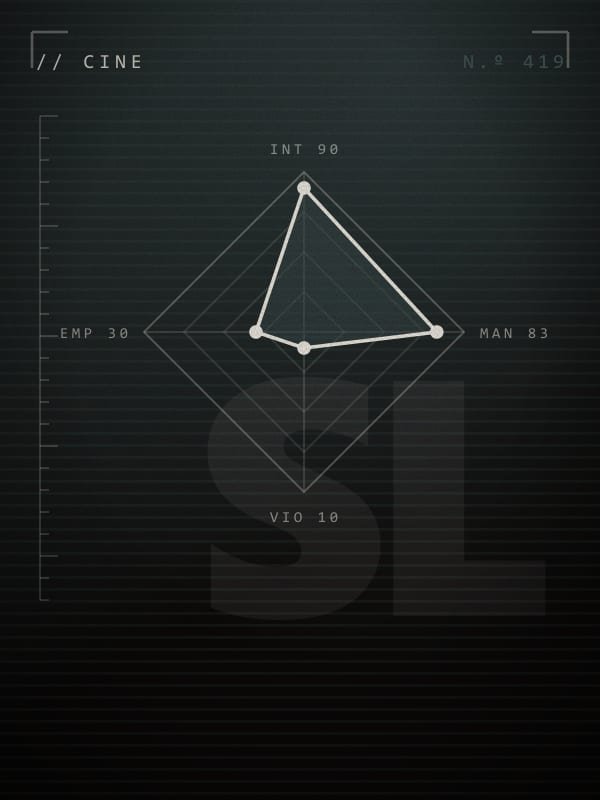
Sir Charles Litton, "the Phantom", is the elegant and elusive jewel thief of the Pink Panther saga—the eternal target of the bumbling Inspector Clouseau. An aristocrat of impeccable manners and a perfect wardrobe, Litton is the cinematic archetype of the white-glove thief: he never uses violence, he never leaves fingerprints, and his specialty is impossible jewels, kept behind the most modern security money can buy. His art is not brute force against the safe, but intelligence against the system: Litton studies the alarms, the sensors, the guards' routines and the building's blueprints until he knows them better than their owners, and then he slips through all of them like a phantom. For CPTED, he embodies a warning about one of its principles: that technological access control is only as good as the ignorance of the adversary it faces.
// The theoryAccess control is not a guarantee, it is a race
Among the principles of CPTED is the natural and organized control of access: hindering the offender's entry (and exit) through physical and technological barriers—doors, locks, alarms, cameras, vaults. It is the most tempting principle because it promises something that sounds like certainty: inviolability. Litton exists to disprove that certainty. Every jewel he steals is protected by the latest in security, and every theft proves that "the latest in security" is a relative promise: it protects against those who do not understand it, and it collapses before those who do. The lesson Litton offers the discipline is that security is not a state that is reached and preserved, but a permanent race between whoever designs the barrier and whoever studies it to beat it. A new alarm buys time, not eternity. A "foolproof" system only means the adversary who has deciphered it has not yet appeared. Mature CPTED does not sell inviolability (a word no serious professional utters), but deterrence and delay: making the crime difficult, slow and risky enough that most will give up. Litton is the minority that does not give up, and that is precisely why he is so useful: he reminds us that no lock thinks, while the thief does.
Technology does not think; the adversary does
Litton illustrates the costliest mistake in security: believing that a device—an expensive alarm, a steel vault, a camera—replaces thought instead of complementing it. Security technology is static: it does exactly what it was designed to do, no more and no less, and once the adversary understands its logic, it stops surprising him. The Phantom does not beat alarms by being stronger than them, but by being more intelligent: he studies how they work, where they have blind spots, at what point in the surveillance cycle there is a gap, which human link—a distracted guard, a predictable routine—renders them useless. CPTED learns from this not to entrust security to a single object, however expensive, but to redundant layers that cover one another: natural surveillance backing up access control, human presence backing up technology, maintenance ensuring everything keeps working. A system with a single point of failure has exactly one puzzle to solve; Litton always solves it. Robust defense is not the most expensive, but the one that forces the adversary to decipher many things at once.
// The subjectThe gentleman for whom security is a game
For Litton security is an intellectual challenge, and his two most famous jobs show what beats him and what does not. In The Pink Panther (1963) he does not attack head-on: he stays at the same Cortina d'Ampezzo resort as Princess Dala and courts her to get close to the diamond, a route of access no lock controls. But at the costume party in Dala's Rome villa, when he and his nephew George reach the safe separately, they find it empty: warned by Clouseau, the princess had hidden the jewel. Against the determined professional, removing the target from where he expects it works better than reinforcing the door. In The Return of the Pink Panther (1975), the thief at the Lugash museum leaves as a signature a white glove embroidered with a gold “P,” the sporting gesture of someone who turns theft into a game; Litton, singled out by that signature, travels to Lugash to clear his name and on the museum's security footage recognizes his own wife, Claudine, in disguise. The camera did not prevent the theft, but it helped solve it. Litton is a thief, however elegantly he dresses, and a realistic design must reckon with adversaries like him.
Sir Charles Litton
Get the map of theories for free
Subscribe to the criminal archive —one case a week, no spam— and I'll send you The map of theories: the great currents of criminology on a single sheet.
// The crackNeither the false promise of the infallible, nor surrender
The crack that Litton exposes has two opposite faces, both dangerous. The first is the false promise of the infallible: installing an expensive system and believing the problem is solved forever, lowering one's guard just as a Litton begins to study it. Security that believes itself finished is the most vulnerable, because it stops thinking. The second, opposite face is surrender: concluding that, if a determined professional can beat any system, it is not worth investing in any. That too is false. That Litton can steal any jewel does not mean the measures are useless: they mean the crime is more difficult, slower and riskier, and that deters the vast majority of offenders, who are not Litton. The honest reading sits between the two cracks: security is neither inviolable nor useless; it is a race that must keep being run, with layers that reinforce one another and with the humility to know that no lock thinks on its own.
That the most expensive system falls to the thief who takes the time to understand it is the lesson The Pink Panther, between one joke and the next, gives the discipline: security is not bought, it is thought through—and it must go on being thought through every day, because on the other side there is always someone studying the blueprints with more attention than anyone assumes.
Security in layers, not in promises
Litton matters to CPTED because he dismantles security's most comfortable illusion: that there exists some definitive device that solves the problem once and for all. There is none. Every time a valuable target is protected (a jewel, a piece of data, an infrastructure), the temptation is to delegate security to the most expensive technology and consider the matter closed. The Phantom teaches the opposite: that technology is a layer, not a guarantee; that any static system can be deciphered by an adversary who thinks; and that the only robust defense is the one combining several layers that cover one another—physical barriers, natural surveillance, human presence, constant maintenance—so that no single puzzle exists to solve. Realistic security does not promise inviolability: it promises to make the crime so difficult that almost everyone gives up, and it knows that against the one who does not give up the race must keep being run. To design well is to accept that the adversary designs too.
Three key takeaways
- Sir Charles Litton, "the Phantom" of The Pink Panther, is the jewel thief who defeats access control—alarms, vaults, systems—by studying it better than whoever installed it. Security technology only protects against those who have not deciphered it.
- He teaches that security is not a state that is reached, but a permanent race between whoever designs the barrier and whoever studies it to beat it. No system is "inviolable": that only means the adversary who understood it has not yet appeared.
- Robust defense does not rely on a single object, however expensive, but on redundant layers that cover one another. Neither believe in the infallible (guard drops) nor surrender (the measures deter the majority, who are not Litton): keep running the race.
Sources · further reading
- Crowe, T. D. (1991). Crime Prevention Through Environmental Design. Butterworth-Heinemann.
- Clarke, R. V. (1997). Situational Crime Prevention: Successful Case Studies. Harrow and Heston.
- Jeffery, C. R. (1971). Crime Prevention Through Environmental Design. Sage.
Case-file questionsFrequently asked questions
Who is Sir Charles Litton?
Sir Charles Litton (“El Fantasma”) is a villain from The Pink Panther, analysed on KRIMINIS through the lens of criminology. Every new alarm, every vault, every security system promises the same thing: inviolability.
Why does Sir Charles Litton become a villain?
Sir Charles Litton and CPTED: the jewel thief who defeats access control by studying it better than whoever installed it. Security technology only protects those who have not deciphered it.
Which criminological theory explains Sir Charles Litton?
Sir Charles Litton's case is analysed through CPTED. CPTED (Jeffery, Crowe) includes access control—closing off space with doors, alarms and barriers—among its principles. Sir Charles Litton, "the Phantom" of The Pink Panther, is the thief who defeats that control by studying it better than whoever installed it. He embodies the lesson that no security technology is inviolable in itself: it only protects against those who have not bothered to decipher it, and there is always an intelligent adversary willing to do so.