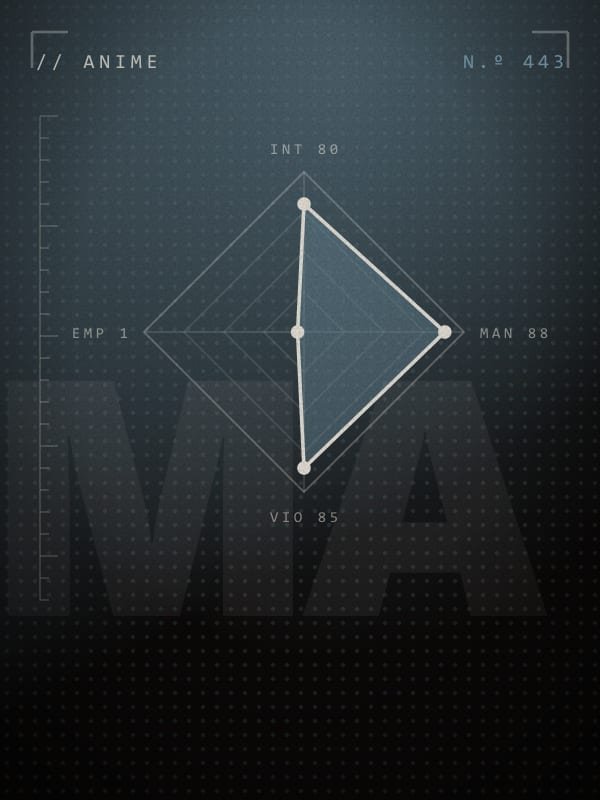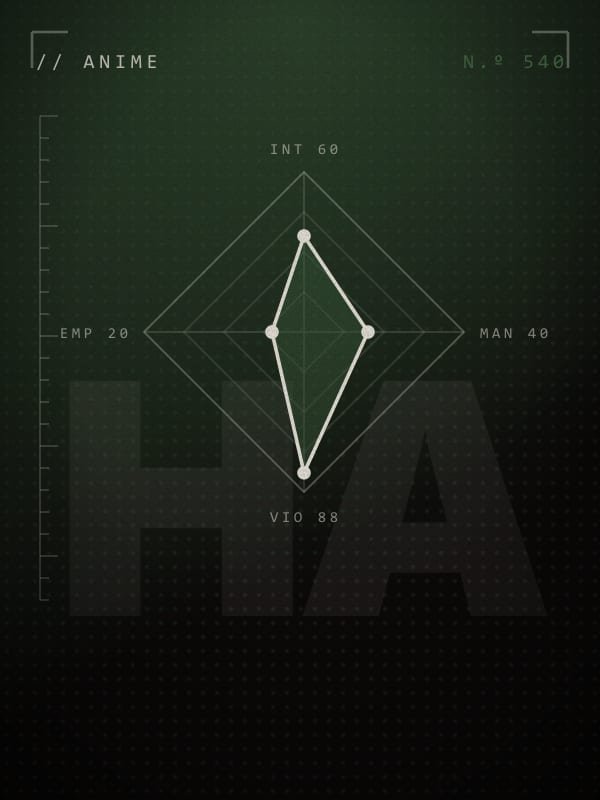
Akaza, the Upper Moon Three of the demon army in Demon Slayer, presents himself as a fanatic of strength: he trains in every fight, demands that his rivals grow stronger, and despises with fury the weak and those who «do not fight». But his human origin tells another story. He was Hakuji, a young man who stole to pay for his sick father's medicine, who found a master who took him in and a fiancée who waited for him —and who lost all three, poisoned, in a single night—. The demon that Muzan forged from that grief is no accident: it is what happens when a mountain of strain finds no healthy outlet. For general strain theory, Akaza is the portrait of a pain that, without consolation or exit, becomes violence.
// The theoryThe strain that finds no way out
Robert Agnew formulated general strain theory in 1992 to explain why certain people, under pressure, drift toward crime. His thesis: there are three great sources of strain —the failure to achieve valued goals, the loss of positive stimuli (the death of a loved one, the breaking of a bond) and the appearance of negative stimuli (abuse, wrongs, injustices)—. These strains do not produce crime automatically: they first generate negative emotions —above all anger, but also pain, humiliation and hopelessness—, and it is those emotions that press toward a response. If the person has resources for healthy coping —social support, meaning, legitimate channels to process grief—, the strain drains away without harm. If they do not, the anger seeks an outlet in deviant behavior. Akaza lives all three sources at once and in their most brutal form: he loses his father, he loses the family that adopted him, he suffers the injustice of a gratuitous poisoning. And no one is left to him, no structure, no outlet. The theory predicts exactly what happens to him: a strain with no drainage that crystallizes into permanent rage.
From loss to chronic anger
What sets Agnew's reading apart is that it places emotion at the center. It is not misfortune that produces crime, but what misfortune makes you feel when there is no way to work it through. Akaza does not turn violent the day his father dies; he breaks when, after finally finding a dignified life —a master who treats him like a son, a fiancée to whom he promises a future—, it is torn from him all at once. That is the loss of positive stimuli in its purest state: not the absence of something good, but its brutal withdrawal after having possessed it. The anger it generates is not a one-off outburst but a chronic emotion that Agnew describes as especially criminogenic: when pain finds neither consolation nor justice, it settles into a stable resentment that reorganizes the entire personality. Akaza ceases to be Hakuji and becomes a being whose only compass is strength —because strength is the only thing that, in his broken logic, could have protected what he lost—. The cult of strength is his failed coping: it turns «I could not save them» into «the weak do not deserve to exist».
Get the map of theories for free
Subscribe to the criminal archive —one case a week, no spam— and I'll send you The map of theories: the great currents of criminology on a single sheet.
// The subjectThe demon who does not kill women
There is a detail the series underscores and the theory illuminates: Akaza, capable of limitless cruelty, refuses to kill women. In a being who has erased almost all of his humanity, that limit is an emotional fossil —the trace of his sick fiancée, the woman he cared for and could not save—. Agnew notes that strain does not destroy a person uniformly: it leaves cores intact, bonds that not even the worst drift manages to bury entirely. Akaza does not consciously remember his past through much of the story —Muzan erased that memory—, and yet his body obeys a rule he can no longer explain. It is proof that beneath the demon the original grief still beats: the violence organized itself around a wound, and that wound keeps its shape. The cult of strength and the refusal to kill women are two faces of the same unresolved strain —the contempt for the weak that masks the horror of not having been able to protect the one he loved—. Akaza is fully responsible for everything he does as a demon; but his pathology has a grammar, and that grammar is the grammar of a pain that was never worked through.
Akaza
// The crackTragedy explains, it does not excuse
Here is the crack, and it must be named with care. General strain theory explains why Hakuji became Akaza: the accumulation of losses, the total absence of healthy coping, the anger that becomes chronic. But to explain is not to excuse. The best proof is in the series itself: many characters in Demon Slayer suffer devastating losses —the protagonist sees his entire family massacred— and do not become executioners. Strain is a pressure, not a destiny. Agnew was explicit about this: his theory predicts probabilities, not excuses, and he devotes much of his work to explaining why most strained people do not offend —because they find support, meaning, legitimate channels—. What makes Akaza a tragic case is not that he suffered, but that in his moment of maximum vulnerability there was no one and nothing to drain his pain, and there was a Muzan willing to channel it toward evil. The crack is double: neither deny the tragedy that forged him (that turns the villain into an incomprehensible monster and keeps us from learning anything), nor use that tragedy to launder his crimes (that insults all those who suffered the same and chose not to destroy).
The honest reading holds both things at once: Akaza is a victim of a brutal strain and the one responsible for all the harm he caused as a demon. Understanding the mechanics of his fall —how grief with no outlet turns into a cult of strength— does not lower his guilt by a gram; on the contrary, it makes it sharper, because it shows us the exact point where a broken life could have taken another path if someone had been there.
Where to break the chain
Akaza matters because general strain theory is not only a diagnosis: it is a map of intervention. If the route toward violence runs through strain → negative emotion → failed coping, then there are three points where the chain can be broken. You can reduce the strain (support networks in the face of loss, justice in the face of a wrong, so that pain does not accumulate without response). You can work on the emotion (accompanied grief, attention to chronic anger before it settles). And you can offer healthy coping (legitimate channels, meaning, community, alternatives to revenge). Akaza's case is the snapshot of what happens when all three fail at once and, on top of that, someone appears willing to recruit that pain. In real life, that figure is the criminal group that takes in the adolescent no one held up, the ideology that offers an enemy to hate, the environment that turns humiliation into a program. The lesson is not «those who suffer turn evil» —that is false and dangerous—, but that unattended suffering is fertile ground, and that preventing crime means as much holding up the one who breaks as sanctioning the one who harms.
Three key takeaways
- Akaza was Hakuji: a young man who lost his father, his master and his fiancée, all poisoned. He is the portrait of Agnew's general strain theory —loss of positive stimuli, accumulated wrong and injustice— that, without healthy coping, crystallizes into chronic anger.
- His cult of strength and his contempt for the weak are a failed coping: grief with no outlet turned into violence. His refusal to kill women is the emotional fossil of the fiancée he could not save —the wound that still shapes the demon—.
- Tragedy explains, it does not excuse. Many characters suffer equal losses and do not turn into executioners: strain is pressure, not destiny. Understanding his fall points to where the chain can be broken —reduce the strain, attend to the emotion, offer healthy coping— without lowering his responsibility by a gram.
Sources · further reading
- Agnew, R. (2006). Pressured into Crime: An Overview of General Strain Theory. Roxbury Publishing.
- Agnew, R. (1992). «Foundation for a General Strain Theory of Crime and Delinquency». Criminology, 30(1), 47-88.
- Broidy, L. M. (2001). «A Test of General Strain Theory». Criminology, 39(1), 9-36.
Case-file questionsFrequently asked questions
¿Quién es Akaza?
Akaza («Luna Superior Tres») es un villano de Demon Slayer, analizado en KRIMINIS con la lente de la criminología. He was a boy who cared for his sick father and found a family that saved him.
¿Por qué Akaza (Luna Superior Tres) se convierte en villano?
Akaza and general strain theory: a young man from whom life tore away everyone he loved, and whose grief, finding no outlet, curdled into contempt for the weak. Loss made violence.
¿Qué teoría criminológica explica a Akaza?
El caso de Akaza se analiza desde la Tensión general. Robert Agnew's general strain theory explains how the accumulation of strains —losing positive stimuli, suffering wrongs and injustices— generates negative emotions that, without healthy coping, push toward deviant behavior. Akaza, the Upper Moon Three of Demon Slayer, was Hakuji: a human who lost his father, his fiancée and his master, all poisoned. His grief, finding no outlet, became an obsessive cult of strength and contempt for the weak. Loss made violence.