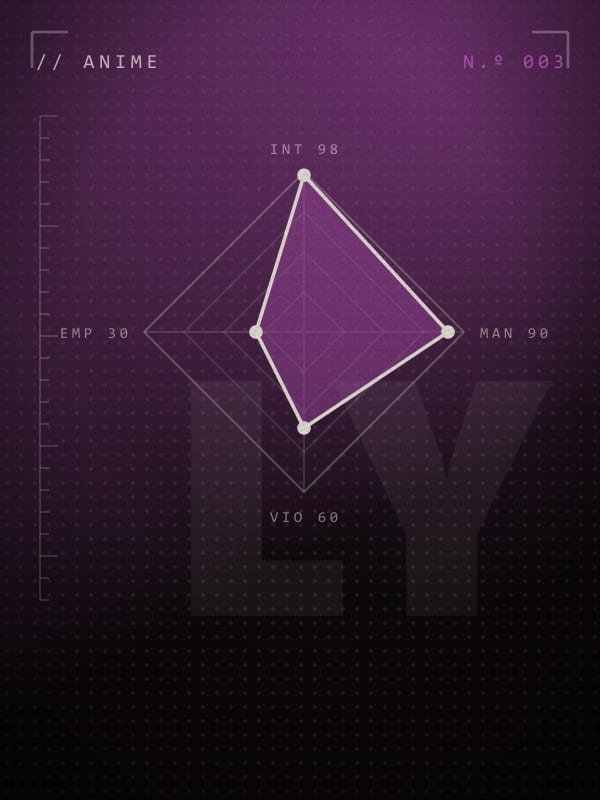
Garou did not want to be the villain. As a child, in the games where the other kids played heroes, he was always assigned the same role—the monster, the one everyone gangs up on, the one destined to lose. And he was not merely cast as the monster; he was bullied and beaten for it, over and over, until the pattern hardened into a conviction. He came to see the hero/monster binary as a lie: a story the strong tell to justify crushing the weak and calling it justice. So Garou, the Hero Hunter of One Punch Man, made a choice that is the dark mirror of every origin story—he trained relentlessly, deliberately became the monster the world had always said he was, and set out to hunt the professional heroes and expose their hypocrisy. He is not a nihilist wrecking things for pleasure. He sympathizes with the bullied, with the losing side, with everyone cast as the monster and told to accept defeat. For general strain theory, Garou is not an aberration: he is the predictable product of accumulated strain—humiliation and injustice metabolized into rage, and rage channeled into a war.
// The theoryWhen pressure, not poverty, pushes toward crime
In 1938 Robert K. Merton argued that crime springs from a gap—the strain between the goals a society glorifies (success, wealth) and the legitimate means it actually offers to reach them. It was a powerful idea, but a narrow one: strain, for Merton, was essentially economic. More than half a century later, the criminologist Robert Agnew broadened it into general strain theory, and the widening is the whole point. Strain, Agnew argued, is not only the blocked pursuit of money or status. It is any negative treatment a person suffers, and it comes in three forms. The failure to achieve valued goals—Merton's original strain, now one type among several. The removal of positively valued stimuli—losing something or someone that mattered. And the presentation of negative stimuli—being subjected to what harms us: abuse, bullying, humiliation, injustice. What matters is what these strains do inside a person. They generate negative emotions—above all anger and resentment—and those emotions create pressure, a felt need for relief or correction, that pushes some people toward crime as a way to cope, to retaliate, to set right what feels unbearably wrong.
Garou is general strain theory in the flesh, and he hits all three forms at once. He suffered the presentation of noxious stimuli in their purest shape—years of bullying and beatings, the humiliation of always being the monster. He absorbed a burning sense of injustice, the conviction that the world is rigged so the strong always win and the weak always lose. And he carries a blocked goal too: a world where the underdog cast as the monster is no longer automatically defeated, a goal the existing order makes impossible. Out of that convergence comes exactly the emotion Agnew predicts—a deep, structured anger—and out of the anger comes the corrective project: hunt the heroes, break the hierarchy, force the world to see its own hypocrisy. Garou does not drift into violence. He reasons his way there, from a wound, along the very path the theory charts.
From Merton's gap to Agnew's wound: why not everyone under strain offends
The leap from Merton to Agnew is not just a longer list of strains; it is a shift in where the theory looks. Merton looked at social structure—the mismatch between cultural goals and available means. Agnew looked inward, at the emotional machinery that turns a bad situation into an act: strain produces negative affect, and negative affect pressures behavior. But Agnew was equally insistent on the other half of the equation—that most people under strain do not turn to crime. The theory catalogs a wide repertoire of responses: some reinterpret the injury, some withdraw, some seek support, some redirect the anger into legitimate effort, some simply endure. Crime is one path among many, and which path a person takes depends on their coping resources, their temperament, the people around them, whether legitimate channels feel open. This is why general strain theory explains without excusing. It illuminates the pressure Garou is under—real, severe, the kind that reliably breeds rage—while insisting that the pressure did not make the choice for him. The wound is the context. The war is the decision. And the theory that names the first is the same one that refuses to let it swallow the second.
// The subjectThe boy always cast as the monster
What makes Garou compelling—and what makes him a near-perfect illustration—is that his villainy is legible as a response, not a nature. He is not cruel for its own sake; he is a man executing a project born from an injury. He trains his body to the edge of what is possible, not out of vanity but because strength is the only language the hierarchy he hates respects—to break the rule that the monster always loses, he must first become strong enough to win. He hunts heroes not at random but as the visible emblem of the order that crushed him, the official monopoly on being the good guy. And beneath the menace runs a genuine, disquieting sympathy: for the bullied, for the outmatched, for whoever has been handed the role of the one who is supposed to lose. This is the shape general strain theory predicts—the offender who is not empty but overfull, driven by an emotion that has a history and a logic. Garou can articulate his grievance with unsettling clarity, and the clarity is the point: his war is not chaos, it is a corrective, an attempt to force a rigged world to balance. Which is exactly why he is dangerous, and exactly why the diagnosis cannot end at understanding him.
Garou
Get the map of theories for free
Subscribe to the criminal archive —one case a week, no spam— and I'll send you The map of theories: the great currents of criminology on a single sheet.
// The flawThe wound explains the rage — it does not license the war
Here is the crack, and there are two edges to it. The first: general strain theory explains, with real precision, how humiliation and injustice pressure a person like Garou toward violence—but that pressure does not make the choice for him. The theory itself insists that most who are bullied, wronged, cast as the monster, do not become monster-hunters who maim; they take one of the many other paths Agnew catalogs. Garou chose violence over all of them. The strain is the reason the choice was available and tempting; it is not a force that made the choice inevitable, and it does not transfer the responsibility off the person who acted. The second edge cuts deeper, and it is in his own logic. Garou claims to hate a world where the strong crush the weak and call it justice—yet his method is to become the strongest and crush whoever stands in his way. Fighting injustice by turning himself into the very thing he despises does not overturn the hierarchy; it re-enacts it, with him on top. The underdog who wins by becoming the boot is no longer the underdog. Explaining the wound is not excusing the war—and the war, on its own terms, betrays the wound it claims to avenge.
Taking the grievance seriously without surrendering to it
Garou matters because he refuses both of the easy readings. He is not a monster who was simply born bad—the bullied child is real, the injustice is real, the rage has a cause we can trace. But he is also not a hero misunderstood, and the story is careful not to let his eloquence become a permission slip. General strain theory holds those two truths together, which is precisely its value. It takes the grievance seriously—insists that humiliation and injustice are real strains, that they reliably produce anger, that a society which manufactures them at scale is manufacturing the conditions for violence. And it refuses to let the grievance dissolve the responsibility, because it also documents the many people under the same strain who did not offend. That is the honest posture toward a figure like Garou: understand the wound completely, and judge the war clearly. The lesson is not to pity him into innocence, nor to dismiss him as evil and learn nothing. It is to see that reducing strain—the bullying, the humiliation, the rigged hierarchies—is how a society lowers its own risk, while still holding each person accountable for what they choose to do with the anger they were handed. And it is to notice the trap in his answer: you do not end the reign of the strong by becoming the strongest. That is not the cure for the injustice. It is the injustice, wearing the loser's face.
Three key takeaways
- Garou embodies general strain theory (Agnew, 1992): a child forever cast as the monster and beaten for it accumulates the three strains—noxious treatment (bullying, humiliation), a burning sense of injustice, and a blocked goal—which breed anger and resentment and pressure him toward a corrective war on the heroes he blames. The extension of Merton (1938): strain is not only economic, it is any negative treatment.
- His villainy reads as a response, not a nature—a project executed from a real wound, with a logic and a history. He trains to become strong because strength is the only language his hierarchy respects, and he sympathizes with the bullied and the losing side. That is exactly the offender general strain theory predicts: not empty, but overfull.
- The flaw has two edges. Strain explains the rage but does not license it—most who are wronged do not become monster-hunters; Garou chose violence over the many other responses the theory catalogs. And his own logic traps him: fighting the strong by becoming the strong who crushes the weak reproduces the very injustice he hates.
Sources · further reading
- Agnew, R. (1992). “Foundation for a General Strain Theory of Crime and Delinquency”. Criminology, 30(1), 47–88.
- Merton, R. K. (1938). “Social Structure and Anomie”. American Sociological Review, 3(5), 672–682.
- Agnew, R. (2006). Pressured into Crime: An Overview of General Strain Theory. Oxford University Press.
- Broidy, L. & Agnew, R. (1997). “Gender and Crime: A General Strain Theory Perspective”. Journal of Research in Crime and Delinquency, 34(3), 275–306.
Case-file questionsFrequently asked questions
Who is Garou?
Garou (“el Cazador de Héroes”) is a villain from One Punch Man, analysed on KRIMINIS through the lens of criminology. As a boy he was always forced to play the monster in the hero games, and beaten for it.
Why does Garou become a villain?
Garou and general strain theory (Agnew): how accumulated humiliation and a burning sense of injustice pressure a person toward violence. The Hero Hunter is not born evil—he is a bullied child who turned his wound into a war.
Which criminological theory explains Garou?
Garou's case is analysed through General strain. General strain theory (Robert Agnew, 1992) extends Merton: strain is not only blocked economic goals but any negative treatment—the loss of what we value, the imposition of what harms us (bullying, humiliation, injustice), and the failure to reach the goals we prize. These strains breed negative emotions—anger, resentment—that pressure some toward crime as a corrective response. Garou, the Hero Hunter of One Punch Man, is that theory in the flesh: a child forever cast as the monster and beaten for it, who channels a lifetime of humiliation into a war on the professional heroes he blames. And the flaw is decisive: strain explains his rage, it does not license it—most who are bullied do not become monster-hunters, and fighting injustice by becoming the strong who crushes the weak reproduces the very thing he claims to hate.