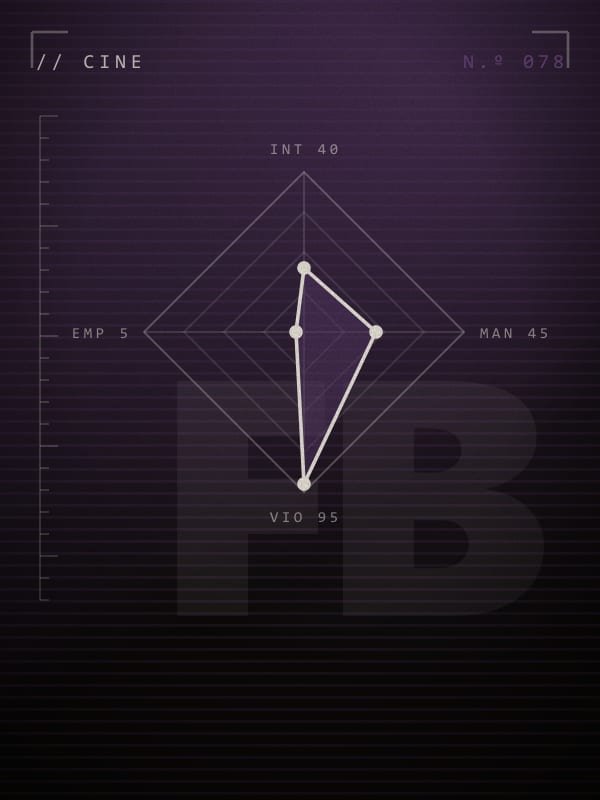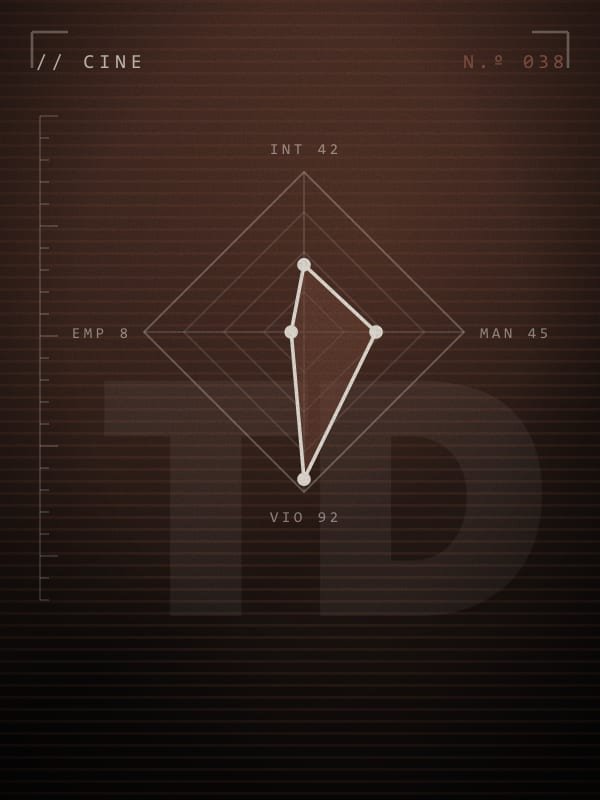
Victor Creed —Sabretooth— is not just big and strong: he is animal. Claws, fangs, a predator's sense of smell, an almost feline pleasure in hunting the weakest. Where the Kurgan is a human mesomorph, Sabretooth is the next and most sinister step of the prejudice: the powerful body reimagined as a beast. And that is where Sheldon's somatotype theory connects with its most venomous ancestor: Lombroso's atavism.
// The theoryFrom muscle to beast
Sheldon said the offender is muscular; Lombroso, decades earlier, had said the criminal is an evolutionary throwback, a savage with the body of another era. The two ideas share a root: reading criminality in physical form and equating it with something less human. Sabretooth is the perfect fusion of both —a dominant physique presented as pure animality—. When he says "I'm an animal, and animals hunt," he recites, without knowing it, the heart of the prejudice: that there are bodies that do not house people, but beasts that can only prey.
It is the most dangerous part of the myth, because animalization is not a rhetorical flourish: it is the step before denying someone's humanity. Historically, describing a group as "beasts" —for their body, their race or their class— has served to justify treating them as such: hunting them, caging them, exterminating them. Sabretooth embodies that fantasy in entertainment form; his case file serves to remind us where it comes from and where it leads.
Dehumanization through the body
The leap from "strong body" to "beast" is a mechanism of dehumanization, and modern criminology studies it very seriously. Perceiving the other as less human —more animal, more "primitive"— reduces empathy, increases the cruelty applied to them and makes their extreme punishment easier. Research on bias shows that certain faces and bodies activate associations with the "animal" and that those associations influence real judicial decisions, including the gravest ones. Sabretooth is the comic-book version of a prejudice with deadly consequences: the one that decides, by the shape of a body, who counts as fully human.
Get the map of theories for free
Subscribe to the criminal archive —one case a week, no spam— and I'll send you The map of theories: the great currents of criminology on a single sheet.
// The subjectThe alibi of nature
Sabretooth hides behind his own bestiality —"it's my nature"— as if the body excused him from choosing. It is the perfect alibi of biological determinism: if I am an animal, I am not responsible, I only obey my species. Fiction sometimes buys it, presenting him as a force of nature without will. But even within his world, Sabretooth chooses whom he hunts and why he enjoys it. "Animal nature" is not an explanation; it is an excuse that the myth of the criminal body serves him on a platter.
Victor Creed
// The crackNeither a beast without guilt, nor a body that condemns others
Sabretooth's crack is accepting his own framing. Seeing him as a "beast" without responsibility exonerates him —it hands him the determinism he claims— and, worse, validates the idea that there are bodies that are intrinsically criminal. And that idea, taken out of the comic, is the one that has justified the worst abuses: treating real people as animals for their physique or their origin. The honest reading separates the two things: Sabretooth is responsible for his cruelty and his figure must serve us as a warning about how easy it is to slide from "strong body" to "subhuman". Understanding the prejudice does not mean sharing it.
Against him, Wolverine has an almost identical body and instincts —claws, ferocity, power— and chooses to contain them. The saga, without meaning to, refutes the myth: the same "animal body", opposite destinies. If biology ruled, there would be no difference between the hero and the beast.
No one is a beast
Sabretooth's lesson is the gravest of this theory: no body makes anyone less human. The myth that equates physical strength with animality is not only false; it is the gateway to the dehumanization that precedes the greatest atrocities. That is why it matters to defuse it both in fiction and in justice: to remember that the most imposing defendant, the most "primitive" in a jury's eyes, is as much a person —and as responsible, no more and no less— as anyone. Mature criminology judges people for their acts; never "beasts" for their form.
Sabretooth roars that he is an animal so he does not have to answer as a man. The case file does the opposite: it gives him back his humanity —and with it his responsibility—, and warns us how dangerous any theory is that is willing to take it away from him for the shape of his body.
Three key takeaways
- Sabretooth fuses Sheldon with Lombroso: the powerful body reimagined as a beast. It is the darkest root of the myth —the equation between a strong physique and animality—.
- Animalization dehumanizes, and that has real consequences: it reduces empathy and hardens punishment. Historically it has justified treating entire groups as "beasts" for their body or their origin.
- "It's my nature" is an alibi, not an explanation: he chooses whom he hunts. Against Wolverine (same body, a different choice), the myth collapses: no body makes anyone less human.
Sources · further reading
- Lombroso, C. (1876). L'uomo delinquente. Hoepli.
- Sheldon, W. H. (1949). Varieties of Delinquent Youth. Harper & Brothers.
- Goff, P. A. y cols. (2008). «Not Yet Human: Implicit Knowledge, Historical Dehumanization, and Contemporary Consequences». Journal of Personality and Social Psychology, 94(2).
Case-file questionsFrequently asked questions
¿Quién es Victor Creed?
Victor Creed («Dientes de Sable») es un villano de X-Men, analizado en KRIMINIS con la lente de la criminología. Claws, fangs, hunting instinct: Sabretooth is not just a mesomorph, he is the strong body reimagined as an animal.
¿Por qué Victor Creed (Dientes de Sable) se convierte en villano?
Sabretooth and Sheldon's theory: the darkest root of the criminal-body myth —the equation between a powerful physique and animality, the beast-man, the atavistic fantasy that fused strength with subhumanity—.
¿Qué teoría criminológica explica a Victor Creed?
El caso de Victor Creed se analiza desde la Teoría de los somatotipos. Somatotype theory inherits from Lombroso the idea of the criminal as a biological throwback. Sabretooth takes that prejudice to its most literal form: the powerful body turned into a beast, the animal-man who hunts by instinct. His case file shows how the myth of the criminal body links up with the old and dangerous fantasy of animalizing the offender.