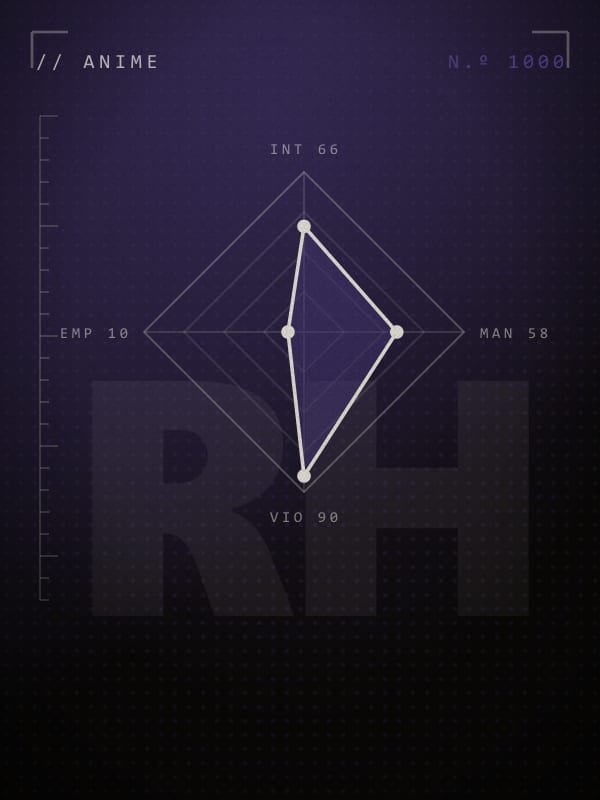
In Shinjuku, Takashi Mitsuya, captain of Toman’s Second Division, finally faces a rival worthy of him: Kanji Mochizuki, one of Tenjiku’s Four Heavenly Kings. Then Rindo Haitani arrives and tells Mocchi not to keep all the fun to himself. There is no fight. From behind, his older brother, Ran, smashes a brick over Mitsuya’s head. Rindo complains: Ran always steals the spotlight with his dirty tricks. Ran answers that Toman is not a gang you can beat by playing fair (manga chapter 128). The whole character is in that scene. Rindo is the younger of the Haitani brothers, who ruled the Roppongi district as teenagers, and in the Tenjiku arc he is an executive of Izana Kurokawa’s gang. He fights with grappling holds: he pins his opponent and bends the joints until they break. This case file covers all of Takemichi’s timelines and reveals the ending of the manga.
// The theoryYou copy to start, you stay for what it pays
In 1966, Robert Burgess and Ronald Akers took Sutherland’s differential association, which held that crime is learned in intimate groups, and added what it lacked: a learning mechanism. Akers developed it in Deviant Behavior (1973) and systematized it in Social Learning and Social Structure (1998). His social learning theory has four parts. Differential association: whom you spend your time with. Definitions: your own ideas that make an act acceptable. Differential reinforcement: the balance between what a behavior brings in and what it costs, both what has already happened and what is expected, above all in social currency: approval, respect, status. And imitation, which Akers takes from Albert Bandura: doing what you have seen someone else do, especially when that someone is admired and is seen to get something out of it. Akers adds a point that matters here: imitation weighs more at the start, when a behavior is acquired; reinforcement weighs more later, when it is kept up or abandoned.
The model and the reward
Bandura showed that people imitate models with status, models who resemble them and models they see rewarded. A famous older brother checks all three boxes. But copying is not enough to keep going: what sustains a behavior for years is differential reinforcement. If hitting brings respect, other people’s fear and a name, and punishment comes late, rarely, or turns into prestige in its own right, the balance tips toward hitting again. Ran is Rindo’s model; the Haitani reputation is his reward.
// The subjectThe little brother who got tired of being the little brother
In the battle against Toman on the Yokohama pier, Rindo picks his opponent with a line about himself: he tells Souya Kawata, Angry, that both of them are outshined by their older brothers (chapter 156; episode 44). Shortly after, while promising Angry, whose arm is already broken, that he will break another limb, he admits to Ran that people look down on him for being the younger brother, and Ran urges him to show them what he can do. In the same chapter Izana explains why the Haitanis ended up in juvenile detention: in what became known as the Roppongi Battle of the Ashes, they took down the leaders of the area’s largest gang, and their blows killed its vice-captain (chapter 160; episode 45). The brothers fight as a single machine, Rindo holding and Ran striking with his baton (chapter 161), and in chapter 162 (episode 46) Rindo breaks Angry’s leg while Ran remarks that his brother enjoys his opponents’ screams. Angry, crying, gets up on the broken leg and knocks him out with a single punch (chapter 163). Afterward, the reinforcement keeps coming from every gang. In the 2018 future of the Bonten arc, the Haitanis are executives of Mikey’s criminal organization (chapter 196; episode 53). In the 2008 timeline, which the anime starts adapting in its fourth season, South Terano beats them all in juvenile detention and brings them into Rokuhara Tandai (chapter 227); later they move to Mikey’s Kanto Manji Gang. There, Mitsuya recalls that at thirteen he watched them walk through the Azabu festival as Roppongi’s charisma, and that he came to admire their style (chapter 248).
Rindo Haitani
Get the map of theories for free
Subscribe to the criminal archive —one case a week, no spam— and I'll send you The map of theories: the great currents of criminology on a single sheet.
// The crackSame model, different pupil
The theory has a problem the manga itself exposes. Mitsuya also watched the Haitanis at thirteen, with his two little sisters in tow, and he also admired what he saw. He did not become them. Akers would answer that the model is only one piece: Mitsuya had other associations, other definitions and other reinforcements, starting with two girls in his care. It is a good answer, but it shows the limit. Imitation does not explain why one person takes up a model and another lets it pass, and with two brothers raised together it is almost impossible to know who taught whom. Rindo is not a passive copy: the taste for hearing a rival scream is his own, according to his own brother.
Explaining is not excusing. That Rindo learned to hit by watching Ran describes how he entered the trade; it does not change the fact that he was the one who broke the leg of a boy who was already down with a broken arm. And the theory leaves a way out open. (Spoiler warning for the ending.) In the manga’s last future, where Toman never turns into Bonten, the Haitanis run a music club (chapter 278). They are still brothers and still together. What changed was what their world rewarded.
What is paid for can stop being paid for
Research on siblings backs up the manga’s intuition. In the Arizona Sibling Study, Rowe and Gulley (1992) found that siblings with a warmer relationship and more friends in common were more alike in their substance use and delinquency. The bond transmits. But social learning does not treat that bond as a life sentence: if a behavior is sustained by what it brings in, intervening means changing the balance, so that status can be earned another way and violence stops making a name. Harsher punishment is not enough if juvenile detention, as happened to Rindo, becomes one more source of fame.
Three key ideas
- Akers’s social learning theory (Burgess and Akers, 1966; Akers, 1973 and 1998) explains crime through four mechanisms: differential association, definitions, differential reinforcement and imitation; imitation weighs more in acquiring a behavior and reinforcement in keeping it up.
- Rindo Haitani, the younger of the Roppongi brothers, learns by watching Ran and resents living in his shadow; in Tenjiku he breaks Angry’s leg, and in other timelines he moves through Rokuhara Tandai, the Kanto Manji Gang and Bonten, always as a figure of prestige.
- The crack: Mitsuya admired the same models and did not become like them; the model explains the repertoire, not the choice, and in the manga’s last future the Haitanis, with nothing rewarding their violence, run a music club.
Sources · further reading
- Burgess, R. L. and Akers, R. L. (1966). “A Differential Association-Reinforcement Theory of Criminal Behavior”. Social Problems, 14(2), 128-147.
- Akers, R. L. (1973). Deviant Behavior: A Social Learning Approach. Wadsworth.
- Akers, R. L., Krohn, M. D., Lanza-Kaduce, L. and Radosevich, M. (1979). “Social Learning and Deviant Behavior: A Specific Test of a General Theory”. American Sociological Review, 44(4), 636-655.
- Akers, R. L. (1998). Social Learning and Social Structure: A General Theory of Crime and Deviance. Northeastern University Press.
- Bandura, A. (1977). Social Learning Theory. Prentice Hall.
- Rowe, D. C. and Gulley, B. L. (1992). “Sibling Effects on Substance Use and Delinquency”. Criminology, 30(2), 217-234.
- Wakui, K. (2017-2022). Tokyo Revengers. Kodansha (chapters 128, 156, 160-163, 196, 227, 243, 248 and 278).
- Tokyo Revengers (2021-2026). Anime series, Liden Films (episodes 38, 44-46 and 53).
Case-file questionsFrequently asked questions
Who is Rindo Haitani?
Rindo Haitani is a villain from Tokyo Revengers, analysed on KRIMINIS through the lens of criminology. He complains that his brother always steals the spotlight with dirty tricks.
Why does Rindo Haitani become a villain?
Rindo Haitani, of Tokyo Revengers, and Akers’s social learning: the younger Haitani learned violence by watching Ran and kept at it because Roppongi paid him in fame. Imitation and differential reinforcement.
Which criminological theory explains Rindo Haitani?
Rindo Haitani's case is analysed through Social learning. Ronald Akers’s social learning theory (Burgess and Akers, 1966; Akers, 1973 and 1998) explains crime through four mechanisms: association with others, the definitions that justify it, differential reinforcement (what a behavior brings in against what it costs) and the imitation of models. Rindo Haitani, in Tokyo Revengers (Ken Wakui), is Ran’s younger brother: together they ruled Roppongi, went through juvenile detention, became executives of Tenjiku and, in later timelines, of Rokuhara Tandai, the Kanto Manji Gang and Bonten. Rindo learned the trade by watching his brother, and kept at it because every beating paid him back in something he valued: the Haitani name.