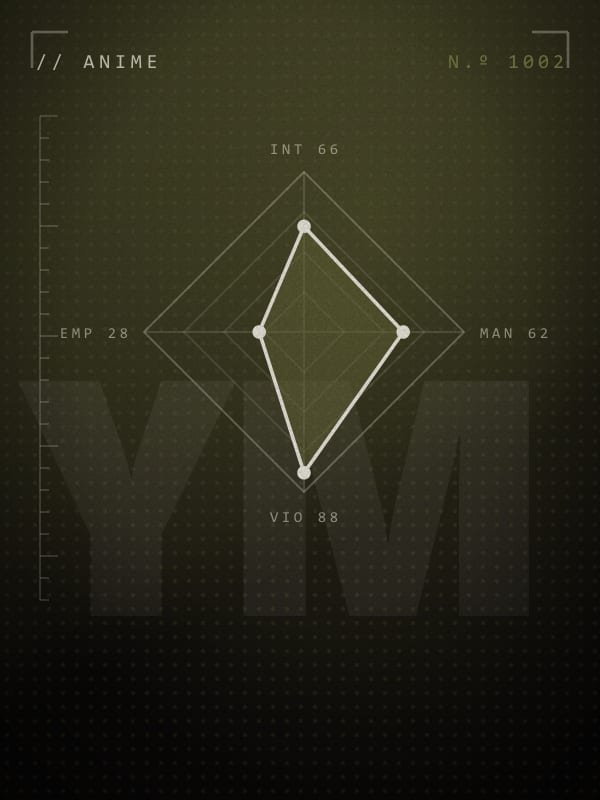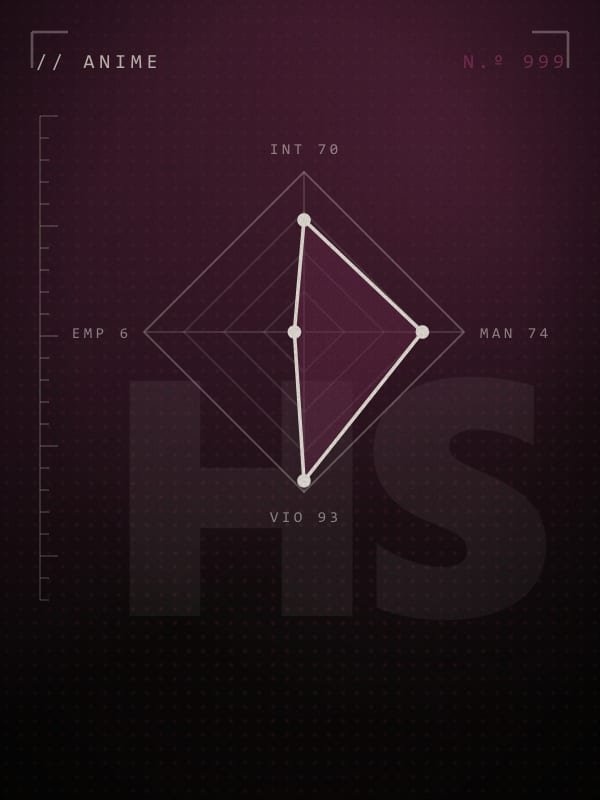
In a cold-storage room, several men wait, tied up, beaten and gagged. In front of them, a young man with pink hair swallows a pill and shouts that Bonten’s traitors are about to be judged. When the prisoners try to speak through their gags, he hushes them: they must listen to Mikey’s words. Mikey, eating taiyaki off to one side, gives the order, and he shoots them, one by one. This is chapter 196 of Ken Wakui’s Tokyo Revengers manga, which the anime aired in October 2026 (episode 53), and the shooter is Haruchiyo Sanzu, born Haruchiyo Akashi: Bonten’s number two, the criminal organization Mikey runs in the 2018 that Takemichi reaches after the Tenjiku arc. Twelve years earlier, in 2006, Sanzu was the vice-captain of the Tokyo Manji Gang’s 5th Division (Toman), under Yasuhiro Muto, “Mucho,” and he followed Mucho when he defected to Tenjiku; in the final arc’s timeline, in 2008, he is vice-leader of Kanto Manji. The year, the gang and the uniform change. Whom he obeys does not. (Warning: this case file spoils the manga’s final arc, which the anime has not yet fully adapted.)
// The theoryWhose eyes you see yourself through
In 1956, the sociologist Daniel Glaser published “Criminality Theories and Behavioral Images” in the American Journal of Sociology, a correction to Edwin Sutherland’s differential association. For Sutherland, crime is learned through direct contact with others: the more definitions favorable to breaking the law a person receives from those close to them, the more likely they are to offend. Glaser accepted the learning but shifted its center of gravity. What matters is not only whom you spend time with, but whom you identify with: a person offends to the extent that they identify with persons, real or imaginary, from whose perspective their conduct seems acceptable. Identifying, in his sense, is not copying gestures; it is choosing someone through whose eyes you judge your own behavior. And that choice is selective: out of all possible models, people pick the one that confirms what they already wanted to be. Sanzu fits almost word for word. His bond with the gangs is thin: Mikey places him under Mucho because the other captains cannot handle him (ch. 206), and in the future Bonten and Kanto Manji are all the same to him. His bond with one figure, by contrast, is total.
The king as a point of view
Glaser does not speak of loyalty to a group, but of adopting a perspective. Sanzu adopts it in three ways. He speaks in the model’s name: in Bonten’s warehouse he does not present the execution as his own doing, but as Mikey’s will. He judges others through the model’s eyes: whoever fails Mikey stops being a comrade and becomes a traitor, even the captain who took him in. And everything else becomes expendable, his own allies included. Seen that way, murder does not look like a crime to him, but like a service. In his vocabulary, Mikey is not a friend or a boss: he is the king on the board.
// The subjectProtect the king
Three moments in the manga make it clear. The first is a flashback (ch. 206). Mucho, newly appointed captain of the 5th Division, plays shogi with Sanzu, the troublesome kid Mikey has placed in his division. The boy opens with a defense and explains why: protecting the king comes first. That is why he took on the Yotsuya gang by himself after they mocked Toman. Mucho gives him a mask to cover the scars around his mouth. Within six months, Sanzu is his right-hand man and treats him like an older brother; when Mucho tells him he is leaving Toman, he swears loyalty and goes with him to Tenjiku. Half a year after the battle against Tenjiku, Mucho walks out of juvenile detention and finds Sanzu waiting for him. Sanzu takes him to the wharf where that battle was fought and slashes his torso with a katana. Then he removes his mask, reminds him of the shogi game, accuses him of betraying Mikey and finishes him off. The second moment is the warehouse (ch. 196) that opens this case file. The third comes in the final arc, in 2008 (chs. 254-255): during the battle between Kanto Manji and the second Toman, Takemichi and Kakucho catch him in a freight yard, trying to start a train so he can send it into the crowd. Kakucho warns him he will kill his own side as well. Sanzu cares about no one but Mikey. He draws his sword and slashes Kakucho across the chest.
Haruchiyo Sanzu
Get the map of theories for free
Subscribe to the criminal archive —one case a week, no spam— and I'll send you The map of theories: the great currents of criminology on a single sheet.
// The crackThe king who scarred his face
Chapter 241 answers the uncomfortable question. As children, Haruchiyo, his sister Senju and Baji hang around Mikey at the Sano dojo. Senju accidentally breaks a Concorde model Mikey has just gotten and, when he asks who did it, she lies: Haruchiyo. Soon after, Senju finds her brother with the corners of his mouth wounded and Mikey with blood on his hands; those are the scars the mask will cover years later. Mikey tells him to laugh, and Haruchiyo obeys. The man Sanzu turns into a king is the boy who scarred his face. Here differential identification falls short: it explains whose perspective Sanzu acts from, but not why someone chooses as a model the person who hurt him. For that you have to leave sociology for what the psychoanalyst Anna Freud called, in 1936, identification with the aggressor, a suggestive hypothesis and a hard one to test. Glaser’s selectivity, on the other hand, does show in Sanzu: he tells Takemichi that Mikey’s fate was sealed in childhood (ch. 261), and it is that dark Mikey, and no other, whom he chooses to serve.
The end of the manga adds the counterexample. After Takemichi and Mikey’s last time leap (chs. 277-278), Haruchiyo grows up without scars, leads the new Toman’s 5th Division alongside Senju and, in 2017, arrives at Takemichi and Hina’s wedding as a famous YouTuber, together with her. Same idol, different outcome. This is also the classic criticism of Glaser: saying someone identified with a model explains almost everything after the fact while predicting almost nothing. Identification is not destiny: it needs a wound, a void and an occasion to turn it into violence. And explaining Sanzu is not excusing him. What happened to Mucho, to the prisoners in the warehouse and to Kakucho was not decided by a model, but by a man who chose to see the world through his model’s eyes and to pull the trigger for him.
Devotion is an alibi too
A real violent organization, from a gang to a cult, can produce its own Sanzu: the lieutenant who needs no detailed orders because he has adopted the boss’s gaze and applies it with more zeal than the boss himself. Glaser helps explain why that figure is so dangerous: someone who acts from his idol’s perspective does not feel he is committing a crime, but carrying out a will he considers higher than his own. That is why prevention is not only about dismantling the gang, but about offering other mirrors: bonds, role models and forms of belonging that do not demand blood in return. And about remembering that obeying the king does not share the guilt with him.
Three key ideas
- Differential identification (Glaser, 1956) corrects Sutherland: it is not enough to know whom someone spends time with; what matters is whom they identify with, real or imaginary, and from whose perspective their crime seems acceptable.
- Haruchiyo Sanzu, Mucho’s vice-captain in Toman, Bonten’s number two in 2018 and vice-leader of Kanto Manji in 2008, executes traitors (ch. 196), kills Mucho for betraying Mikey (ch. 206) and plans to run down both gangs with a train (ch. 255): always in the name of his “king.”
- The crack: his idol is the boy who scarred his face (ch. 241), something Glaser cannot explain, and in the last future, without that wound, Sanzu does not kill; identifying with someone explains the gaze, it does not excuse the trigger.
Sources · further reading
- Glaser, D. (1956). “Criminality Theories and Behavioral Images”. American Journal of Sociology, 61(5), 433-444.
- Sutherland, E. H. (1947). Principles of Criminology (4th ed.). Lippincott.
- Glaser, D. (1978). Crime in Our Changing Society. Holt, Rinehart and Winston.
- Freud, A. (1936). Das Ich und die Abwehrmechanismen [The Ego and the Mechanisms of Defence]. Internationaler Psychoanalytischer Verlag.
- Wakui, K. (2017-2022). Tokyo卍Revengers. Kodansha (Weekly Shōnen Magazine), chs. 196, 206, 241, 254-255, 261 and 277-278.
- Liden Films (2021-2026). Tokyo Revengers (anime), episode 53.
Case-file questionsFrequently asked questions
Who is Haruchiyo Sanzu?
Haruchiyo Sanzu (“Haruchiyo Akashi”) is a villain from Tokyo Revengers, analysed on KRIMINIS through the lens of criminology. He is not loyal to Toman, or to Bonten, or to Kanto Manji.
Why does Haruchiyo Sanzu (Haruchiyo Akashi) become a villain?
Haruchiyo Sanzu, Bonten’s number two in Tokyo Revengers, and Glaser’s differential identification (1956): he does not kill for the gang, he kills through the eyes of Mikey, the “king” he has worshipped since childhood.
Which criminological theory explains Haruchiyo Sanzu?
Haruchiyo Sanzu's case is analysed through Differential identification. Differential identification theory (Daniel Glaser, 1956) holds that people offend to the extent that they identify with persons, real or imaginary, from whose perspective the crime seems acceptable. Haruchiyo Sanzu, vice-captain of Toman’s 5th Division, Bonten’s number two in the 2018 future and vice-leader of Kanto Manji in the final arc of Tokyo Revengers, is its textbook case: he executes traitors, kills his own captain and plans to run down two whole gangs, always in the name of Mikey, the “king” he has worshipped since childhood.