Garfield Lynns started out as a pyrotechnic effects specialist, a man who worked with fire for a living. When the work vanished, the need did not. Turned into Firefly, one of the most dangerous arsonists in the Batman universe, Lynns doesn't set fires to steal, or to blackmail, or to take revenge on a specific enemy: he sets fires because he cannot resist. The sight of a flame devouring a structure gives him a pleasure he doesn't know how to postpone. For the theory of low self-control, that is exactly the profile criminology has been describing for decades: not a criminal genius, but someone who was never fitted with the inner brake that lets you say "not now."
// The theoryA single cause: not knowing how to wait for gratification
In 1990, Michael Gottfredson and Travis Hirschi published A General Theory of Crime with a thesis as ambitious as it was controversial: there aren't a thousand causes of crime, there is one. Low self-control: the inability to resist immediate, easy and exciting gratification, even when it turns out ruinously expensive in the long run. The authors describe it in a handful of traits recognizable at a glance —impulsivity, risk- and sensation-seeking, a preference for the simple and physical over the complex, self-centeredness and a bad temper—. And they argue that this brake is forged in childhood, in parenting that monitors, detects and corrects; afterward, they say, it barely changes. Crime, according to them, requires neither skill nor a master plan: all it takes is for low self-control to meet opportunity. Firefly illustrates the equation almost didactically. There's no elaboration, no calculating greed, no sophisticated revenge: there's a man and an opportunity to see something burn. The brake most people place between impulse and act —"this has consequences, this destroys me, this can wait"— simply never appears in him. The match is struck because striking it is the most immediate, most exciting and easiest thing, and because he never learned to tell himself no.
It's not that he doesn't calculate: it's that he can't wait
The theory distinguishes Firefly from other villains with useful precision. Unlike the rational criminal who weighs costs and benefits, or the one who patiently learns a criminal trade, the low-self-control offender does neither: he yields to the impulse of the moment. Firefly is not the Joker plotting a theatrical scheme nor the Penguin running an empire: he is the pure trait, gratification that will not wait. That's why his behavior looks less like a strategy and more like a compulsion: the thrill of fire always wins because the mechanism meant to brake it was never built. And because the brake is raised in childhood —with supervision and limits that teach how to defer pleasure— the theory places the lever of prevention long before the crime: not in the cell or the threat of punishment, but in having learned to wait. A fact consistent with the character: someone with low self-control not only offends more, but also has more accidents, takes more risks and self-destructs more. Firefly, who burns himself in his obsession, is the same trait looking at itself in the mirror.
Get the map of theories for free
Subscribe to the criminal archive —one case a week, no spam— and I'll send you The map of theories: the great currents of criminology on a single sheet.
// The subjectThe pyromaniac as a catalog of traits
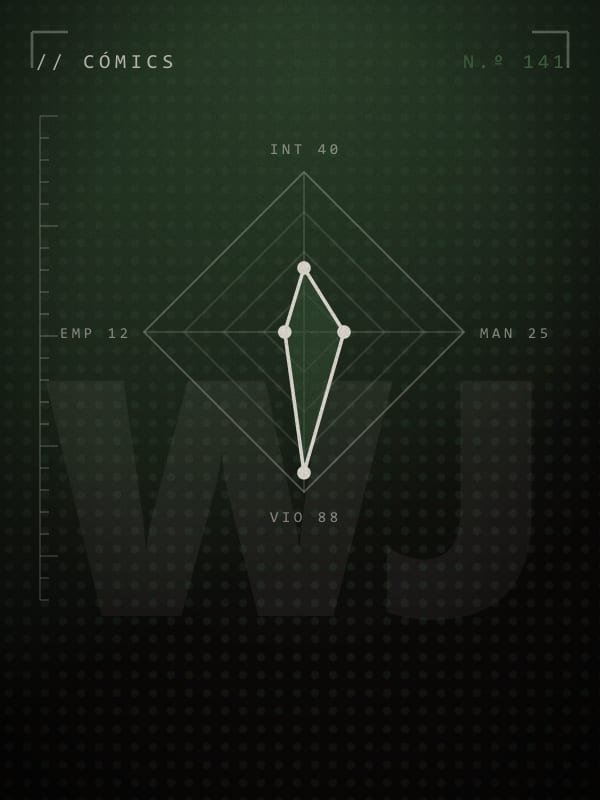
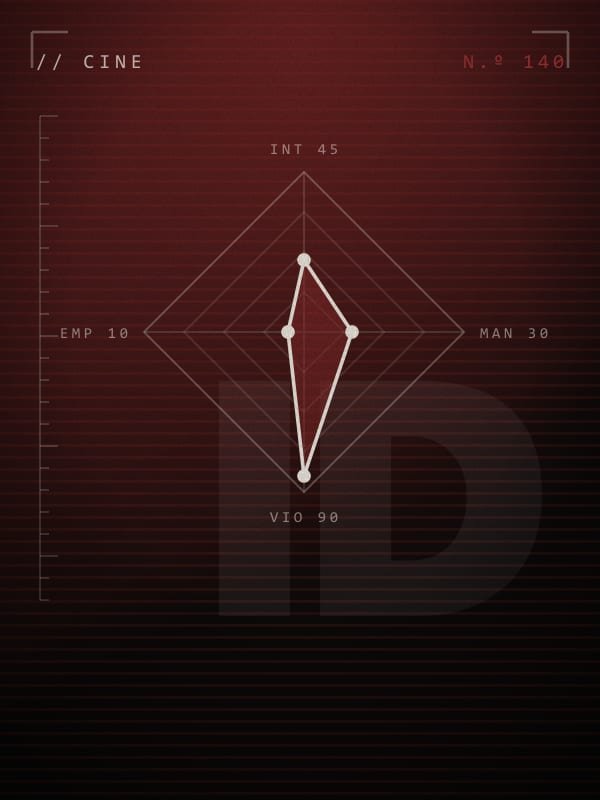
What makes Firefly such a clean case is that he gathers, one by one, the six traits of low self-control with almost no contamination. Impulsivity: he acts for the immediate pleasure of the flame, without calculation or delay. Sensation-seeking: fire alone isn't enough, he needs the thrill of risk, danger, the spectacle of the blaze growing. A preference for the physical and the simple: his method isn't intellectual or subtle, it's the elemental crudeness of burning. Self-centeredness: the world exists as fuel for his pleasure, and harm to others doesn't enter the equation. And the bad temper and low tolerance for frustration that flare up the moment something gets in the way. The theory adds a revealing nuance: someone with a weak brake rarely sticks to a single kind of behavior, because the trait is cross-cutting. Firefly is not a professional of calculated arson; he is someone whose entire life is organized around not being able to resist. He harms himself, ruins any chance of a future, burns his bridges —literally and figuratively— because tomorrow weighs less than the instant of seeing the next flame catch. He is responsible for every fire, fully; but his figure shows with clarity how the absence of an inner brake can organize an entire biography around immediate gratification.
Firefly
// The crackExplaining the impulse is not excusing the fire
The theory of low self-control is powerful, but it has limits that Firefly lays bare. The first is the circularity that Robert Akers reproached it for: if we measure "low self-control" by the tendency to give in to temptation, and then use it to explain that someone gives in to temptation, the theory bites its own tail. Saying that Firefly sets fires because he has low self-control, and knowing he has low self-control because he sets fires, doesn't explain much. The second limit is clinical: real pyromania is a recognized impulse-control disorder, with its own phenomenology —prior tension, relief and fascination with fire— that overflows Gottfredson and Hirschi's general framework. Reducing Firefly to "a case of low self-control" ignores that compulsive arsonous behavior has specific roots that a single-cause theory doesn't capture. And the third: the excessive stability the theory posits —that the brake barely changes after childhood— clashes with what we know about treatment, turning points and desistance.
None of this excuses. To explain is not to excuse. Understanding that Firefly gives in to an impulse he never learned to brake doesn't turn him into a victim of his brain nor erase those who burned in his fires: it marks him as the agent of every decision to strike a light. The honest reading holds both things at once. Low self-control names the mechanism well —immediate gratification that beats a brake that was never installed— and that's why it helps to prevent, to intervene early, to understand why belated punishment rarely deters someone who lives in the instant. But compulsive pyromania is not just "impulsivity": it's a clinical picture that demands a clinical eye, not only a criminological one. The remembrance, here, is for those who lost their home, their business or their life in the fire —not for the fascination of the one who lit it—.
The brake is raised before the first flame
Firefly matters because he shows where the lever really is. If the behavior is born from a brake that was never installed, waiting for the fire to act is always arriving late. The practical consequence of low self-control is luminous and counterintuitive: the best policy isn't more punishment, but investing in childhood —in parenting, school and programs that teach how to defer pleasure and regulate impulse—. The evidence backs it up: early self-regulation interventions reduced delinquency among at-risk children decades later. The trap would be to use the theory to blame families and forget that stress, precarity and the lack of a future erode that same brake; and, in the specific case of pyromania, to forget that there is a clinical component that calls for treatment, not just social prevention. The lesson isn't to wait for the pyromaniac who already has the match in his hand, but to recognize and cultivate the brake much earlier —while he is still a child learning, for the first time, that some things are worth waiting for—.
Three key takeaways
- Firefly (Garfield Lynns) embodies the theory of low self-control (Gottfredson and Hirschi, 1990): he sets fires not to steal or take revenge, but because he can't resist the immediate gratification of fire. Impulsivity, sensation-seeking and self-centeredness, with no brake to contain them.
- It's not that he doesn't calculate: it's that he can't wait. Unlike the rational criminal who weighs costs, Firefly yields to the impulse of the moment because the inner brake was never installed. Crime only needs that trait crossing paths with opportunity.
- To explain is not to excuse. The theory has cracks —circularity (Akers), pyromania as a specific clinical disorder, its disputed stability—, but it names the mechanism well. The remembrance is for those who burned, not for the fascination of the one who lit the flame.
Sources · further reading
- Gottfredson, M. R. & Hirschi, T. (1990). A General Theory of Crime. Stanford University Press.
- Akers, R. L. (1991). «Self-Control as a General Theory of Crime». Journal of Quantitative Criminology, 7(2).
- Pratt, T. C. & Cullen, F. T. (2000). «The Empirical Status of Gottfredson and Hirschi’s General Theory of Crime: A Meta-Analysis». Criminology, 38(3).
- American Psychiatric Association (2013). DSM-5: Trastornos disruptivos, del control de los impulsos y de la conducta (piromanía). APA.
Case-file questionsFrequently asked questions
¿Quién es Firefly?
Firefly («Garfield Lynns») es un villano de Batman, analizado en KRIMINIS con la lente de la criminología. He doesn't steal to get rich or kill for revenge.
¿Por qué Firefly (Garfield Lynns) se convierte en villano?
Firefly (Garfield Lynns) and the theory of low self-control: pyromania as an inability to resist immediate gratification. Why the person who needs to see something burn now, today, neither calculates nor learns: he simply yields to the impulse.
¿Qué teoría criminológica explica a Firefly?
El caso de Firefly se analiza desde la Bajo autocontrol. The theory of low self-control (Gottfredson and Hirschi, 1990) reduces crime to a single cause: the inability to resist immediate, easy and exciting gratification. Firefly, alias Garfield Lynns, the compulsive pyromaniac of the Batman universe, embodies that diagnosis with textbook precision: impulsivity, sensation-seeking, self-centeredness and an absolute inability to defer the pleasure of seeing something burn. He doesn't plan a big heist or chase money; he chases the thrill of fire now, without weighing the consequences. Every fire is the temptation that wins because the brake was never fitted.