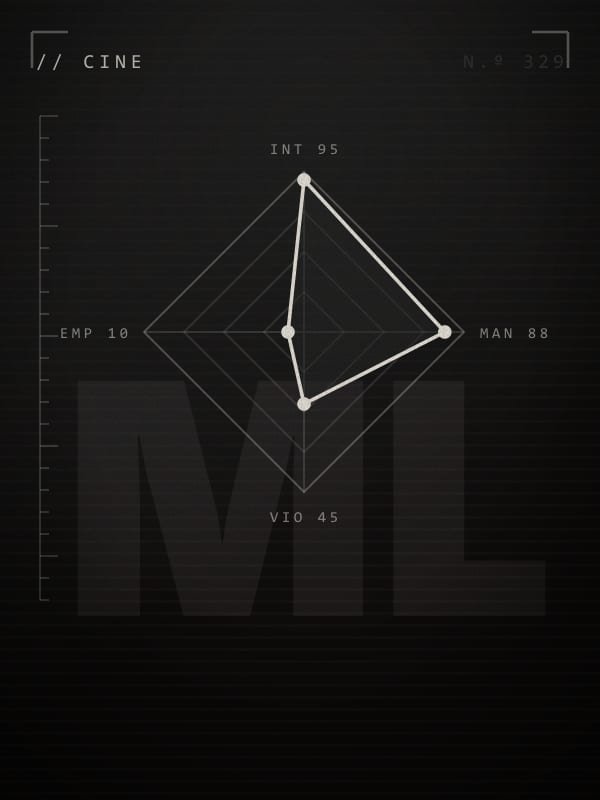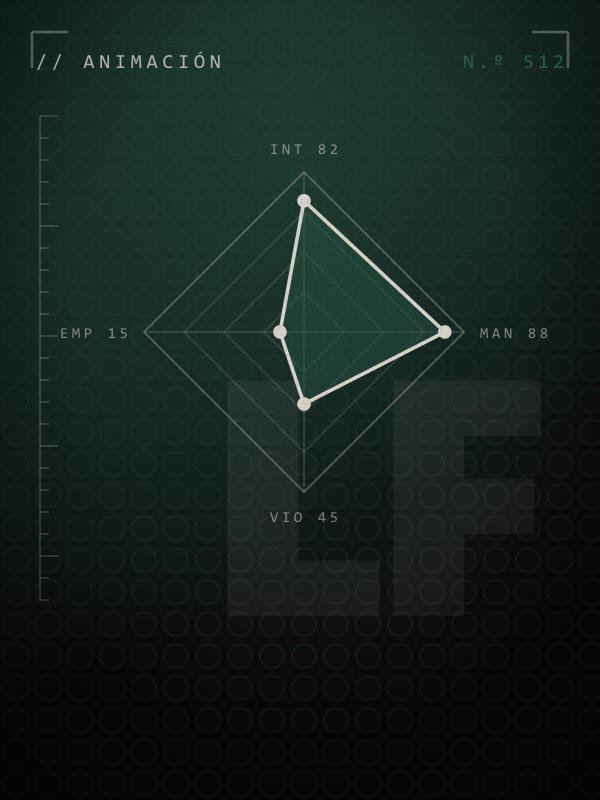
Doctor Jonathan Crane, alias Scarecrow, is a psychiatrist at Gotham's Arkham Asylum before becoming one of Batman's most disturbing enemies. His obsession is a single one: fear. He studies it, catalogs it, provokes it in his patients with abominable methods and, finally, distills it into a toxin —the «fear gas»— that induces hallucinations of sheer panic in whoever breathes it. His recurring plan is to spray that toxin over the entire city, to plunge Gotham into a wave of collective dread. For the geography of fear, Crane is the limit case: he takes the contagion of fear that Ferraro and Skogan described as a slow social process and turns it into an instantaneous chemical attack.
// The theoryThe contagion, made a weapon
Skogan's theory holds that fear spreads across a territory like a contagion: from neighbor to neighbor, from rumor to rumor, until an entire neighborhood withdraws and its streets empty out. Crane understands that logic better than anyone and accelerates it. Where the real process would take months —the disorder that breeds unease, the unease that is transmitted, the withdrawal that degrades public space—, his toxin achieves it in minutes: a cloud of panic that runs from street to street and empties Gotham all at once. What Scarecrow reveals is that fear, once unleashed, has real consequences regardless of whether the threat is real. His victims flee from monsters that do not exist, but the chaos they cause —the accidents, the paralysis, the ungovernable city— is perfectly tangible. Crane demonstrates the core of the theory: that fear needs no true danger to cause true harm, and that whoever controls a population's fear controls its conduct.
Whoever manufactures fear governs the territory
Scarecrow illustrates an uncomfortable principle of the geography of fear: fear is power. Skogan showed that panic empties the streets and hands public space to whoever wants to occupy it; Crane turns that into a conscious strategy. By sowing terror over Gotham, he not only harms his victims: he redesigns the city, decides which zones empty out, where no one dares to go, how people move. It is the villainous version of a truth the theory also applies to legitimate actors: whoever controls the perception of danger controls the conduct of a population. That is why the geography of fear warns that fear can be manufactured and exploited —by criminals, yes, but also by politicians, media or sellers of security— and that a citizenry that does not understand how its own fear works is a citizenry easy to govern through panic. Crane is the extreme caricature of that mechanism: the man who understood that you do not need an army to take a city, it is enough to flood it with fear.
Get the map of theories for free
Subscribe to the criminal archive —one case a week, no spam— and I'll send you The map of theories: the great currents of criminology on a single sheet.
// The subjectThe psychiatrist who studied fear until he fell in love with it
What makes Crane so unsettling is that he arrives at fear through science. He is no brute: he is a specialist, a psychiatrist who devoted his life to understanding human panic. But his knowledge, instead of curing, is perverted into a weapon —the fear expert who falls in love with his object of study and decides to administer it in massive doses—. There is in him, moreover, a history of humiliation and mockery that feeds his fixation: he was a victim before becoming an executioner of terror. The geography of fear, embodied in his case, reveals a temptation within the discipline itself: studying fear can lead as much to protecting us from it as to learning to exploit it. Crane is responsible for every crime he commits, and his knowledge does not exculpate him —it aggravates it—: he knew exactly what he was doing to Gotham. His figure is the warning that understanding a phenomenon as powerful as fear carries an enormous ethical responsibility, because the same knowledge that can defuse panic can also sow it.
Espantapájaros
// The crackNeither minimize fear, nor surrender to it
The crack with Scarecrow is letting yourself be fascinated by his theatricality and forgetting what he teaches. It is tempting to read him as a villain in a flashy costume and stop there. But his lesson is serious: fear is a weapon, and it works. The opposite crack is the one Crane himself wants to provoke —surrendering to panic, believing the world is as terrifying as his toxin paints it—. The honest reading holds both extremes: taking seriously that fear can be manufactured and exploited, without letting fear dictate how we live. Batman defeats Crane not by eliminating fear —he too uses it, dressed as a bat— but by refusing to let it paralyze him. That is the theory's answer: fear is not fought with more fear nor by denying it, but by moving through it with lucidity and returning to inhabit the street it wanted to empty.
That a psychiatrist —someone whose profession is to relieve mental suffering— becomes the manufacturer of an entire city's panic is the irony that Batman sets against the theory: knowledge of fear is a double-edged power, and which side it falls on depends entirely on the ethics of whoever possesses it.
Learning to recognize manufactured panic
Scarecrow matters because he teaches you to ask the question that defuses his toxin: who benefits from my being afraid?. Every time a wave of panic runs through a community —because of an amplified event, a viral rumor, a tough-on-crime campaign—, it is worth asking whether the fear responds to a real danger or whether someone is releasing it the way Crane releases his gas, to empty the street and occupy it with their agenda. The geography of fear teaches that collective panic is almost never entirely spontaneous: someone stokes it, doses it and exploits it. Crane's lesson is to refuse to breathe the gas without thinking: to recognize when the fear we feel is our own and when it has been injected into us, because a citizenry that knows where its fear comes from is immune to the scarecrows that want to govern it with it.
Three key takeaways
- Scarecrow (Jonathan Crane) is the geography of fear made a weapon: a psychiatrist who synthesizes a panic toxin and sprays it over Gotham, triggering in minutes the contagion of fear that the theory describes as a slow social process.
- He demonstrates that fear causes real harm even when the threat is not real, and that whoever manufactures fear controls the territory: he empties the streets and occupies them with his agenda. Panic is power.
- Neither minimize fear as a mere villain's costume, nor surrender to it. The question that defuses his toxin: who benefits from my fear? Collective panic is rarely spontaneous —it is worth knowing where it comes from—.
Sources · further reading
- Ferraro, K. F. (1995). Fear of Crime: Interpreting Victimization Risk. SUNY Press.
- Skogan, W. G. (1990). Disorder and Decline. University of California Press.
- Glassner, B. (1999). La cultura del miedo. Basic Books.
Case-file questionsFrequently asked questions
¿Quién es Espantapájaros?
Espantapájaros («Jonathan Crane») es un villano de Batman, analizado en KRIMINIS con la lente de la criminología. He does not kill with bullets: he kills with fear.
¿Por qué Espantapájaros (Jonathan Crane) se convierte en villano?
Scarecrow and the geography of fear: a psychiatrist who synthesizes terror and sprays it over an entire city. Fear as a deliberate epidemic, spreading from street to street.
¿Qué teoría criminológica explica a Espantapájaros?
El caso de Espantapájaros se analiza desde la Contagio Social y Geografía del Miedo. The geography of fear (Ferraro, Skogan) studies how panic spreads across a territory and transforms it. Scarecrow, from Batman, is its weaponized version: a psychiatrist obsessed with fear who synthesizes a panic toxin and spreads it over Gotham, emptying its streets and sowing chaos. Terror turned into a deliberate epidemic —the contagion the theory describes, triggered on purpose—.