Why We Love Villains: The Psychology of Why the Bad Guy Wins
You root for the monster, and you know you shouldn't. Why does the villain pull us in harder than the hero who is supposed to save the day?
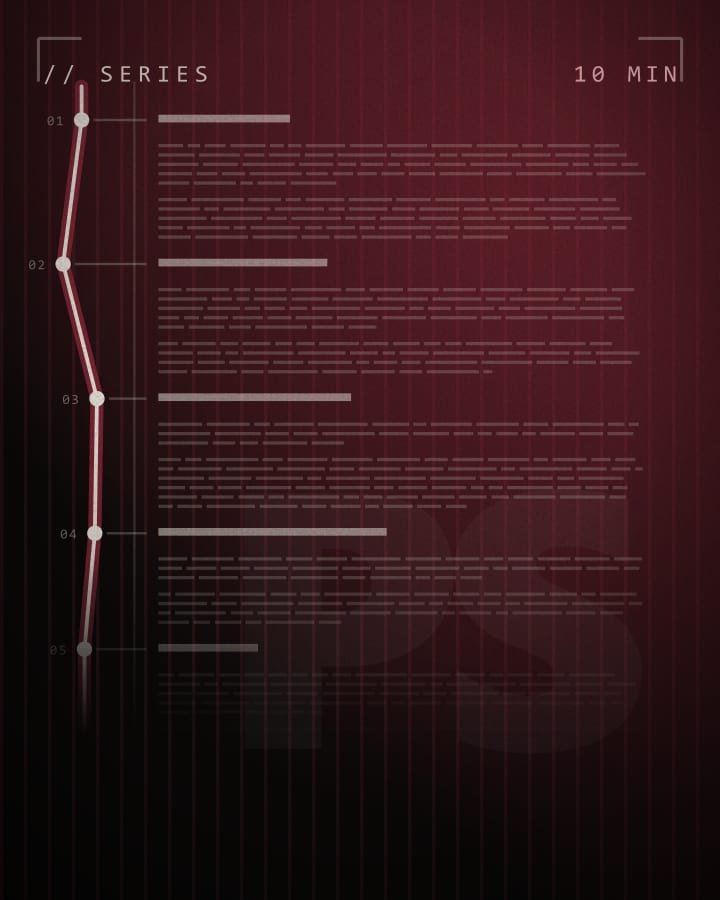
The hero saves the city. The villain gets the standing ovation. Think about the last story that truly gripped you — odds are it wasn't the square-jawed protagonist you were quoting the next day. It was the killer with the good manners, the schemer with the perfect plan, the outcast who finally stopped asking permission. We say we want good to triumph, yet we lean forward when evil speaks.
This isn't a moral failure. It's a predictable one. The same criminology that explains real offenders — why people break rules, how they justify it, and how society manufactures its own monsters — maps almost perfectly onto why fictional villains seduce us. Below are five reasons the bad guy keeps beating the hero for your attention, each one grounded in the theories we obsess over at KRIMINIS.
// 1 · The mirrorThe villain says what you won't
Every villain is a mirror held up to the desires you've agreed to bury. The colleague you resent, the rule you'd love to shatter, the revenge you'd never take — the villain takes it, on screen, so you don't have to. Psychologists have a word for this: the shadow, the disowned part of the self we project onto others. Fiction lets us visit it and come home clean.
That's why the most compelling villains rarely want anything alien. They want more of what we all secretly want — control, recognition, freedom from consequence. Their sin isn't desiring the forbidden thing. It's refusing to feel bad about it. We watch and think, with a small guilty thrill, I've felt that too.
The shadow self
We're drawn to characters who act on impulses we keep in a locked drawer. The villain isn't our opposite — he's the version of us with the lock removed. Recognition, not difference, is what makes the fascination uncomfortable.
Hannibal Lecter
Read Hannibal Lecter’s full case file · Psychopathy →
// 2 · The alibiBreaking the rules — with a ready-made excuse
There is a real pleasure in watching someone break a rule and get away with it. But raw transgression isn't enough — we need permission to enjoy it. Great villains hand us that permission through what criminologists David Matza and Gresham Sykes called techniques of neutralization: the little verbal tricks offenders use to silence their own conscience.
"They deserved it." "The system is corrupt anyway." "I had no choice." "Who am I really hurting?" These aren't excuses invented after the crime — they're the mental license that makes the crime possible beforehand. And screenwriters weaponize them. When a villain delivers a monologue about how the world forced his hand, he isn't just explaining himself. He's handing you the alibi for cheering him on.
The seduction of the neutralized crime
We don't excuse the villain. He excuses us — for wanting him to win.
This is also why villains who rob a rigged casino or torment a cruel boss are so satisfying. The story pre-loads the neutralization: the target had it coming. Strip that away — make the victim genuinely innocent and helpless — and the same actions curdle from thrilling to sickening. The pleasure was never in the harm. It was in the permission.
// 3 · The origin storyNobody is born a monster
Give us a villain's childhood and watch our judgment soften. The abused kid, the betrayal, the moment the world turned its back — suddenly the monster has a wound, and the wound has our sympathy. This is empathy hijacked, and it rests on one of criminology's most humane insights: monsters are made, not born.
Labeling theory argues that deviance isn't a fixed trait but a social process. Call someone a criminal often enough — arrest him, exclude him, treat him as irredeemable — and you help build the very identity you feared. The label becomes a prophecy. When a villain's backstory shows the world rejecting him first, we're watching labeling theory dramatized: society wrote "monster" on his file, and he finally decided to live up to it.
There's a structural version of this too. Anomie and strain theory holds that when a culture screams "succeed, win, dominate" but slams the legitimate doors shut, some people simply take the illegitimate ones. The villain who claws upward through crime isn't rejecting our values — he's pursuing them by the only route he was left. That's uncomfortably relatable, and relatability is the enemy of easy judgment.
Sympathy is a trap the story sets
- A wound converts a monster into a person — and we defend people.
- Labeling theory: society's rejection can build the criminal it dreads.
- Strain theory: blocked ambition explains crime without excusing it.
- Understanding is not the same as approving — but our feelings blur the line.
// 4 · The charmThe seduction of the high-functioning psychopath
Then there's a different, colder fascination — the villain who feels nothing and wins anyway. Hannibal Lecter's exquisite manners. Patrick Bateman's flawless surface. Joe Goldberg's soft, reasonable voice narrating unspeakable things. We're transfixed by the psychopath not despite the missing conscience but because of it.
Clinically, psychopathy describes a cluster of traits — superficial charm, grandiosity, manipulativeness, and a striking absence of guilt or empathy. In fiction, that absence reads as a superpower. The high-functioning psychopath is free of the anxieties that govern the rest of us: no shame, no hesitation, no 3 a.m. replaying of a mistake. He calculates coldly, acts decisively, and never flinches. Part of us envies that frictionless nerve.
That's exactly the engine behind Patrick Bateman in American Psycho, whose polished emptiness we can't stop staring into, and behind Joe Goldberg in You, who talks himself — and us — into believing his obsession is love. The charm is the trap. In real life it's how predators disarm victims; in fiction it's how they disarm the audience. We keep listening because they're so good at being listened to.
Charm without guilt
What we read as villainous magnetism is often the on-screen face of psychopathy: confidence uncoupled from conscience. It looks like freedom. It functions as camouflage — and we fall for it exactly as a real victim might.
// 5 · The safe seatCatharsis behind glass
Here's the reassuring part. You can adore a villain from your couch precisely because none of it can touch you. Fiction is a controlled experiment in darkness — a way to rehearse fear, rage, and forbidden desire with the exit door always in reach. Aristotle called it catharsis: the purging of emotion through spectacle. We feel the whole storm and step outside dry.
That safety is what separates our fascination from anything sinister. We're not endorsing murder; we're metabolizing the parts of ourselves we can't express at the office. The villain becomes a pressure valve. And when the credits roll, most of us feel a little lighter, a little more curious about the line between us and them — and a little grateful we watched from behind the glass.
So the next question isn't whether you love villains. You do; now you know why. The interesting question is which one you love, and what that says about the shadow you're carrying. The seducer? The avenger? The cold strategist who feels nothing? That's not just a preference — it's a fingerprint.
Find out where you land. Take our criminal profile test to discover which villain lives inside you, then dive into the full catalogue of theories and cases that explains the rest of the cast.
Why the bad guy wins
- The villain mirrors the desires we've agreed to repress.
- Techniques of neutralization hand us the alibi to enjoy the transgression.
- Origin stories trigger sympathy — labeling and strain theory made the monster.
- High-functioning psychopathy reads as freedom, but it's really camouflage.
- Fiction offers safe catharsis: all the storm, none of the consequences.
Follow the thread on KRIMINIS
- Psychopathy: charm, grandiosity and the missing conscience — teoria-psicopatia.html
- Labeling theory: how society builds the criminal it fears — teoria-etiquetamiento.html
- Techniques of neutralization: the alibi before the crime — teoria-neutralizacion.html
- Anomie & strain: when blocked ambition turns to crime — teoria-anomia.html
- Rational choice: the villain who calculates coldly — teoria-eleccion-racional.html
- Which villain is inside you? — quiz-en.html
// Quick challengeWhich theory best explains Hannibal Lecter?
Frequently asked questions
Why do we find villains more attractive than heroes?
Villains act on impulses most of us repress — control, rebellion, revenge — so they function as a mirror of our hidden shadow. They also break rules while handing us ready-made justifications (what criminologists call techniques of neutralization), which gives us permission to enjoy the transgression. Heroes reassure us; villains reveal us, and revelation is more magnetic than reassurance.
Does loving a villain mean something is wrong with me?
No. Being drawn to fictional villains is a form of safe catharsis — a way to explore fear, anger and forbidden desire with zero real-world consequences, always behind the glass of the screen. The fascination is about metabolizing repressed emotion, not endorsing harm. Tellingly, our sympathy collapses the moment a villain hurts a genuinely innocent victim, which shows the attraction was always about permission and understanding, never the cruelty itself.