Erik Killmonger vs Shinnok
Two villains, one criminological theory: Relative deprivation. We compare Erik Killmonger and Shinnok: their profile, how dangerous they are, and where they meet and part.

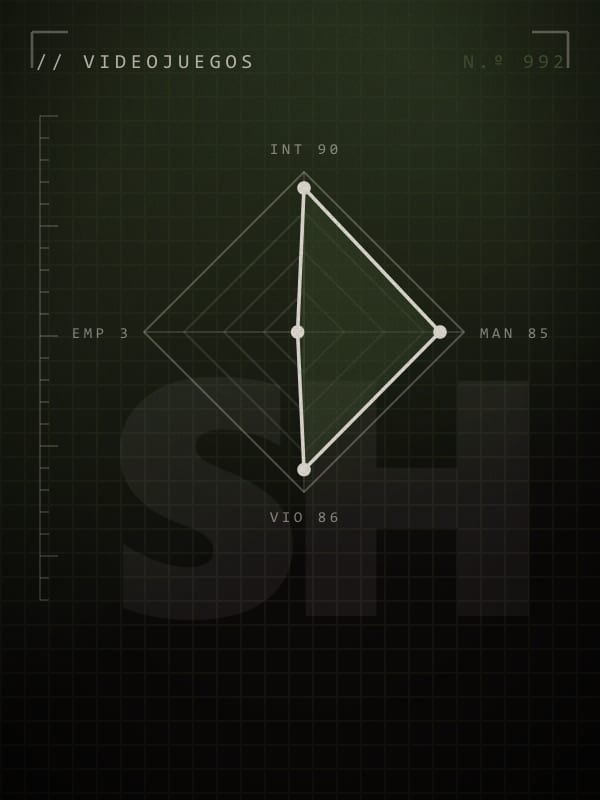
Erik Killmonger and Shinnok share neither a film nor a universe, but they share something deeper: the same criminological theory explains them, Relative deprivation. That makes their face-off more than a “who would win?”: it is the same mechanism of crime taking two different shapes. The biggest gap is in empathy: Erik Killmonger beats Shinnok by 37 points.
The face-off · criminal profile
On paper, the more dangerous one is Shinnok, with a danger index of 88/100 against 79. But paper isn’t everything.
The index weighs violence, manipulation and intelligence, and subtracts empathy (the colder, the more dangerous). It is a reading for debate, not a sentence: the theory matters more than the score.
Erik Killmonger
Shinnok
Why does the same theory explain both?
Origins, authors, criticism and the case studies in depth.
Read “Relative deprivation” →Frequently asked questions
Who is more dangerous, Erik Killmonger or Shinnok?
On the KRIMINIS danger index (violence, manipulation, intelligence and lack of empathy), Shinnok scores higher: 88 against 79 out of 100.
Which criminological theory explains Erik Killmonger and Shinnok?
The same theory sheds light on both: Relative deprivation. That is what makes this a revealing duel: two different embodiments of the same criminal mechanism.
How do Erik Killmonger and Shinnok differ?
The biggest gap is in empathy: Erik Killmonger beats Shinnok by 37 points.