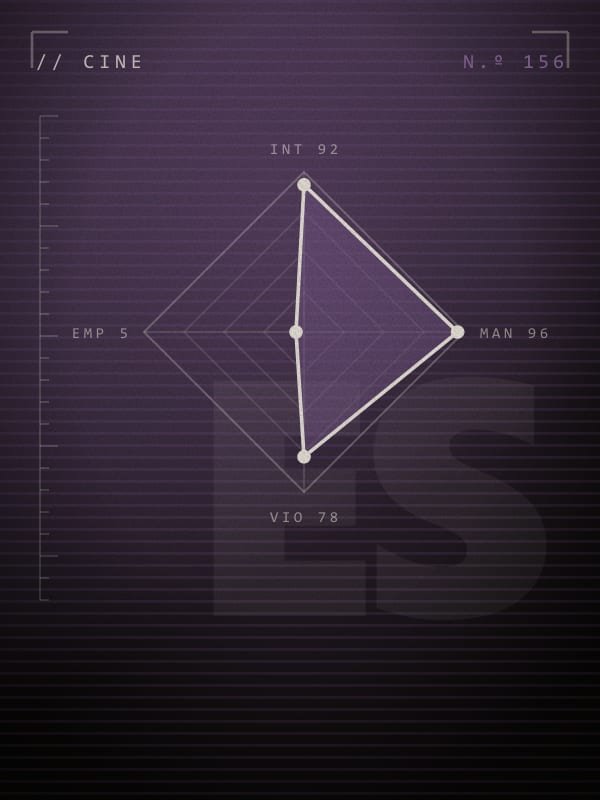
Sōsuke Aizen, captain of the Fifth Division of the Gotei 13 in Bleach, is the perfect traitor: for years he served with seemingly impeccable loyalty while plotting, underneath, to overthrow the entire order of the afterlife and seize the throne of the gods. What is fascinating for Elliott's integrated theory is not that he betrays, but how he came to do it: not from a single motive, but by walking the whole chain the model describes —a strain that erodes his bonds, broken bonds that leave him without brakes, and a deviant learning that he himself cultivates around him—. Aizen is the textbook integrated trajectory, walked from beginning to end.
// The theoryThe three stations of a betrayal
Elliott's integrated theory holds that one arrives at crime through a sequence: strain weakens conventional bonds, and broken bonds open the door to learning with deviant groups. Aizen walks the three stations with clockwork precision. First station, strain: Aizen despises the world he lives in —he judges it mediocre, ruled by absent kings and unworthy superiors—, and that contempt is a deep frustration, that of a brilliant being who feels trapped in an order he considers far beneath him. Second station, the breaking of bonds: that strain corrodes his loyalty to the Gotei 13 until it is pulverized; the ties that should restrain him —duty, camaraderie, the oath— become, for him, the chains of a despicable world, and by breaking them he is left available for anything. Third station, deviant learning: instead of joining a deviant group, Aizen manufactures one —he gathers around him subordinates and allies who reinforce his view of himself as a god above all law—, creating the environment that consummates and legitimizes his crime. The whole chain, link by link.
The one who cannot find a deviant group creates one
Aizen illustrates a sophisticated nuance of integrated theory. In the classic model, the unbonded person finds a deviant group that teaches them to offend. Aizen reverses the order: too superior to submit to any existing group, he builds his own. He recruits, manipulates and molds an entourage —the arrancar, his allies, his pawns— whose function is precisely the one the model assigns to deviant peers: to reinforce his definition of the world, to applaud his vision, to normalize what he is planning. Social learning works in both directions: Aizen does not learn from his group, but he needs his group to reflect his greatness back at him to sustain his delusion. It is proof that the «deviant group» link does not always pre-exist the villain; sometimes the villain tailors it to measure, because even one who believes himself a god needs the faithful to confirm his divinity. The lesson: when someone with strain and without bonds also has charisma and power, he does not look for a gang —he founds one—.
Get the map of theories for free
Subscribe to the criminal archive —one case a week, no spam— and I'll send you The map of theories: the great currents of criminology on a single sheet.
// The subjectLoyalty as a disguise for the break
What makes Aizen so unsettling is that the breaking of his bonds happened long before anyone noticed it. For years he displayed the most exemplary loyalty in the Gotei 13 —kind, helpful, respected— while inside he had already broken with everything. Integrated theory usually imagines the breaking of bonds as something visible: the youth who drops out of school, who breaks with his family. Aizen shows the most dangerous version: the inner and hidden break, that of one who keeps every appearance of the bond long after having annihilated it from within. His courtesy was not a bond, it was its negation in disguise. That is why he was impossible to prevent: he gave none of the external signs the model allows us to detect. Aizen thus teaches the limit of observation: there are trajectories that walk the chain in silence, and by the time the crime erupts, the entire sequence —strain, break, group— has already completed in plain sight without anyone seeing it.
Sōsuke Aizen
// The crackNeither a genius without cause, nor a victim of his sequence
The crack with Aizen has two faces. The first is to admire him as a genius of evil arisen from nowhere, a master chess player with no history —which erases the trajectory that made him and turns him into an inexplicable mystery instead of the product of a chain that can be analyzed—. The second, the opposite, is to use that chain as an alibi: «the strain pushed him, the break freed him, power corrupted him, he couldn't help it». Both fail. Aizen is not a genius without cause: he walked a recognizable sequence that integrated theory lets us trace step by step. But neither is he a victim of that sequence: at each station —in despising the world, in breaking his loyalty, in manufacturing his entourage— there was a choice, and many with less power and more frustration never betrayed anyone. Explaining Aizen's trajectory does not excuse him; on the contrary, it reveals how many times he chose to advance to the next link when he could have stopped.
The honest reading holds both truths: Aizen is understandable —his villainy has a genesis, it is not magic— and he is responsible —that genesis was a series of decisions, not a destiny—. Understanding how the perfect traitor was manufactured is not forgiving him, but learning to recognize the chain before it completes itself in others.
Seeing the chain in order to cut it
Aizen matters because he shows the practical use of thinking of crime as a sequence and not as a single cause. If we see him only as «a traitor», there is nothing to do but lament it. But if we see the chain —the strain of contempt, the silent breaking of loyalty, the manufacture of the reinforcing group— the cut points appear: moments where an intervention (addressing the strain, strengthening the bond, dismantling the group) could have stopped the process. Integrated theory turns the villain from an inexplicable mystery into an analyzable trajectory, and that is what makes it powerful: you cannot prevent what you do not understand, and the only way to keep another Aizen from arising is to learn to read the sequence that produced him while it is still half-walked. Seeing the chain is the first step to cutting it.
Three key ideas
- Sōsuke Aizen walks the entire chain of integrated theory (Elliott): the strain of contempt for a mediocre world erodes his loyalty (bond), the broken loyalty leaves him without brakes, and he manufactures the group that reinforces his god delusion. The textbook sequence, from beginning to end.
- He reverses one link: instead of finding a deviant group, he creates one —he recruits an entourage whose function is to reinforce his vision—. And he breaks his bonds from within long before showing it: the exemplary loyalty was the disguise of a break already consummated.
- Neither a genius without cause (his villainy has a traceable genesis) nor a victim of his sequence (at each link he chose to advance). Seeing the chain lets us locate the cut points: explaining the trajectory does not excuse, it reveals where he could have stopped.
Sources · further reading
- Elliott, D. S., Huizinga, D., & Ageton, S. S. (1985). Explaining Delinquency and Drug Use. Sage.
- Akers, R. L. (1998). Social Learning and Social Structure. Northeastern University Press.
- Hirschi, T. (1969). Causes of Delinquency. University of California Press.
Case-file questionsFrequently asked questions
¿Quién es Sōsuke Aizen?
Sōsuke Aizen («—») es un villano de Bleach, analizado en KRIMINIS con la lente de la criminología. He did not betray for one reason.
¿Por qué Sōsuke Aizen (—) se convierte en villano?
Sōsuke Aizen and integrated theory: the strain of contempt broke his loyalty, the broken loyalty left him without brakes, and he himself manufactured the group that reinforced his god delusion. The complete sequence, from beginning to end.
¿Qué teoría criminológica explica a Sōsuke Aizen?
El caso de Sōsuke Aizen se analiza desde la Patrón Interactivo Integrado. Integrated theory (Elliott) chains together strain, the breaking of bonds and deviant learning. Sōsuke Aizen, of Bleach, walks the entire sequence: the strain of despising a world and superiors he judges unworthy erodes his loyalty until it breaks; with no bonds to restrain him, he is left available for crime; and then he manufactures around himself a circle of subordinates who reinforce his vision of a god above the law. A textbook integrated trajectory.