Reggie Star, a sorcerer in the Culling Game arc of Jujutsu Kaisen, does not fight like the fanatics or the monsters around him. He fights like a broker. His cursed technique lets him turn any object into a weapon —but only through receipts: he must pay for the object first, and the receipt materializes what he bought, at a scale proportional to the price. On top of that, he manipulates the binding vows of the game itself —the rule-bound contracts that govern the whole arena— the way a sharp attorney reads a contract: looking for the clause everyone else skipped. For the Economic Model of Crime, Reggie is an almost laboratory-pure specimen: an offender who does not act out of passion or compulsion, but treats every move as a transaction with a cost, a benefit and a risk. He is the calculating criminal —and that, paradoxically, is what makes him the easiest to deter and the most honest mirror of a theory we would rather not admit applies to us.
// The theoryCrime is not a pathology, it is a decision
In 1968, economist Gary Becker published «Crime and Punishment: An Economic Approach» and broke with a century of thinking that treated the criminal as sick, broken or possessed. His thesis was disarmingly simple: for a large share of offenses, the person offends because it pays. A rational agent compares the expected benefit of the crime with its expected cost, and that cost is not a fixed number: it is the probability of being caught multiplied by the severity of the punishment, plus the opportunity cost —everything he gives up by not choosing the legal path. Crime, in this reading, is one option in a portfolio, not a symptom. It follows that if you want less of it, you do not moralize: you change the numbers —raise the odds of getting caught, alter the payoff, improve the legal alternatives.
The idea was refined rather than discarded. Derek Cornish and Ronald Clarke, in The Reasoning Criminal (1986), tempered Becker's perfect calculator into a more realistic bounded one: the offender reasons, but with limited information, under pressure and about very specific decisions —this house, tonight, this target— rather than about crime in the abstract. And Daniel Nagin (2013), reviewing decades of evidence, drew the practical lesson that matters most: what deters is not the harshness of the punishment but its certainty. The credible perception of being caught changes behavior; piling on years of sentence, for someone who bets on not being caught at all, barely moves the equation. The calculating offender fears the odds, not the theatre of severity.
The offender responds to incentives
The core of the Economic Model of Crime is that the criminal is a decision-maker, and a decision-maker can be moved by changing the terms of the decision. Reggie makes this literal: his power runs on money —no payment, no weapon— and his leverage runs on rules —he wins by exploiting the binding vows others treat as sacred. He does not break the game; he reads it better than anyone and turns its own clauses into blades. That is exactly Becker's agent: someone for whom the crime is a line in a ledger. And it carries a hopeful corollary, one that separates this figure from the impulsive killer or the true believer: a calculator can be deterred. Raise the probability of a real consequence and his math changes on its own. He is not chasing catharsis or a cause; he is chasing a margin. Close the margin and the behavior recedes —no conversion required.
Get the map of theories for free
Subscribe to the criminal archive —one case a week, no spam— and I'll send you The map of theories: the great currents of criminology on a single sheet.
// The subjectThe lawyer-scammer who priced every move
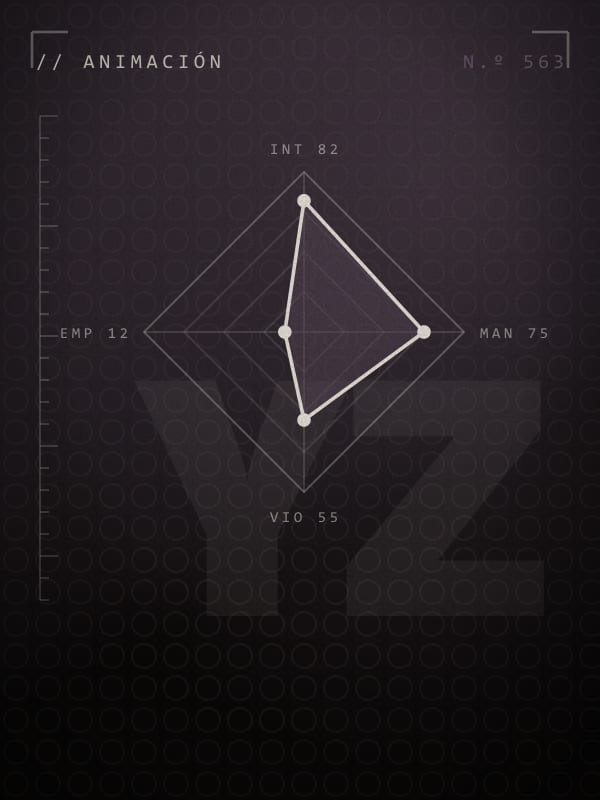
What makes Reggie revealing is that he is the opposite of the crimes we usually imagine. He shares the Culling Game arc with Hiromi Higuruma, another lawyer-sorcerer, but the two are mirror images: Higuruma is the exhausted moralist who ends up judging and executing, while Reggie is pure cold commerce, without a cause to redeem him or a grievance to explain him. His whole style is transactional. The receipt technique forces him to spend to strike, so he is constantly doing cost-benefit arithmetic: is this object worth the price for the damage it will do? He treats the rules of the game not as constraints but as a contract to exploit, hunting for the loophole, the technicality, the binding vow whose wording can be turned against its author. He is, in short, the reasoning criminal of Cornish and Clarke made flesh: bounded, opportunistic, focused on the concrete play in front of him, indifferent to anything that does not affect the balance sheet. His low empathy is not the point —plenty of calculators feel things— the point is that feeling never enters the equation. For him, the crime is a business, and business has no room for rage.
Reggie Star
// The flawNot every crime is a calculation, and explaining the math is not endorsing it
The crack in the model is the same one that makes it powerful: it assumes the offender calculates, and not every offender does. Crimes of passion, expressive violence, addiction-driven acts, offenses committed by people who never weigh consequences because the future barely exists for them —none of these fit the neat ledger. Treating all crime as rational commerce leads to two mistakes. The policy mistake is the seductive leap to maximum severity: if crime is a price, raise the price to the sky. But Nagin's evidence says the opposite —severity is a blunt lever, certainty is the sharp one— and the death-penalty and mass-incarceration record confirms it. The moral mistake is subtler: reading Reggie's logic so sympathetically that his cold competence starts to look like a defense. To explain is not to excuse. Showing that Reggie offends because it pays him tells us how to stop him; it says nothing about whether what he does is right. A rational crime is still a crime, and the victims are no less harmed for having been harmed efficiently. And Becker's map, for all its power, is a partial one: best where offenders reason, weakest where they do not —which is why the pure calculator Reggie is the exception that clarifies the rule.
Deterrence works on those who respond to incentives
Reggie matters because he embodies the offender the Economic Model was built for, and he shows both its strength and its limit. The strength: with a calculator, you do not need to reform his soul or win an argument —you change the incentives. Raise the certainty of consequence and his own arithmetic does the work; this is why visible, credible enforcement deters more than draconian sentences, a finding Nagin drove home for the twenty-first century. The limit: the model only grips where reasoning grips. It has little to say to the impulsive, the compelled or the desperate, and it can be twisted into an alibi for cruelty —«make the price unbearable»— that the evidence does not support. The mature use of Becker is surgical: apply the cost-benefit lens to the crimes that are actually chosen, invest in certainty over severity, and never confuse understanding the offender's math with agreeing with his conclusion. Reggie can be stopped by good incentives. He should still be stopped.
Three key takeaways
- Reggie Star embodies Becker's Economic Model of Crime: the offender as a rational agent who weighs the benefit of the crime against its expected cost —probability of being caught times severity of punishment— plus the opportunity cost of the legal path. His receipt-and-contract technique and his exploiting of binding vows make the crime literally a transaction.
- Because he responds to incentives, he can be deterred —and the evidence (Nagin) says what deters is the certainty of consequence, not its severity. Against a calculator, changing the odds beats moralizing or piling on sentence.
- To explain is not to excuse. The model is a partial map: it grips where offenders reason and fails where they do not (passion, compulsion, desperation), and it must never be twisted into an alibi for maximum cruelty. Understanding Reggie's math is how you stop him, not a verdict that he was right.
Sources · further reading
- Becker, G. (1968). «Crime and Punishment: An Economic Approach». Journal of Political Economy 76(2).
- Cornish, D. & Clarke, R. (1986). The Reasoning Criminal. Springer.
- Nagin, D. (2013). «Deterrence in the Twenty-First Century». Crime and Justice 42(1).
- Becker, G. S. (1976). The Economic Approach to Human Behavior. University of Chicago Press.
Case-file questionsFrequently asked questions
¿Quién es Reggie Star?
Reggie Star es un villano de Jujutsu Kaisen, analizado en KRIMINIS con la lente de la criminología. He does not kill out of rage or pleasure: he signs.
¿Por qué Reggie Star se convierte en villano?
Reggie Star and Gary Becker's Economic Model of Crime: the criminal as a rational agent weighing cost against benefit. A lawyer-sorcerer who turns objects into weapons through receipts and exploits binding vows like clauses.
¿Qué teoría criminológica explica a Reggie Star?
El caso de Reggie Star se analiza desde la Modelo Económico del Crimen. The Economic Model of Crime (Becker, 1968) holds that the offender is neither sick nor possessed, but a rational agent who compares the expected benefit of the crime with its expected cost —the probability of being caught multiplied by the severity of punishment— and the opportunity cost of law-abiding alternatives. Reggie Star, a sorcerer in the Culling Game of Jujutsu Kaisen, embodies that figure almost in its pure state: he turns objects into weapons through receipts and contracts, and exploits the game's own binding vows like a lawyer reading the fine print. Everything is transaction, margin and clause. His figure illuminates the power of the model —deterrence works on someone who responds to incentives— and its crack: not all crime is calculated, and explaining the logic of the calculation is not blessing it.