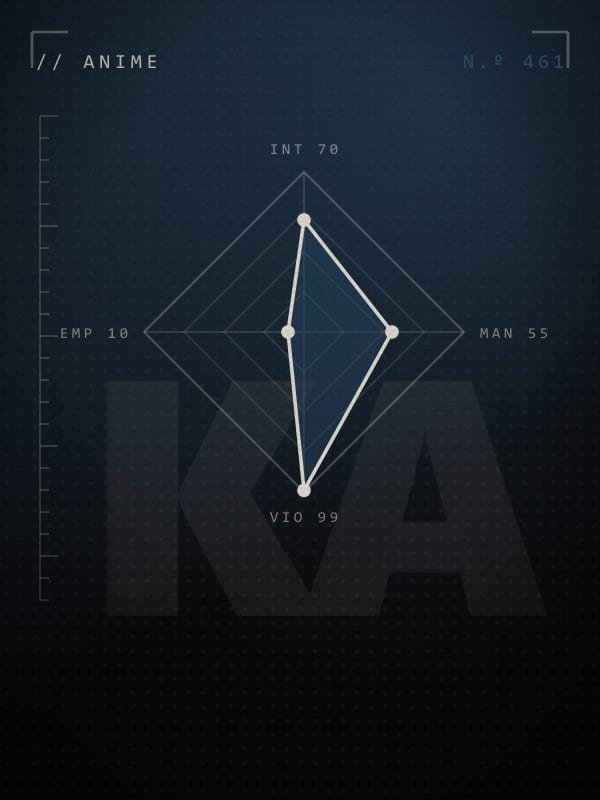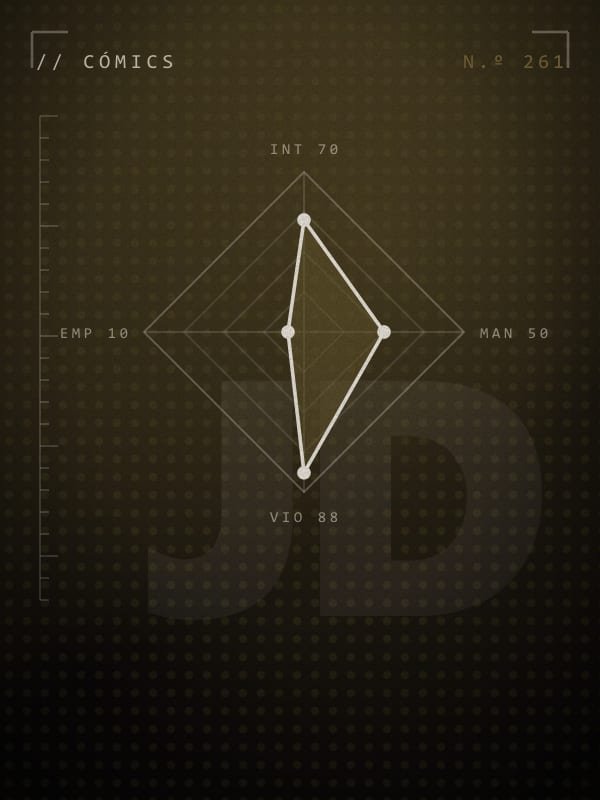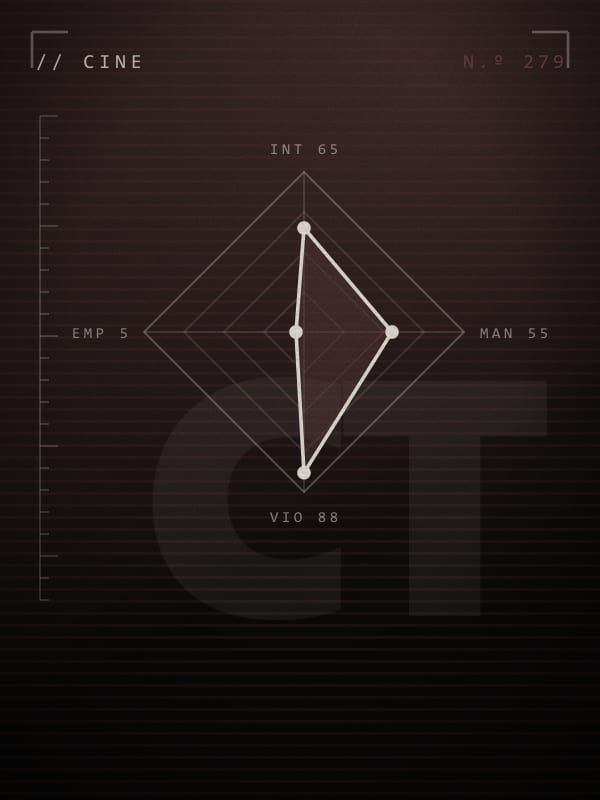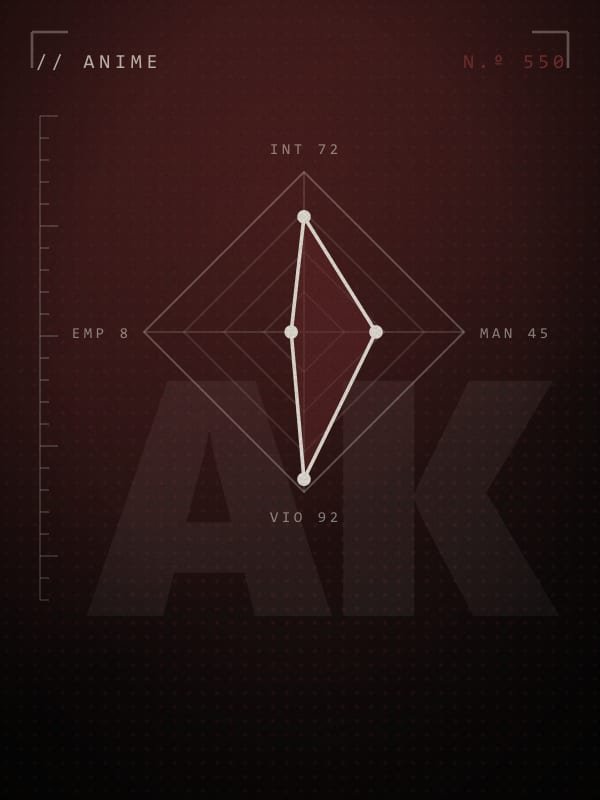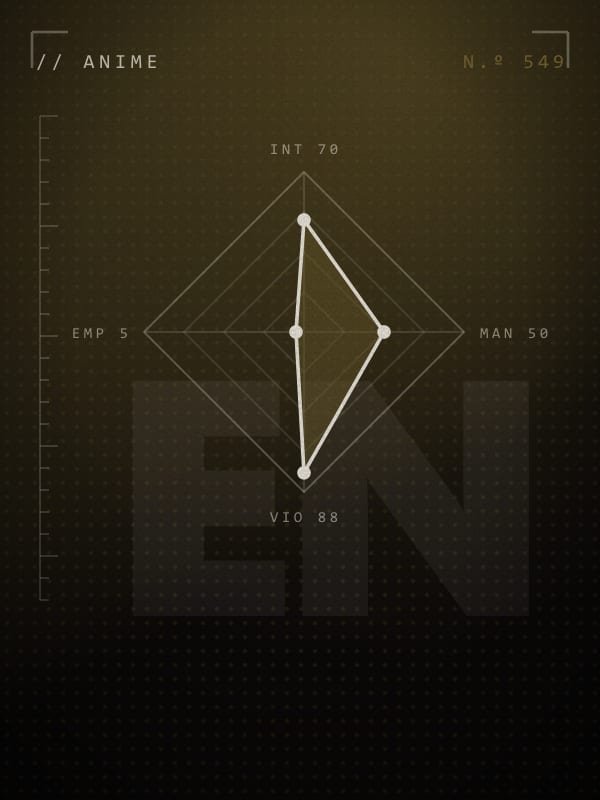
Enel, the man who proclaims himself god of Skypiea in One Piece, rules an entire sky from a simple and terrifying premise: he stands above everything and everyone. With the power of lightning he can strike down anyone in an instant, and with his "Mantra" —a perception that lets him hear what happens and what is thought for miles around— he turns total surveillance into permanent judgment. There is no defined offense, no accusation, no defense: there is a divine will that decides, at every moment, who lives and who burns. For critical criminology, Enel is not just a cruel villain; he is the illustration of an uncomfortable thesis —that unchecked power does not make exceptions, it redefines what counts as crime so that its own acts never do—.
// The theoryWhoever writes the law almost never ends up in a cell
Critical criminology flips the board. Where almost every theory asks "why does the individual offend?", it asks something else: who decides what a crime is, who writes the law, who enforces it and why the powerful almost never set foot in a cell. Its object of study is not crime as such, but criminalization. Willem Bonger (1916) tied crime to economic structures; George Vold (1958) showed that the law is the spoils of a struggle between groups —the winner criminalizes the loser—; and Richard Quinney, in The Social Reality of Crime (1970), put it bluntly: crime is not a quality of the act, but a definition imposed by whoever has the power to make it stick. In 1973, Taylor, Walton and Young called for a "new criminology" that looked upward, not only downward. The formula that sums up the school is brutal in its clarity: power writes and enforces the law, and with it criminalizes the weak and absolves the powerful. You can read the full theory in Critical criminology.
Crime is defined by whoever rules
Enel embodies the central thesis of critical criminology with almost laboratory clarity: when a single person writes the law, enforces it and judges himself, the category of "crime" stops protecting anyone and starts protecting his dominion. In Skypiea, the crime is not the summary execution nor the banishment of entire peoples to drift away —that is "order"—; the crime is resisting. Whoever disputes his divinity is a heretic; whoever sets foot on his island without permission is an intruder to be exterminated; whoever survives his judgment is an anomaly to be corrected. The violence of the powerful cloaks itself in legality —he is legality— while any gesture from the weak is reclassified as a threat. That is why critical criminology insists on looking upward: the greatest harms rarely carry the label of "crime", because they are committed precisely by whoever has the power to decide what does. Enel does not break his law: his law exists so that he can never break it.
Get the map of theories for free
Subscribe to the criminal archive —one case a week, no spam— and I'll send you The map of theories: the great currents of criminology on a single sheet.
// The subjectThe god complex as an alibi
What defines Enel is not cruelty, but indifference. He does not hate his victims; he simply does not regard them as subjects with a right to exist before him. His "god complex" works as the perfect moral alibi: if he is a god, he answers to no man, just as no one asks a storm for explanations. That self-proclamation is not a harmless delusion —it is a device of power—. It lets him treat the suffering of others as irrelevant (what is the life of a mortal against the eternal?), dissolve all responsibility (what he does is not murder, it is "divine judgment") and erase in advance any body that might hold him to account (who judges a god?). Critical criminology would recognize here the most dangerous mechanism of all: not brute force, but the narrative that legitimizes force. Enel kills with lightning, but he rules with theology. Mantra completes the picture: absolute surveillance turns every inhabitant of the sky into a permanent suspect, judged not for what he does, but for what he thinks. It is the dream of all power that answers to no one —to see everything, punish anything, explain nothing—.
Enel
// The crackPower explains the crime, it does not excuse it
The crack with Enel is twofold. The first is the temptation to dissolve his responsibility into the structure: to say that "the system of Skypiea" made him possible and, with that, to lessen his personal guilt. Critical criminology does not say that. It analyzes structures precisely to pin down responsibility more sharply, not less: understanding that Enel could criminalize at will because no one above him held him to account does not turn him into an innocent cog, but into the agent who exploited and perfected that impunity. To explain is not to exonerate. The "god complex" describes his alibi; it does not validate it. The second crack is the opposite: to stop at "Enel is a unique monster" and fail to see what the theory underscores —that his tyranny was only possible because an entire architecture of power (an army of priests, a conquered country, a cultivated fear) authorized and obeyed it—. Reducing him to an anomaly reassures us, but it blinds us to what matters: the Enels do not reign alone, but over systems that normalize their impunity long before the first bolt falls.
The honest reading holds both things at once. Enel is fully responsible —for every execution, for every people banished into the void, for every life treated as fuel for his glory—. And his crime is also that of an order that taught an entire sky to confuse power with divinity, and obedience with virtue. The memory that matters here is not that of the god who believed himself untouchable, but that of those his power tried to erase: the inhabitants of Skypiea and the peoples of the sky whom he denied, with no law but his whim, even the right to exist.
Watching the one who answers to no one
Enel matters because he teaches us to read crime in its most uncomfortable place: at the top. Critical criminology insists that the greatest harms —those of the one who holds power— tend to fall outside the penal code, not because they are lesser, but because they are defined by whoever commits them. Every time a structure grants someone the right to rule, judge and punish with no one above to hold them to account, the scaffolding from which the Enels emerge is being built. The lesson is not to wait for the tyrant who thinks himself a god, but to recognize the absence of counterweights while it is still reversible: in the one who surveils without limit, in the one who confuses his will with the law, in the one who calls "order" what is only his fear imposed on others. A decent society is not measured by how it topples the god once the sky already thunders, but by whether it knew to hold him to account long before —when he was still "only" the one in charge—.
Three key takeaways
- Enel embodies critical criminology (Bonger, Vold, Quinney): crime is defined by whoever has the power to impose the definition. As the self-proclaimed god of Skypiea, he writes the law, enforces it and judges himself, so that his violence never counts as crime.
- The "god complex" is not a harmless delusion but an alibi: it dissolves his responsibility, renders the suffering of others irrelevant and erases any body able to hold him to account. Mantra turns total surveillance into permanent judgment.
- To explain is not to exonerate. Understanding that Enel could abuse because no one held him to account pins down his responsibility more sharply and forces us to look at the structure that authorized him. The memory is for his victims, not for the tyrant who believed himself untouchable.
Sources · further reading
- Quinney, R. (1970). The Social Reality of Crime. Little, Brown.
- Taylor, I., Walton, P. & Young, J. (1973). The New Criminology. Routledge & Kegan Paul.
- Vold, G. B. (1958). Theoretical Criminology. Oxford University Press.
- Bonger, W. (1916). Criminality and Economic Conditions. Little, Brown.
Case-file questionsFrequently asked questions
¿Quién es Enel?
Enel es un villano de One Piece, analizado en KRIMINIS con la lente de la criminología. He heard every thought, judged without trial and executed with a bolt of lightning.
¿Por qué Enel se convierte en villano?
Enel and critical criminology: when the one who rules writes the law, enforces it and decides who is a criminal, unchecked power stops being government and becomes crime. The "god complex" as the perfect alibi.
¿Qué teoría criminológica explica a Enel?
El caso de Enel se analiza desde la Criminología crítica. Critical criminology (Bonger, Vold, Quinney) shifts the question from "why does the weak person offend?" to "who defines crime, and why does the powerful almost never answer for it?". Enel, the self-proclaimed god of Skypiea in One Piece, takes that indictment to the extreme: he monopolizes the law, criminalizes the mere existence of his subjects and places himself beyond all accountability thanks to absolute power —lightning and Mantra— and a divine narrative that turns every abuse into "the will of god". The case shows the critical thesis in its purest form: the crime of the powerful is not the one the law pursues, but the one the law, written by him, never even gets to name.