Nearly every theory in this archive asks the same question —why does someone become a criminal?— and answers with a cause: genes, poverty, lack of self-control, bad bonds. The interactional theory of Terence Thornberry (1987) breaks with that one-way logic of cause and effect. Its thesis is more unsettling and more real: social bonds and deviant behavior cause one another over time. A weak bond makes deviant behavior easier; deviant behavior weakens the bond further; and that now more fragile bond opens the door to more deviance. It is not an arrow, it is a loop. Crime stops being a state one has or lacks, and becomes a trajectory that worsens —or reverses— with each turn of the spiral.
Dynamic and interactional control at a glance
- Author
- Terence Thornberry (with Marvin Krohn)
- Year / era
- 1987
- Family
- Integrative
- Idea
- Bonds and deviant behavior cause one another in a spiral
Weak bond ⇄ deviant behavior (a loop that feeds itself over time)// OriginThornberry and crime as a process
In 1987, criminologist Terence Thornberry published “Toward an Interactional Theory of Delinquency,” a synthesis that combined two traditions that until then had turned their backs on each other: control theory (which says delinquency appears when bonds to society —family, school, conventional values— weaken) and social learning theory (which says deviant behavior is learned from deviant peers). Thornberry observed that both were true, but that neither captured the essential thing: time and reciprocity. Weak bonds do not just cause delinquency; delinquency also erodes bonds. An adolescent who starts to offend drifts away from parents and teachers, who in turn control him less, which lets him offend more, which drives him further away still. Cause becomes effect and effect becomes cause, round after round.
Thornberry called it a dynamic and reciprocal model. Dynamic because it changes over time: the factors that matter at 12 are not the same as at 17 or 25 —family weighs in childhood, peers in adolescence, work and a partner in adulthood—. And reciprocal because the variables influence one another in both directions, forming what he described as a spiral that feeds itself. This idea connects directly with life-course criminology (Sampson and Laub) and with theories of attachment and desistance: all share the conviction that crime is not a fixed photograph but a film —a trajectory that can worsen or reverse depending on how bonds are weakened or rebuilt—.
The spiral that feeds itself
The heart of interactional theory is the feedback loop. Picture deviant behavior and social bonds as two pans of a scale joined by a cord: when one drops, it pulls the other. A first step toward deviance —a lie, a small crime, a betrayal— weakens a bond (the family’s trust, one’s reputation, one’s own self-respect). That weakened bond reduces the brake that held back the next step, which now feels easier. And that second step weakens the bond further still. Each turn of the spiral is not independent: it inherits the momentum of the last and passes it on, amplified, to the next. That is why corruption is rarely a leap —from good to evil in an instant—; it is almost always a gradual descent, in which each step makes the next seem smaller than it is. The good news is that the spiral works both ways: rebuilding a bond —recovering an affection, a purpose, a loyalty— can halt the fall and start an ascending spiral. The trajectory is not sealed; it can be reversed.
The spiral, turn by turn
- 1Weak bondA fragile tie to family, school or norms leaves little brake
- 2First stepThe bond’s weakness makes a deviant act easier
- 3ErosionThat act weakens the bond that could have stopped it even more
- 4FeedbackThe even more fragile bond makes the next step easier
- 5TrajectoryThe spiral gains inertia and worsens —or reverses if a bond is rebuilt—
The loop works both ways: recovering an affection, a job or a purpose can start an ascending spiral.
// In fictionFive falls in Middle-earth
No work has portrayed corruption as a dynamic process better than The Lord of the Rings. The One Ring itself is a spiral machine: it turns no one evil all at once, but erodes bonds little by little, and each step toward darkness makes the next one easier. Sméagol is the purest case: Sméagol murders his friend Déagol for the Ring in the first minute he sees it, and from there his trajectory is a centuries-long downward spiral —the Ring isolates him from his kin, the isolation makes him depend on the Ring more, until his own identity splits into two voices—. —, the white wizard, falls from the highest place: his study of the enemy in order to fight him becomes, turn by turn, admiration, then imitation and finally betrayal —each concession to Sauron’s power weakened his loyalty to the good and eased the next one—.
—, the steward of Gondor, shows the spiral of disillusion: his vigil against Sauron through the palantír fills him with despair, despair erodes his judgment and his love for his sons, and the eroded judgment drags him into madness and the attempt to murder his own son. Wormtongue, Wormtongue, embodies corruption by dependence: each venomous whisper into King Théoden’s ear binds him more tightly to Saruman, and that bondage demands worse whispers of him. And — is the luminous exception that proves the rule: his desire to use the Ring “for good” drags him into trying to seize it from Frodo —a step down the spiral—, but he reverses the trajectory: horrified, he redeems himself by dying to protect the hobbits. Boromir shows the other face of the theory: the spiral can be halted, and the broken bond can be repaired.

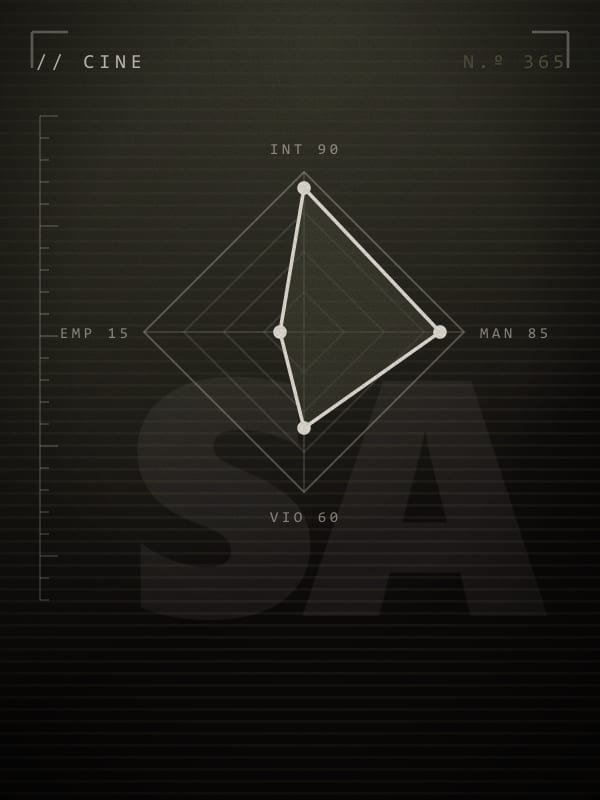



From Gollum’s centuries-long descent to Boromir’s redemption: five trajectories of corruption as a process, not a switch. Tap to open their case file.
// The other directionThe spiral rises too
What makes interactional theory valuable is not only explaining why people fall, but why they sometimes rise. If deviant behavior and weak bonds feed one another downward, conventional behavior and strong bonds feed one another upward. Recovering a tie —a stable job, a partner, a purpose, someone’s trust— reduces deviance, and that reduction strengthens the tie further, starting an ascending spiral. It is exactly what the criminology of desistance observes in real trajectories: most of those who offend in adolescence stop in adulthood, not because “their nature changes,” but because new bonds reorganize their lives. Boromir does it in an instant; Gollum came close —there was a moment, on the stairs of Cirith Ungol, when Frodo’s affection almost reversed centuries of spiral— and his relapse, triggered by Sam’s distrust, shows how fragile that turn is. The lesson is twofold: corruption is a process, and for that very reason it is, in principle, reversible.
// The flawThe process does not erase responsibility
The great flaw of reading corruption as a spiral is sliding toward exculpation: “it wasn’t him, it was the Ring,” “the trajectory dragged him along,” “each step made the next inevitable.” Interactional theory describes a powerful mechanism, but to explain is not to excuse. That corruption is gradual does not mean it is involuntary: at every turn of the spiral there was a choice —Sméagol chose to kill Déagol, Saruman chose to bargain with Sauron, Denethor chose to look into the palantír, Gríma chose each whisper—. The value of the theory is precisely to illuminate where those choices lie: not in a single great heroic moment of resistance, but in the thousand small steps, each of which seemed minor and none of which was inevitable. The other flaw, the opposite one, is the simplistic moralism that sees only the outcome —“a monster”— and not the process, thereby losing all capacity for prevention. If you do not understand how one descends step by step, you cannot help anyone avoid the first one.
Boromir is the ethical compass of this archive of villains: he falls and he rises, and his fall does not condemn him nor does his redemption erase his fault —both are true at once—. That is the honest gaze interactional theory demands: to see the whole trajectory, with its choices and its possibility of a turn, without reducing anyone either to their worst moment or to a passive victim of a spiral.
The dynamic turn of criminology
Thornberry’s interactional theory marked a before and after by introducing time and reciprocity into the study of crime, breaking with static single-cause models. It rested on the Rochester Youth Development Study, an ambitious longitudinal study, and became one of the cornerstones of the life-course criminology that dominates the discipline today, alongside the work of Sampson and Laub.
- 1987Thornberry publishes “Toward an Interactional Theory of Delinquency” in Criminology.
- 1988The Rochester Youth Development Study begins, the model’s empirical base.
- 1993Sampson and Laub publish Crime in the Making: life-course criminology crystallizes.
- 2005Thornberry and Krohn extend the model to continuity and change in antisocial behavior.
// Why it mattersIntervene before the last turn
Interactional theory matters because it changes the goal of prevention. If crime were a fixed state caused by one variable, it would be enough to correct that variable. But if it is a dynamic spiral, what matters is intervening in time, in the first turns, while bonds are still warm and not frozen. Every turn allowed to pass makes the next harder to halt: that is why effective programs act early —reinforcing family attachment, school rootedness, purpose— before the negative feedback gains inertia. And when the fall is already advanced, the theory teaches that there is still a way out: not by denying what happened, but by rebuilding a single bond that can start the reverse spiral. A job, a relationship, a recovered affection can do for a trajectory what no punishment achieves.
Middle-earth says it in its own way. Gollum is lost because no one rebuilds in time the bond the Ring tore from him; Boromir is saved because love for his companions returns, at the last instant, to outweigh power. Between those two fates lies all of life-course criminology: the conviction that no fall is wholly inevitable while a tie remains to be repaired, and that corruption, being a process, is never completely irreversible until the very end.
Lights and shadows
- It captures something the single-arrow models ignored: the reciprocity between bonds and behavior over time.
- It is dynamic: it recognizes that the factors that weigh at 12 (family) are not those that weigh at 17 (peers) or at 25 (work, partner).
- It explains both the fall and desistance: the spiral rises too, and that guides intervention.
- It teaches us to intervene early, in the first turns, before the feedback gains inertia.
- Its complexity —reciprocal loops among many variables— makes it hard to test and to refute cleanly.
- By describing an almost automatic spiral, it can slide toward exculpation (“the trajectory dragged him along”).
- It requires costly, prolonged longitudinal data that few studies can assemble.
- It does not fully specify what rebuilds a bond, nor why some turns catch and others (like Gollum’s) fail.
Three key takeaways
- Interactional theory (Thornberry, 1987): social bonds and deviant behavior are not cause and effect in one direction, but cause one another over time. Crime is not a fixed state but a dynamic trajectory that worsens —or reverses— in a loop that feeds itself.
- Corruption is a spiral, not a switch: each step toward darkness weakens a bond, and the weakened bond makes the next step easier. That is why it is almost always a gradual descent, in which no step seems decisive —but the spiral rises too: rebuilding a bond can reverse the trajectory—.
- Explaining the process does not excuse it: at every turn of the spiral there was a choice. The theory teaches us to intervene early, in the first turns, and that no fall is wholly irreversible while a tie remains to be repaired. Boromir falls and redeems himself; Gollum descends for centuries because of a bond no one rebuilt in time.
Sources · further reading
- Thornberry, T. P. (1987). «Toward an Interactional Theory of Delinquency». Criminology, 25(4).
- Thornberry, T. P. y Krohn, M. D. (2005). Applying Interactional Theory to the Explanation of Continuity and Change in Antisocial Behavior. Springer.
- Sampson, R. J. y Laub, J. H. (1993). Crime in the Making: Pathways and Turning Points Through Life. Harvard University Press.