It is night, and Draken is testing Mikey’s old motorcycle with Takemichi, freshly repaired. Then a motorcycle pulls up beside them with a passenger who did not choose the ride: Seishu Inui, bruised, dangling from the hand of a blond giant who steers with the other. The giant throws him onto the road, brakes, hums and calls for a nocturne. This is South Terano, representative of Rokuhara Tandai, and within seconds his bikers have them surrounded (chapters 210 and 211 of the manga). South asks Draken to join him. Draken answers that he has retired. South hits him, and keeps hitting him while shouting musical terms. Retiring, South explains, is unforgivable: the strongest stays the strongest until someone brings him down. So he gives him a choice: work under him or die right there. That is the entrance of the antagonist of the Three Deities arc (chapters 207-235), which begins when Takemichi, after the Bonten arc, leaps from 2018 to 2008. In that timeline Toman has been disbanded for two years, and Tokyo has been through a gang war that left three powers standing: Mikey’s Kanto Manji, Senju Kawaragi’s Brahman and South’s Rokuhara Tandai, with Kakucho, the Haitani brothers and Mocchi among its leaders. The anime’s fourth season, which premiered in October 2026, has only just begun adapting this arc, so this case file follows the manga. Warning: it reveals his ending.
// The theoryWhat was never learned: waiting
In A General Theory of Crime (1990), Michael Gottfredson and Travis Hirschi argued that crime does not need a thousand causes, only one. It is committed by people with low self-control, that is, people who tend to choose what feels good now even when it costs them dearly later. The authors describe that trait through six elements: impulsivity and a pull toward the immediate, a preference for easy and simple tasks, a taste for risk, a leaning toward physical rather than mental activity, self-centeredness and indifference to the suffering of others, and low tolerance for frustration, which shows up as a quick temper. Self-control, they argue, forms in childhood, roughly before the age of ten, when someone watches the child, recognizes misbehavior and corrects it; if that does not happen, the trait stays low and barely changes afterward. Combined with opportunity, it produces crime, along with fights, accidents and excess. The theory has drawn serious criticism, which we will get to, but Pratt and Cullen’s meta-analysis (2000) placed it among the strongest predictors of criminal behavior.
Six traits in a single man
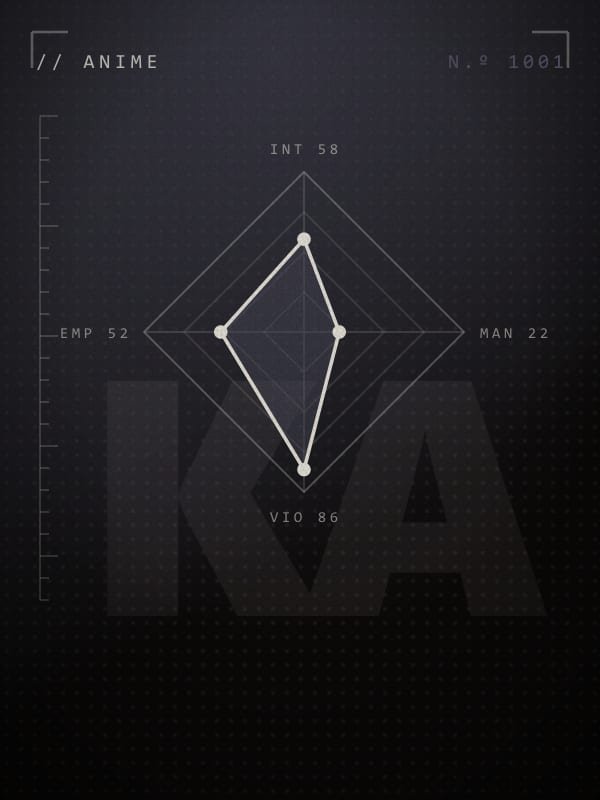
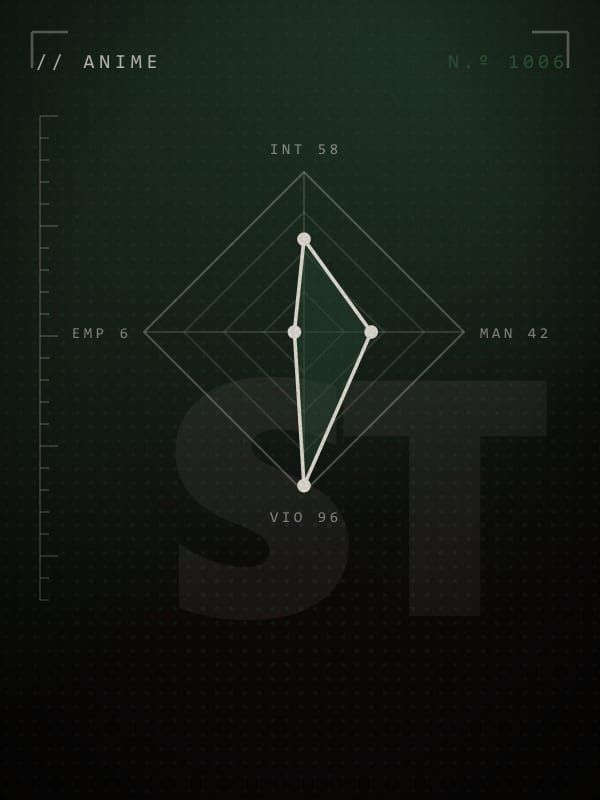
South has nearly every element on the list. The temper: a single no from Draken is enough for him to beat him to the ground. Risk as entertainment: he rides a motorcycle with one hand while holding a man with the other, and in his fights he celebrates finding opponents who can match him. The preference for the physical: even his way of “negotiating” with Kakucho is a beating. And the self-centeredness, which reaches its rawest form in chapter 224, when he praises his own men for a killing. But the most striking part he says himself, in chapter 228: that he cannot stop his urges and has come to love violence. It is close to the theory’s own definition.
// The subjectThe boy who was paid to shoot
The manga shows him in three moments. The first is his past (chapter 227). Born Minami Terano, he grew up in Rio de Janeiro with a bedridden mother. Dino, the leader of a gang, looked after her and acted as his father, and it was Dino who, when South was five, ordered him to shoot some men he considered enemies; with the money, the boy bought new shoes, and Dino began calling him “South.” At twelve he beat Dino to death and inherited his gang; at fourteen, a raid by a rival gang killed his mother. Back in Japan, in juvenile detention, he beat the S-62 Generation one by one (the Haitani brothers, Shion, Mucho and Mocchi), and in 2007, after his release, he founded Rokuhara Tandai with the Haitani brothers, Shion and Mocchi; he recruited Kakucho by beating him in an alley. The second moment is the coldest. At the Trinity Land amusement park, some Rokuhara members who wanted to climb the ranks by killing Takemichi end up gunning down Draken, and in chapter 224 South beats the shooters for going too far and then, grinning, tells them they did well. The third is the battle of the Three Deities. Against Wakasa and Benkei, Brahman’s veterans, he gets up when he seemed beaten, takes off his uniform and shows the scars from the raid that killed his mother (chapter 228); he knocks them both down, calls out to Mikey, convinced Mikey understands him, and although Senju kicks him unconscious (chapter 229), he gets back up and floors her (chapters 230 and 231). That is when Mikey steps into the fight (chapters 232 and 233): he breaks the elbow of Takemichi, who tries to get between them, and beats South until he stops breathing.
South Terano
Get the map of theories for free
Subscribe to the criminal archive —one case a week, no spam— and I'll send you The map of theories: the great currents of criminology on a single sheet.
// The crackAn urge with an agenda
The theory explains South’s temperament well, but it falls short of his biography. Low self-control describes someone who cannot put things off, and South puts a great deal off. In juvenile detention he decides that if he beats the generation that ruled Kanto, he will be number one; he gets out, builds a gang out of the men he defeated and travels to Tokyo with a declared goal, to defeat Toman and open a new era. Nor does he escape the classic objection of Ronald Akers (1991): if we measure low self-control by the tendency to give in to impulse and then use it to explain giving in, the reasoning goes in circles. And his childhood does not quite fit the model. Gottfredson and Hirschi speak of parenting that neither monitors nor corrects; South’s was worse, because an adult rewarded his first violence with money and a name. That looks more like learning than like a missing brake.
The end of the manga raises one more question. In the final timeline (chapter 278), South is alive, a heavyweight mixed martial arts champion who trains at Wakasa and Benkei’s gym whenever he visits Japan and, at Takemichi’s wedding, loudly challenges Mikey. The same appetite, inside a sport with rules. The manga does not say how he got there, but the image clashes with the stability the theory attributes to the trait. None of this excuses him in the 2008 timeline: explaining South is not excusing him. The beating of Draken and the praise for the men who killed him are his own decisions, however much he calls them urges.
The brake can be installed
The most contested part of the theory is its pessimism, and the data are more hopeful. The meta-analysis by Piquero, Jennings and Farrington (2010) concluded that programs to improve self-control in children up to age ten really do improve it and reduce delinquency. And South’s story shows the reverse: Dino did not merely fail to correct a child; he paid him for violence with money and gave him a new name.
Three key ideas
- Low self-control theory (Gottfredson and Hirschi, 1990) explains crime as the inability to resist immediate gratification, a trait formed in childhood that, according to the authors, barely changes afterward.
- South Terano, representative of Rokuhara Tandai in the Three Deities arc (2008), beats Draken for refusing to join him, praises his men after Draken’s death, admits he cannot stop his urges and dies at Mikey’s hands.
- The crack: South also plans, his childhood was rewarded learning rather than a missing brake, and in the final timeline he channels the same violence into a ring with rules.
Sources · further reading
- Gottfredson, M. R. and Hirschi, T. (1990). A General Theory of Crime. Stanford University Press.
- Akers, R. L. (1991). “Self-Control as a General Theory of Crime”. Journal of Quantitative Criminology, 7(2), 201-211.
- Pratt, T. C. and Cullen, F. T. (2000). “The Empirical Status of Gottfredson and Hirschi’s General Theory of Crime: A Meta-Analysis”. Criminology, 38(3), 931-964.
- Piquero, A. R., Jennings, W. G. and Farrington, D. P. (2010). “On the Malleability of Self-Control: Theoretical and Policy Implications Regarding a General Theory of Crime”. Justice Quarterly, 27(6), 803-834.
- Wakui, K. (2017-2022). Tokyo Revengers. Kodansha. Chapters 207-235 and 278.
Case-file questionsFrequently asked questions
Who is South Terano?
South Terano (“Minami Terano”) is a villain from Tokyo Revengers, analysed on KRIMINIS through the lens of criminology. He asks Draken to join him.
Why does South Terano (Minami Terano) become a villain?
South Terano, leader of Rokuhara Tandai in Tokyo Revengers, and Gottfredson and Hirschi’s low self-control: a man who won’t take no for an answer, punches to a musical beat and admits he cannot rein in his urges.
Which criminological theory explains South Terano?
South Terano's case is analysed through Low self-control. Low self-control theory (Gottfredson and Hirschi, 1990) holds that crime is committed by people who cannot resist immediate, easy and exciting gratification, and that this brake is formed, or not, in childhood. South Terano, representative of Rokuhara Tandai and the antagonist of the Three Deities arc of Tokyo Revengers (2008, chapters 207-235), is its extreme case: a short temper, risk as entertainment and a violence he himself describes as an urge he cannot stop. The crack: South also plans, and the boy an adult paid to shoot did not merely lack a brake; he learned a trade.