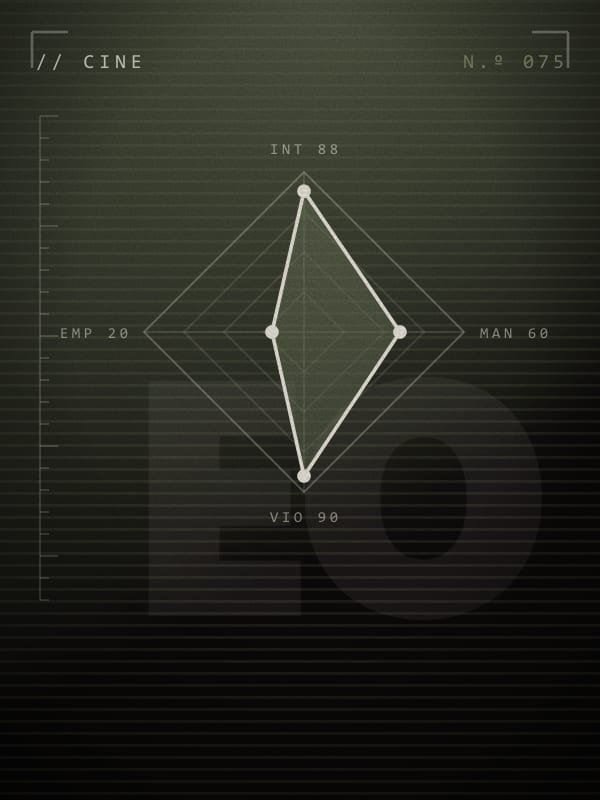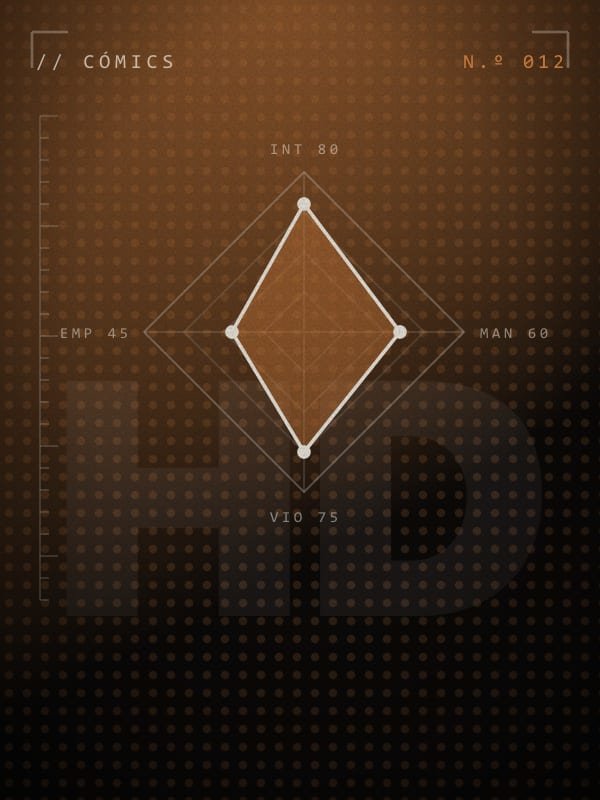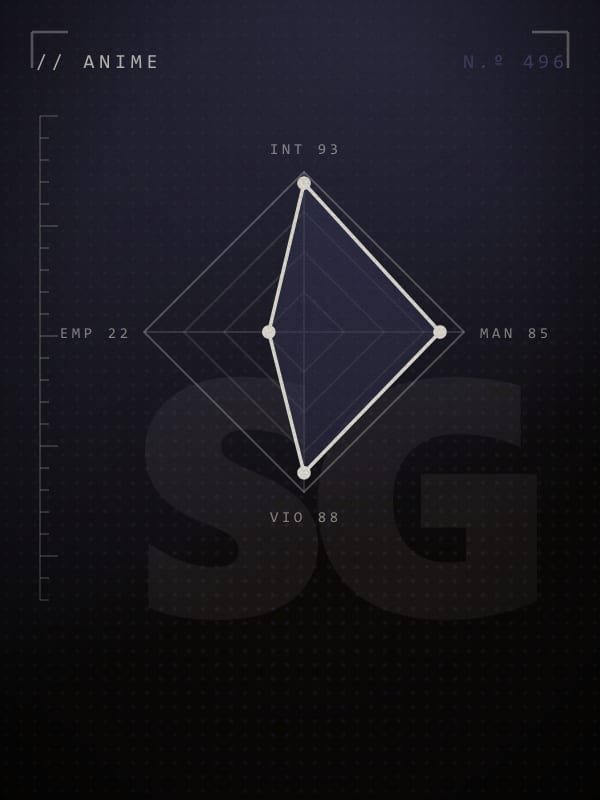
Ra’s al Ghul is centuries old and holds an iron conviction: Gotham is so corrupt that it can no longer be saved, only purged. Leading the League of Shadows, he plans to destroy it —as, he says, he once helped Rome fall or London burn— not out of hatred or lust for power, but to restore balance. He is a serene mass murderer who believes himself a gardener. And behind that serenity beats the same idea we analyzed with el Titán Loco: utilitarianism carried to its most chilling conclusion.
// The theoryThe greater good, again
The utilitarianism of Bentham and Mill measures morality by consequences: the right act is the one that produces the greatest happiness for the greatest number. Applied to entire civilizations, Ra’s’s reasoning seems flawless: if a decadent city spreads its rot, eliminating it would maximize the good of the whole in the long run. It is the felicific calculus scaled up to history and ecology.
His nuance relative to Thanos is revealing. The Titan culls at random, half of everyone alike; Ra’s selects: he punishes the corrupt. It is a retributive utilitarianism, justice on the scale of a civilization. More orderly, more ideological… and, for that very reason, more dangerous: he does not improvise, he has a doctrine.
From the felicific calculus to the purge
Notice the mechanism. Utilitarianism sums well-being; but if to that sum you add future generations and the entire planet, the total becomes so colossal that any present sacrifice seems tiny by comparison. That is how the arithmetic of the greater good turns into a purge: you need only stretch the horizon of the calculation until today’s victims no longer appear in the picture.
Get the map of theories for free
Subscribe to the criminal archive —one case a week, no spam— and I'll send you The map of theories: the great currents of criminology on a single sheet.
// The subjectThe serene genocide
Ra’s al Ghul does not hate Gotham: he has diagnosed it. His calm is what unsettles —he has done the math and sleeps soundly—. He even respects Batman and invites him to join: to him he is not an enemy, but a disciple who has not yet grasped the magnitude of the problem. That blend of idealism, millennia-old patience and accountant’s coldness is what sets him apart from a mere terrorist. He is a believer, and believers with a spreadsheet are the ones who go the furthest.
Ra's al Ghul
// The crackWhen the "greater good" becomes ecofascism
The crack is the same one that sinks all limitless utilitarianism, and here it is in full view. First: who decides which city is "too corrupt"? The calculus offers no safe answer; it hands the verdict to whoever holds the scales —Ra’s, in this case—. Second: it legitimizes sacrificing the innocent, because among Gotham’s millions there are children who have corrupted nothing.
Moral philosophy has spent centuries sharpening that objection with the trolley problem of Philippa Foot and Judith Thomson: almost all of us would divert a trolley to save five at the cost of one, but very few would push a man off a bridge to achieve the same tally. The arithmetic is identical; what changes is that in the second case we use someone as a mere means. Ra’s lives permanently on the bridge: to him, all of Gotham is that man to be pushed. Rule utilitarianism —not act utilitarianism— tries to rein in that abyss by forbidding as a norm what, case by case, could always seem to «add up».
And there is a third danger, historical and real: the language of "purity" and "balance" applied to populations is the root of ecofascism and eugenics. "Pruning for the good of the whole" is one of the most dangerous phrases ever uttered. Against it, the retributive tradition of Kant answers as always: people are ends, not weeds. Batman’s response is the same in terms of action: no one has the right to write off an entire city.
The philosopher Bernard Williams pointed to another flank: a calculus that looks only at outcomes demands that each person bear the consequences of the whole world, and so it dissolves personal integrity —the difference between what I do and what I merely let happen—. Ra’s is that dissolution made doctrine: he has appointed himself the planet’s accountant, and from that accounting no hand is ever left dirty. Whoever believes himself responsible for everything ends up feeling guilty of nothing.
The limit no sum crosses
Utilitarian logic is useful and even necessary —it underlies prevention, public health, criminal policy—. But the greater good needs hard limits: rights, guarantees, the dignity of each individual, precisely so that no one can proclaim themselves the world’s gardener. The classical school already named them: legality and proportionality. They are the dikes that keep a good end from justifying any means.
That is why Ra’s al Ghul is Batman’s darkest mirror: both want to save Gotham. One by protecting every life; the other by spending them. The question the League of Shadows leaves behind is the oldest in ethics: who decides that some lives are weeds?
Three key takeaways
- Ra’s al Ghul is utilitarianism scaled up to civilizations: destroying the corrupt to maximize the good of the whole —a retributive utilitarianism, with a doctrine.
- The lethal trick is to stretch the calculation (the future, the planet) until any present sacrifice seems small: that is how the "greater good" turns into a purge.
- Without hard limits —rights, dignity, proportionality— the greater good drifts into ecofascism: no one should be able to decide which lives are weeds.
Sources · further reading
- Bentham, J. (1789). An Introduction to the Principles of Morals and Legislation.
- Mill, J. S. (1863). El utilitarismo.
- Smart, J. J. C. & Williams, B. (1973). Utilitarianism: For and Against. Cambridge University Press.
- McCloskey, H. J. (1957). «An Examination of Restricted Utilitarianism». The Philosophical Review, 66(4).
- Foot, P. (1967). «The Problem of Abortion and the Doctrine of Double Effect». Oxford Review, 5.
- Thomson, J. J. (1985). «The Trolley Problem». The Yale Law Journal, 94(6).
Case-file questionsFrequently asked questions
¿Quién es Ra's al Ghul?
Ra's al Ghul («la Cabeza del Demonio») es un villano de Batman, analizado en KRIMINIS con la lente de la criminología. When someone believes they are the planet’s gardener, pruning an entire city feels like simple hygiene.
¿Por qué Ra's al Ghul (la Cabeza del Demonio) se convierte en villano?
Batman and utilitarianism: Ra’s al Ghul does not destroy out of malice, but out of arithmetic —razing a corrupt city to save the balance of the world—.
¿Qué teoría criminológica explica a Ra's al Ghul?
El caso de Ra's al Ghul se analiza desde la Utilitarismo. Utilitarianism judges acts by their consequences for the whole. Ra’s al Ghul is its ecological, millennia-old version: destroying corrupt civilizations to restore balance. A genocide presented as gardening —and the same calculus that, unchecked, justifies any sacrifice.