A man wakes in a room with a bed, a television and a steel door. He is fed the same fried dumplings for fifteen years. He is not told what he did, who is holding him or when it ends, because none of those are questions his jailer can answer — the jailer is a subcontractor. The facility has other rooms, other tenants and a price list. When the man finally gets out and works his way back up the chain, he finds an ordinary businessman with staff, overheads and a reasonable explanation: someone paid for fifteen years, and fifteen years were delivered. The horror of Oldboy is usually located in the revelation at the end. The criminology is in this scene.
// The theoryPunishment follows the value of labor
Georg Rusche and Otto Kirchheimer's Punishment and Social Structure (1939), written out of the Frankfurt School in exile, made an argument that still organizes the field. Penal systems are not moral artefacts that improve as societies become enlightened; they are institutions shaped by the economic conditions around them, and above all by the market value of human labor. Where labor is plentiful, punishment destroys bodies — galleys, mutilation, capital penalties applied liberally. Where labor is scarce and therefore valuable, punishment preserves and exploits them: transportation, workhouses, the penitentiary. Their method was comparative and historical, and their conclusion was deliberately deflationary. The rise of imprisonment was not the triumph of humanitarian reform over cruelty; it coincided with the moment a confined body became worth more alive and working than dead as a warning.
The paying party sets the purpose
The tradition's sharpest instrument is a question about funding, and this case makes it unavoidable. In an ordinary penal system the cost of confinement falls on the state, which means the state has a structural interest in shorter sentences and the political incentive runs the other way — an argument permanently in tension. Change who pays and the whole vector reverses. If the payer is a private client, the length of confinement becomes a purchase, and there is no mechanism anywhere in the arrangement that pushes it downward. Park never has to be cruel; he has to be solvent. That is the precise form Melossi and Pavarini identified in their study of the factory-prison: an institution whose declared purpose (correction, deterrence, justice) is downstream of its actual economic function, and which will keep producing its output whether or not the declared purpose is being served. The film asks what such a place would look like from inside a cell. The answer is: exactly like a normal prison, because from inside a cell the financing is invisible.
// The subjectNeither judge nor executioner. A supplier
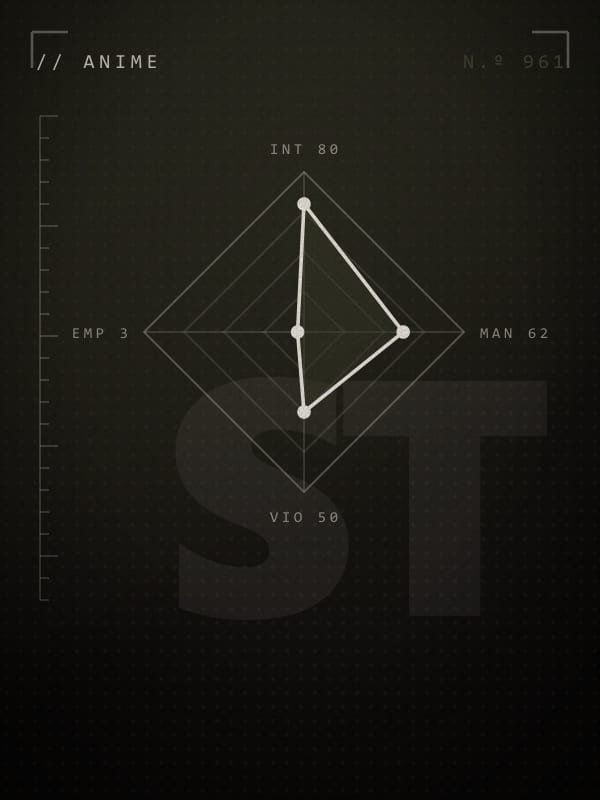
Park is the least dramatic person in the film and the most structurally interesting, because he has removed every element that usually carries the moral weight of punishment. There is no accusation, so there is nothing to disprove. There is no verdict, so there is nothing to appeal. There is no tariff scaled to an offense, only a duration scaled to a payment. What remains is the pure mechanism, and the mechanism works perfectly: a man is held for fifteen years by an organization with no opinion about him whatsoever. Michel Foucault's Discipline and Punish supplies the vocabulary for the rest — the timetable, the identical meals, the observation, the production of a docile body through routine rather than through pain. Foucault's claim was that the prison's function is not to eliminate offenses but to produce a manageable category of delinquent, and that its persistent failure is precisely what makes it durable. Park's facility is the same apparatus stripped of the state's need to claim a public benefit.
It is worth noticing what the client buys, because it is not suffering. Lee Woo-jin could have had Dae-su killed for a fraction of the price. He buys time — a stretch of a man's life, removed and returned, which is the commodity the modern penal system also trades in and almost never names as such. Fifteen years is the unit of account, and once time is the product, the arrangement needs no cruelty to be devastating.
Park Cheol-woong
Get the map of theories for free
Subscribe to the criminal archive —one case a week, no spam— and I'll send you The map of theories: the great currents of criminology on a single sheet.
// The crackThe economy explains too much to explain a sentence
Rusche and Kirchheimer's thesis has aged into something more useful than it was originally stated, and the corrections matter. The strong version is economically determinist: it predicts that imprisonment rates track labor-market conditions, and the relationship is far messier than the theory requires. David Garland's critique is the standard one — penal change is driven by culture, professional groups, political competition and moral sensibilities as much as by production, and a model with one input cannot explain why two countries with similar economies imprison at wildly different rates. The United States and Germany are the case that breaks the simple version. Foucault's history has taken its own hits: his chronology compresses developments that took much longer, he generalizes French institutions to Europe, and his account of the reformers' motives is not supported by the archives as firmly as the book implies. And the contemporary evidence on private prisons, which is where this file naturally points, is genuinely mixed rather than damning: the cost savings are small or absent once populations are matched, quality findings vary by jurisdiction and contract, and the strongest documented problems are structural rather than operational — occupancy guarantees that oblige a state to keep beds full, lobbying for longer sentences, and the immigration-detention sector where the incentive to detain is least constrained by anything resembling a tariff. The defensible core is narrow and holds: punishment is a material institution with funders, suppliers and interests, and any account of it that begins with justice and ends with justice has left out the part that determines its size.
Everyone rational within their role
Park is a jailer for hire and there is nothing to be said for him. The reason he belongs in this archive is that he is legible in a way real penal administrators are not: he has no doctrine, no belief in rehabilitation and no theory of deterrence to hide behind, so what he does is visible as what it is. Fifteen years of a man's life were bought at a price, and everyone in the chain behaved rationally within their role. That is not a fantasy about a Korean thriller. It is a description of how any large penal apparatus keeps running while nobody inside it believes they are doing harm.
Three key ideas
- Rusche and Kirchheimer (1939): the form of punishment follows the economic structure, above all the market value of labor. The rise of imprisonment coincided with the moment a confined body was worth more working than dead.
- Change who pays and the purpose changes. When the state funds confinement it has a structural interest in shorter sentences; when a private client funds it, duration is a purchase with nothing pushing it down. What Woo-jin buys is not suffering but time.
- The strong economic version is too determinist — Garland notes that similar economies imprison at wildly different rates — and the private-prison evidence is mixed. The core that holds is that punishment is a material institution with funders and interests.
Sources · to keep reading
- Rusche, G. y Kirchheimer, O. (1939). Punishment and Social Structure. Columbia University Press.
- Foucault, M. (1975). Discipline and Punish. Gallimard.
- Melossi, D. y Pavarini, M. (1977). The Prison and the Factory. Macmillan.
- Garland, D. (1990). Punishment and Modern Society. Clarendon Press.
- Wacquant, L. (2009). Punishing the Poor. Duke University Press.
- Mukherjee, A. (2021). “Impacts of Private Prison Contracting on Inmate Time Served and Recidivism”, American Economic Journal: Economic Policy, 13(2).
Case-file questionsFrequently asked questions
Who is Park Cheol-woong?
Park Cheol-woong (“El señor Park”) is a villain from Oldboy, analysed on KRIMINIS through the lens of criminology. He has no interest in why his tenant is there.
Why does Park Cheol-woong (Mr. Park) become a villain?
Park Cheol-woong and the political economy of punishment: the businessman who imprisons whoever you pay for, for as long as you pay. The file on who sets the length of a sentence when the sentence is a service.
Which criminological theory explains Park Cheol-woong?
Park Cheol-woong's case is analysed through Political economy of punishment. Rusche and Kirchheimer published the thesis that founded this tradition in 1939: punishment is not a response to crime but an institution whose form follows the economic structure that sustains it. Where human labor is abundant and cheap, bodies are mutilated and executed; where it is scarce and valuable, they are confined and put to work. The question the tradition teaches you to ask is not “is this penalty just?” but “who pays for it and what do they get”. Park Cheol-woong is that question turned into a business model: a private prison with no sentence, no offense and no judge, priced by the year, with a customer who is not the person inside. Oldboy presents it as an absurd premise. The uncomfortable part is how many elements of the model exist.