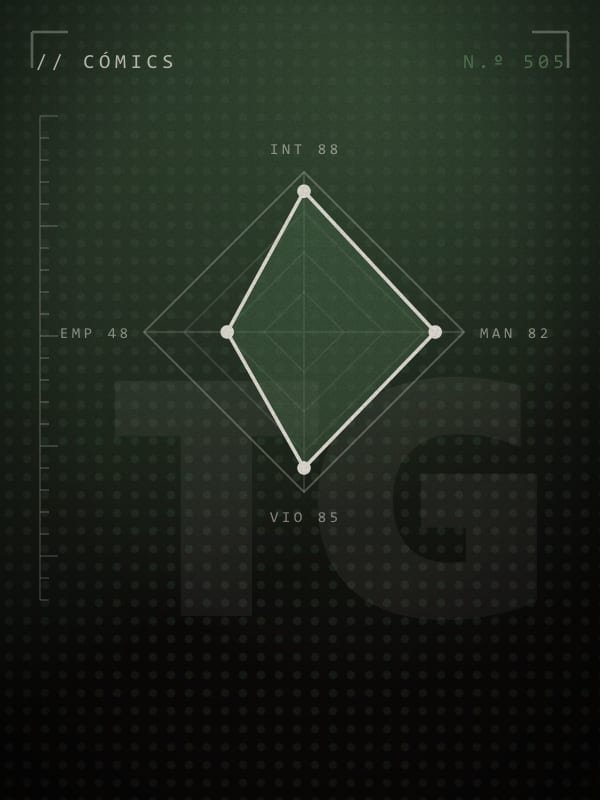
Nagato, who acts under the name Pain in Naruto, carries what looks like an exceptional biological inheritance: the Rinnegan, the most legendary and rarest ocular power in the ninja world, which grants him near-divine capabilities. The series later reveals that he was not born with it: the eyes were Madara's, secretly implanted in him as a child; what he did inherit was the Uzumaki blood that let him bear them. But he is also born in the worst of places and times: a region devastated by wars between great powers, where the civilian population dies of hunger and under crossfire. As a child, Nagato watches his parents die, and later the friend who was like a brother to him. Each loss sinks him deeper, until his pain crystallizes into an ideology: to use his power to inflict on the world the same pain he suffered, convinced that only shared pain can teach peace. For biosocial criminology, Nagato shows how an exceptional power only turns into terror when it passes through an environment of trauma.
// The theoryThe power he carries and the use the environment gives it
The biosocial criminology of Walsh and Beaver insists that a biological endowment does not carry its own moral use: it is the environment that decides what it is used for. Nagato dramatizes this almost like an experiment. His “nature” (the Uzumaki vitality that lets him bear the Rinnegan, and the Rinnegan itself) is a neutral capacity of enormous magnitude: the same power that, in the series' mythology, belonged to a peacemaking sage. His “environment”—war, hunger, the chained deaths of everyone he loved—is among the most adverse imaginable. The interaction of the two produces Pain. And the proof that it is the interaction, and not each factor alone, lies in the series itself: the master Jiraiya, who sees the child Nagato, recognizes in him both the potential to save the world and to destroy it—the same power, two possible fates depending on which environment shapes it. The theory puts it the same way: the biological load sets the magnitude of what the person can do; the environment decides in which direction they will do it. The Rinnegan gave the power; war gave the target.
The trauma that becomes ideology
Nagato refines a feature of the activating environment: trauma does not push him at random, but organizes itself into an ideology that gives shape and alibi to violence. His childhood leaves him not just emotional scars; it leaves him a theory of the world—that pain is the only real teacher, that peace only comes when everyone has suffered equally. That ideology is the bridge between the trauma lived and the power carried: it turns a wound into a program and a biological gift into its instrument. The biosocial lesson is that an adverse environment does not act as a simple switch, but builds meaning: it gives the bearer of the predisposition a reason to use it the way they do. That is why two people with the same power and similar traumas can diverge—it depends on what story they build about their pain. Nagato built the one of redemptive punishment; his friend Yahiko, or Naruto himself who confronts him in the end, build the one of forgiveness. The power was the same; what changed was the story the environment let them tell themselves about their suffering.
// The subjectThe one who almost chose another path
What makes Nagato tragic, and biosocially rich, is that his transformation is neither total nor irreversible: at the end of the confrontation, the words of Naruto—who has suffered similar losses and chosen another path—reach something the ideology of pain had not fully extinguished. Nagato reverses his decision, sacrifices his life to give back the lives he had taken and bets on faith in a different cycle. That turn demonstrates the central biosocial argument: the interaction produced Pain, but did not seal him shut, because a new environment—the encounter with someone who embodies the alternative—could reactivate what the trauma had buried. The gene × environment correlation had sunk him into environments of pain and war that confirmed his ideology; a single encounter that contradicts it is enough to open the crack. Nagato is responsible for the thousands of deaths he causes as Pain, and at the same time he is the proof that not even the most destructive interaction wholly erases the possibility of another ending.
Nagato
Get the map of theories for free
Subscribe to the criminal archive —one case a week, no spam— and I'll send you The map of theories: the great currents of criminology on a single sheet.
// The crackNeither “power corrupts” nor “it was just the war”
The crack with Nagato reproduces the two determinisms that biosocial criminology rejects. The first: “a power that great inevitably corrupts, the Rinnegan doomed him”—the fatalism that forgets that same power belonged to a peacemaker and that Jiraiya saw in the child the possibility of saving the world. The second: “it was just the war, anyone would have done the same”—the denial of the endowment, which does not explain why he, with his power, could turn his pain into a catastrophe of worldwide scale that another could not have caused. The honest reading holds both halves: there was an exceptional power and there was a childhood of trauma, and it was their interaction—mediated by the ideology the environment let him build—that produced Pain. Keeping only one factor is losing what his story teaches about how a monster is made. And the series sets an honest limit on the biosocial reading itself: the gift that looked most innate, the Rinnegan, was not even his. Madara implanted it to use him. Part of what passes for nature in Nagato is someone else's design, a reminder that what looks like biological destiny is sometimes an environment of manipulation that began before memory.
And explaining that interaction does not exculpate Pain's deaths. Understanding that war turned his pain into ideology and his power into a weapon illuminates the origin of the tragedy, but between the trauma and the decision to raze an entire village there remains a subject who chooses—and who, in the end, also chooses to reverse it. Explaining where the terror comes from is the opposite of justifying it.
Interrupting the cycle of pain
Nagato matters because his own ideology—pain breeds pain—describes, without meaning to, the spiral that biosocial criminology wants to break. Environments of war, hunger and loss produce traumatized people who, if they also hold power, can reproduce the cycle on a larger scale: the trauma of one generation becomes the violence of the next. The practical lesson is that preventing the “Pains” does not lie in controlling who is born with which gift (that is the eugenics this file condemns), but in interrupting the cycle of pain: protecting children from the war and loss that arm their suffering, and offering them, as Naruto did, an alternative story before the ideology of punishment crystallizes. The series says it clearly: what saved Nagato was not taking his power away, but someone who had suffered just as much showing him another way out. Changing the environment—and the stories an environment allows one to tell oneself—is the only thing that breaks the cycle that not even the most legendary power, on its own, decides.
Three key takeaways
- Nagato (Pain) embodies the gene × environment interaction: the Rinnegan, a legendary and neutral ocular power that Madara secretly implanted in him (the load), only became an instrument of terror after passing through a childhood of war, hunger and chained losses (the trigger). Jiraiya sees both possible fates in the child.
- The adverse environment does not act as a simple switch: it builds an ideology —“pain is the only teacher”— that gives shape and alibi to violence and turns the gift into its instrument. Another story about the same pain (Naruto's) leads the opposite way.
- Neither “power corrupts” (fatalism) nor “it was just the war” (denial of the endowment). Pain answers for those deaths, even if in the end he reverses them. Prevention: not controlling who is born with which gift (that is eugenics), but interrupting the cycle of pain.
Sources · further reading
- Walsh, A. & Beaver, K. M. (2009). Biosocial Criminology: New Directions in Theory and Research. Routledge.
- Caspi, A., McClay, J., Moffitt, T. E. et al. (2002). “Role of Genotype in the Cycle of Violence in Maltreated Children”. Science, 297.
- Walsh, A. (2002). Biosocial Criminology: Introduction and Integration. Anderson Publishing.
Case-file questionsFrequently asked questions
Who is Nagato?
Nagato (“Pain”) is a villain from Naruto, analysed on KRIMINIS through the lens of criminology. He grew up with the most powerful eyes in ninja history, which looked like pure biological predisposition and were a secret implant from Madara.
Why does Nagato (Pain) become a villain?
Nagato, Pain, and gene × environment interaction: he carries the Rinnegan, the most legendary ocular power in his world (a load he did not even inherit: Madara secretly implanted it), but it is a childhood of war, hunger and loss that turns him into the weapon of a pain made ideology.
Which criminological theory explains Nagato?
Nagato's case is analysed through Modern biosocial criminology. Biosocial criminology (Walsh, Beaver) holds that a predisposition only turns destructive when it meets an adverse environment. Nagato, from Naruto, is born an Uzumaki, of a clan with exceptional chakra and vitality (the biological load), and carries from childhood the Rinnegan, the most legendary ocular power, which he did not inherit: Madara secretly implanted it. But it is a childhood of war, hunger and chained losses that activates that power and channels it into a crusade of terror that seeks to impose peace through pain. Heredity and the implant gave the power; the environment gave its use.