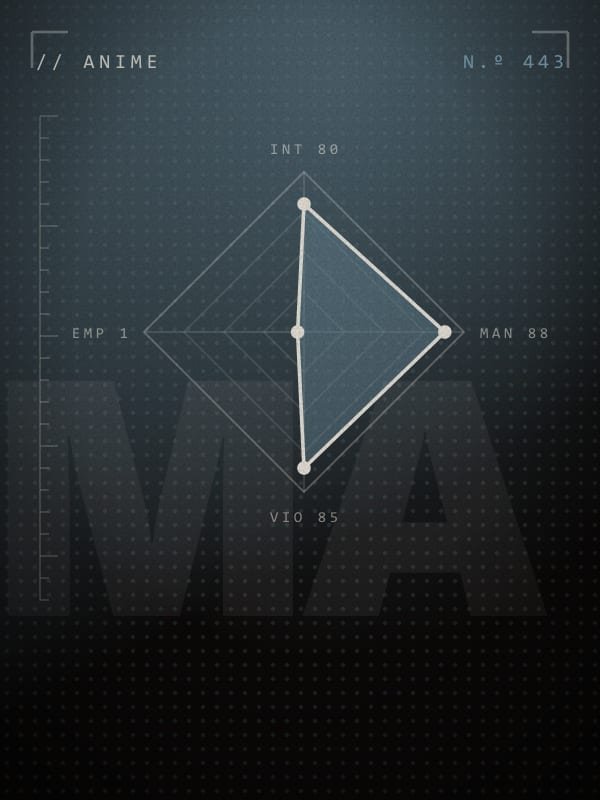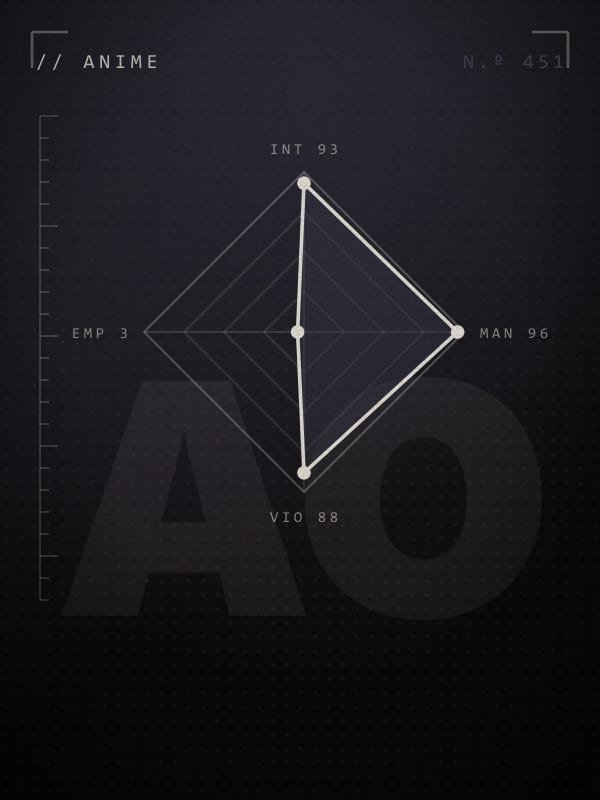
Makima, the Control Devil of Chainsaw Man, is not a villain who delights in chaos. On the contrary: she says she wants a better world —no war, no hunger, no fear, no death—. Her horror lies not in the end, which sounds almost noble, but in the method: to reach that utopia she lies systematically, manipulates everyone around her and sacrifices people and demons without the slightest hesitation, treating them literally as dogs —creatures that are loved, used and discarded as convenient—. Makima embodies a monstrous version of a serious philosophical idea: utilitarianism, the doctrine that judges the right by its consequences. In her we see what happens when the calculus of the «greatest good» is carried out with no brakes whatsoever.
// The theoryThe greatest good for the greatest number
Utilitarianism is born with Jeremy Bentham and refined with John Stuart Mill: an action is right insofar as it produces happiness, and wrong insofar as it produces the opposite. The moral criterion is the aggregate result —«the greatest good for the greatest number»—. It is a powerful and humanitarian ethics: it obliges us to count everyone’s suffering equally, it inspired prison reforms, the abolition of cruel punishments and much of the thinking about public welfare. Makima seems to reason exactly this way: if a world without fear or death would produce immense happiness for all of humanity, then any act that brings that world closer is justified by the magnitude of the good it promises. Add up the suffering spared to millions of future people and subtract that of a few present victims: the calculus, in its arithmetic, always proves her right. Therein lies the danger. Because utilitarianism, in its crude form, contains a temptation that Makima embraces without reservation: if only the aggregate consequences matter, then any means —deceit, torture, the sacrifice of the innocent— can turn out «right» as long as the final balance is positive. People cease to be subjects who deserve respect and become variables in an equation.
People as means, not as ends
Against that drift stands the Kantian critique, and it is the key to understanding why Makima is monstrous even while pursuing a beautiful end. Kant formulated the imperative to treat humanity «always as an end, and never only as a means». Each person possesses a dignity that cannot be sacrificed on the altar of the collective good, however great it may be. Makima violates this principle in every gesture: for her no one is an end in themselves, everyone is an instrument of her project. She manipulates the affection of those who love her, disposes of other people’s lives like tokens, turns tenderness into a leash. When she calls humans «dogs» it is not a simple metaphor of contempt: it is her moral ontology. A dog is loved, even sincerely, but it is owned; it is owed neither truth nor consent, only care in exchange for obedience. That is the blind spot that limitless utilitarianism leaves open and that deontology closes: however good the end, there are things that cannot be done to a person, because doing them reduces them from subject to tool.
Get the map of theories for free
Subscribe to the criminal archive —one case a week, no spam— and I'll send you The map of theories: the great currents of criminology on a single sheet.
// The subjectThe calculator that believes itself a savior
What is disturbing about Makima is that she probably believes in her utopia. She is not a sadist disguised as an idealist; she is an idealist whose idealism has devoured every moral restriction. She is convinced that the world she would build —without death, without the terror that governs humans— justifies the river of lies and corpses she leaves in her wake. That sincerity makes her more dangerous, not less: the fanatic who believes he is doing good has no inner brake, because each cruelty presents itself to him clothed in necessity. Her coldness is not indifference, but the logical consequence of her framework: if people are variables, feeling for each one would be a calculation error, a bias that hinders the optimization of the result. That is why she can smile while she destroys. Makima is responsible for everything she does —her lucidity is total, she chooses each act—, but her monstrousness does not spring from gratuitous malice but from an instrumental reason carried to the end, an intelligence that has decided that present suffering is merely the accounting price of a better future.
Makima
// The crackExplaining her logic is not proving her right
Here is the crack, and it must be trodden carefully. Explaining Makima’s logic —showing that her reasoning has an internal coherence, that it starts from an understandable end— does not exculpate her. Understanding why the calculus «adds up» for her is not granting that she was right. The easy temptation is one of two: either to dismiss her as pure, incomprehensible evil, and thereby lose the lesson; or, worse, to be seduced by her arithmetic and think that «perhaps, if the resulting world were so good...». Both fail. Makima does not prove that utilitarianism is perverse; she proves what happens when it is amputated from every limit. Because serious utilitarianism has brakes that she tramples: Mill himself insisted that certain rights and rules —justice, truthfulness, individual liberty— must be protected almost absolutely, precisely because respecting them maximizes the good in the long run; a society where anyone can be sacrificed «for the common good» is a society of terror, not of happiness.
Makima also commits an error within her own theory: by treating everyone as means, she produces exactly the world of fear she claims to want to abolish. An order based on total manipulation does not eliminate terror: it institutionalizes it. Her utopia without death would be a tyranny with no way out, and no honest calculus of happiness could approve it. The ethical reading does not consist in admiring her end or in denying her intelligence, but in seeing precisely where the reasoning breaks: at the instant she decided that a person could stop counting as an end. That is the threshold that separates consequentialist ethics from barbarism with a spreadsheet.
The calculus needs a limit that is not calculated
Makima matters because her logic is not exotic: it is the alibi of almost every great abuse committed «in the name of the greater good». Purges, camps, experiments, total surveillance: each one was justified as a present sacrifice for a superior future, a calculus in which certain people stopped counting. The lesson is not to abandon consequentialist thinking —asking about the effects of our acts is sensible and human—, but to recognize that the calculus needs a limit that the calculus itself cannot set. That limit is dignity: the rule that there are things one does not do to a person even if the numbers approve them, because treating someone as a mere means corrupts the end itself. Every time we hear «it’s a necessary price», «they’re collateral damage», «think of the good of all» used to trample someone concrete, it is worth remembering Makima smiling while she calls those she loves dogs. The question that breaks her spell is the Kantian one: am I treating this person as an end, or only as a variable in my equation?
Three key ideas
- Makima, the Control Devil, embodies utilitarianism taken to the extreme: she pursues a world without fear or death and justifies any cruelty —lies, manipulation, sacrifice— by the magnitude of the good it promises. The end justifies everything.
- Her horror illustrates the Kantian critique: she treats people and demons as means and never as ends. Calling humans "dogs" is her moral ontology: beings that are loved but owned, with no right to truth or consent.
- Explaining her logic does not exculpate her. Serious utilitarianism has brakes —Mill defended almost absolute rights and rules— that she tramples. The calculus needs a limit that is not calculated: dignity. An end, or a variable in an equation?
Sources · further reading
- Mill, J. S. (1863). Utilitarianism. Parker, Son and Bourn.
- Bentham, J. (1789). An Introduction to the Principles of Morals and Legislation. T. Payne and Son.
- Kant, I. (1785). Groundwork of the Metaphysics of Morals. J. F. Hartknoch.
Case-file questionsFrequently asked questions
¿Quién es Makima?
Makima («el Demonio del Control») es un villano de Chainsaw Man, analizado en KRIMINIS con la lente de la criminología. She wants a better world: no war, no hunger, no death.
¿Por qué Makima (el Demonio del Control) se convierte en villano?
Makima and utilitarianism with no brakes: a world without fear or death, bought at the price of treating every person as a means. The calculus of happiness when no one counts as an end.
¿Qué teoría criminológica explica a Makima?
El caso de Makima se analiza desde la Utilitarismo. Utilitarianism (Bentham, Mill) judges acts by their consequences: the greatest good for the greatest number. Makima, the Control Devil of Chainsaw Man, takes that logic to the extreme: she dreams of a world without fear or death and justifies any cruelty —lies, manipulation, sacrifice— if it serves that end. She illustrates the danger of utilitarian calculus without deontological limits: when people are only means, utopia is paid for with everyone’s dignity.