Count Olaf, the antagonist of Lemony Snicket’s A Series of Unfortunate Events, is a villain who would disappoint anyone looking for a criminal mastermind. He is a third-rate actor—vain, lazy and transparent: his disguises would not fool a child, and in fact the three Baudelaire children see through him every time. And yet he wins again and again. The question that organizes the whole saga is not “how intelligent is Olaf?” but “why, being so clumsy, does he keep getting away with it?”. The answer lies not in him but in the ground he walks on. Olaf pursues a single thing—the fortune the Baudelaire parents left to their children—and to reach it he needs only one requirement: that the adults charged with protecting the orphans fail to do their job. Criminology has a very precise name for that equation, and it is routine activity theory.
// The theoryCrime needs three things, and none of them is talent
In 1979, sociologists Lawrence Cohen and Marcus Felson published an idea that changed the way we think about crime. Until then, criminology looked above all at the offender: their traumas, their deprivations, their psychology. Cohen and Felson shifted the focus to the situation. Their thesis is almost a matter of physics: a crime against a victim or an asset occurs when three elements converge in the same time and the same space. First, a motivated offender—someone willing to commit a crime if the conditions arise. Second, a suitable target—a person or asset that is accessible, valuable and poorly protected. And third, and decisively, the absence of a capable guardian—not necessarily a police officer, but anyone whose mere presence deters: an attentive neighbor, a guardian who asks questions, a doorman who watches. What is revolutionary about the model is its sobriety: you do not need a brilliant monster for a crime to happen; it is enough for the three ingredients to coincide. Remove any one of them—above all the guardian—and the crime simply never takes place.
The absent guardian is the real door
Of the triangle’s three vertices, Cohen and Felson stressed that the most manageable—and the most neglected—is the guardian. The motivated offender almost always exists somewhere; so does the valuable target. What marks the difference between the crime that happens and the one that does not is whether someone is truly watching. And here lies the uncomfortable key to the model: the capable guardian is rarely a figure of formal authority. It is the everyday gaze, the person who notices what does not fit and acts. Count Olaf thrives precisely because every adult who should act as a guardian—the banker Poe, the successive guardians—is distracted, gullible or looking the other way. The Baudelaire children see the danger clearly; the adults, who have the power to stop it, never see it. Crime does not slip in through the villain’s cunning, but through the gap left by surveillance that fails. That is the theory’s dry lesson: protect the target and multiply the guardians, and the most motivated offender in the world is left without a play.
// The subjectThe opportunist who strikes where no one is looking
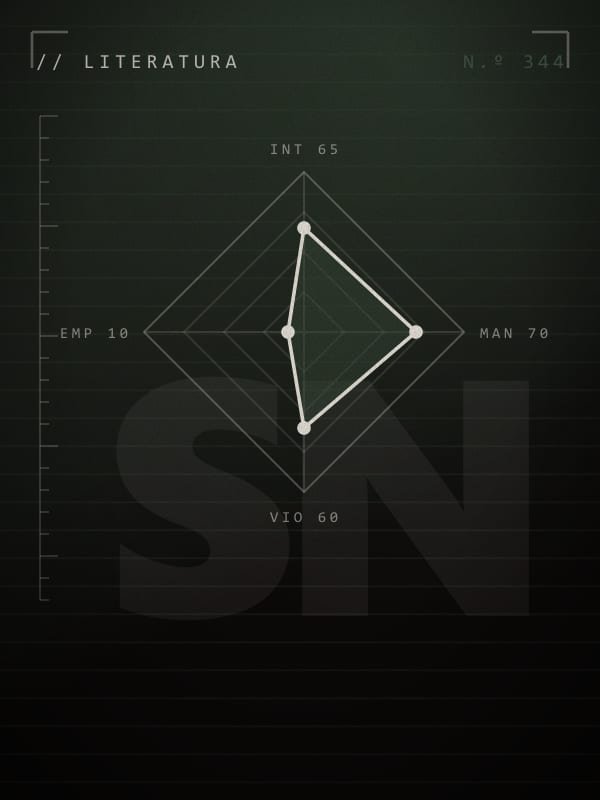
Seen through routine activity theory, Count Olaf stops being an enigma and becomes transparent. He is the motivated offender in its purest state: a single, clear, economic motivation (the Baudelaire fortune), with no ideological grandeur or twisted psychology, only patient greed. His method confirms the opportunist’s profile. He does not plan a masterstroke; he improvises disguises, changes identity and setting, and probes until he finds the weak point of each situation. The orphans are the textbook suitable target: wealthy, yet legally defenseless; intelligent, yet with no authority that believes them; shuffled from guardian to guardian, without a stable home that functions as a fortress. And the third vertex is supplied, without their knowing it, by the adults: a chain of incapable guardians who treat their role as a formality. Olaf does not need to defeat a competent protector because he never runs into one. His genius, if it can be called that, consists only in detecting the exact moment when the three ingredients coincide and slipping through that crack. He changes masks not because he is a master of disguise, but because each new environment offers him a new absence of surveillance to exploit.
Count Olaf
Get the map of theories for free
Subscribe to the criminal archive —one case a week, no spam— and I'll send you The map of theories: the great currents of criminology on a single sheet.
// The crackUnderstanding opportunity does not excuse the predator
The crack in this case is the temptation to spread the blame until the culprit is diluted. If the crime arises from the convergence of three factors, are the negligent adults not as responsible as Olaf? Routine activity theory invites a dangerous misunderstanding: confusing the explanation of how the crime comes about with a reduction of the responsibility of the one who commits it. Cohen and Felson never argued that. Their model describes the conditions that make crime possible; it does not hand out innocence. The absence of a guardian explains why Olaf could act; it does not explain why he wanted to, nor does it make him a victim of circumstances. Understanding that a predator strikes when surveillance fails does not transfer his guilt to whoever was careless, just as understanding why a thief chooses the house with the open door does not turn carelessness into a crime. The one responsible for the harm is the one who decides to do it; the situation only says where and when it was easy for him.
There is a second crack, symmetrical and more useful. If Olaf’s crime depends so heavily on opportunity, then opportunity is also the point at which it is prevented. Here the theory stops being mere diagnosis and becomes a tool: reducing crime does not require manufacturing better people, but hardening targets and restoring guardians. It is the same logic that, in real life, governs the situational prevention later developed by Ronald Clarke and Derek Cornish—lighting a street, locking a doorway, having an attentive adult ask what no one was asking. The Baudelaire children survive, book after book, not because they defeat Olaf, but because they become their own guardians: they watch, doubt, document and act where the grown-ups do not. Read this way, the saga is less a horror tale and more an uncomfortable parable about how hard it is for a system of adults to do the one thing it was supposed to do: look.
The domestic predator seeks the gap, not the challenge
Count Olaf teaches us to read a pattern that recurs outside fiction, and especially painfully in the abuse of minors: the opportunistic predator is rarely the spectacular villain we imagine, but the one who patiently positions himself where surveillance is weak and the victim accessible. That is why the criminology of routine activities shifts the question from “what is the aggressor like?” to “where and when does protection fail?”. It is not about living in fear, but about understanding that the safety of the most vulnerable does not rest on their own cleverness (the Baudelaire children were already brilliant and yet exposed), but on the existence of adults who truly act as guardians: who listen to the child, who distrust the convenient disguise, who do not delegate their responsibility to a formality. Every absent guardian is an open door. And Olaf’s merit, if it exists, is only this: knowing how to recognize which one is left unlocked.
Three key takeaways
- Count Olaf illustrates routine activity theory (Cohen and Felson, 1979): crime arises from the convergence of a motivated offender (the fortune), a suitable target (the wealthy, vulnerable orphans) and the absence of a capable guardian (the adults who do not watch).
- Olaf does not win by talent, but by opportunity: he is clumsy and transparent, yet he thrives because every adult who should have protected them looks the other way. Crime slips in through the gap in surveillance, not through the villain’s genius.
- Opportunity does not sign the crime. That the situation makes crime easier does not transfer the blame to whoever was careless: the responsible one is always whoever decides to do the harm. But the same logic points to the defense—restoring guardians and protecting the vulnerable closes the door to the predator.
Sources · further reading
- Cohen, L. E. & Felson, M. (1979). Social Change and Crime Rate Trends: A Routine Activity Approach. American Sociological Review, 44(4).
- Felson, M. & Boba, R. (2010). Crime and Everyday Life (4th ed.). SAGE Publications.
- Cornish, D. B. & Clarke, R. V. (1986). The Reasoning Criminal: Rational Choice Perspectives on Offending. Springer-Verlag.
- Clarke, R. V. (1997). Situational Crime Prevention: Successful Case Studies (2nd ed.). Harrow and Heston.
Case-file questionsFrequently asked questions
Who is Conde Olaf?
Conde Olaf is a villain from A Series of Unfortunate Events, analysed on KRIMINIS through the lens of criminology. Count Olaf is not a criminal genius: he is a failed actor with a single idea.
Why does Count Olaf become a villain?
Count Olaf and routine activity theory (Cohen and Felson): how a domestic predator turns the Baudelaires’ orphanhood into an opportunity. He did not need to be brilliant, only to be where the adults were not looking.
Which criminological theory explains Conde Olaf?
Conde Olaf's case is analysed through Routine activities. Routine activity theory (Cohen and Felson, 1979) holds that crime does not need an extraordinary criminal: it is enough that three ingredients converge in the same time and place—a motivated offender, a suitable target and the absence of a capable guardian. Count Olaf, the villain of Lemony Snicket’s “A Series of Unfortunate Events”, is the illustrated manual of that equation: a swindler motivated by the Baudelaire fortune, three wealthy and vulnerable orphans as the target, and a procession of incompetent adults who never act as guardians. Olaf does not win by being clever; he wins by showing up exactly where surveillance fails.